

Ninh Binh Sunset and Sunrise Spots: Where and When to Go
Pick the best ninh binh sunset or sunrise spot. Compare Mua Cave, Tam Coc, Trang An and Van Long by crowds, heat, climb time and season.
On this page
Last updated November 2026. A ninh binh sunset at Mua Cave brings warmer golden tones, while sunrise brings cooler air and fewer people. Choose by traveler type: photographers lean toward the dawn or the last light, hikers favor the cool morning, and day-trippers from Hanoi usually get the afternoon slot by default. Below you will find the trade-offs, the alternative viewpoints, and the seasonal calls that decide which window works.
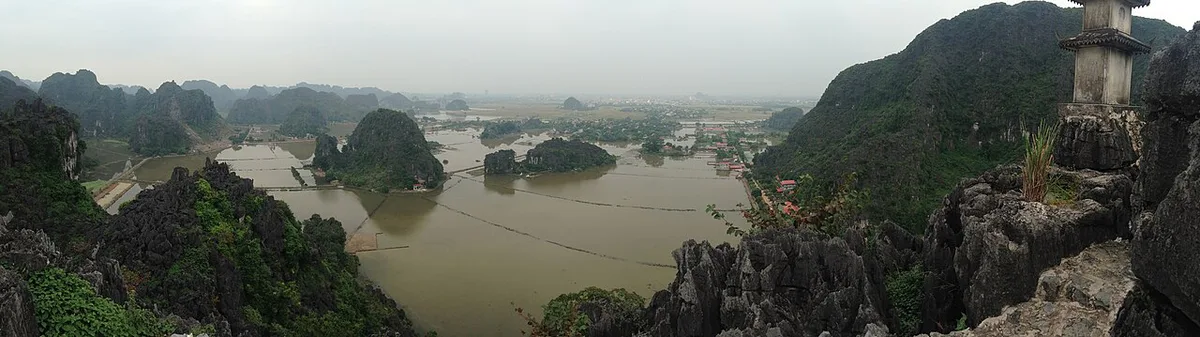
Featured image: Jakub Hałun, CC BY 4.0, via Wikimedia Commons.
Ninh Binh Sunset or Sunrise: The Quick Answer
Choose sunrise for a calmer climb, cooler air and more room at the viewpoints. Choose sunset for stronger golden-hour color and an easy fit at the end of a sightseeing day. The two peak light windows are 6:00–8:00 AM and 4:00–6:00 PM. Mua Cave opens at 6:00 AM, so a pre-dawn summit is not guaranteed. Our photography angles around Ninh Binh cover composition once you pick a window.
| Factor | Sunrise (6:00–8:00 AM) | Sunset (4:00–6:00 PM) |
|---|---|---|
| Crowds | Usually lighter | Often busier near golden hour |
| Temperature | Coolest part of the day | Cooler than midday, still warm in summer |
| Light | Soft, sometimes misty | Warmer, stronger golden tones |
| Best for | Hikers and photographers wanting space | Casual visitors and day-trippers |
- The photographer: sunrise for space, sunset for color. Plan both only if the forecast allows.
- The hiker: sunrise, because the 500 steps are easier in cool air.
- The day-tripper: sunset, because group schedules usually reach Mua Cave in the afternoon.
Take the route offline
Free: the Ninh Binh route notes
Where to base yourself and what it costs, a day-by-day route that avoids backtracking, real transfer times and fares, seasonal timing, and where it connects onward — condensed from our Ninh Binh guides and made to take offline.
Mua Cave: The Sunrise and Sunset Reality Check
Mua Cave (Hang Mua) is reached by roughly 500 uneven stone steps. Most visitors need 20–30 minutes to reach the summit, depending on fitness and photo stops. From the top you look over Tam Coc, the Ngo Dong River and the limestone karsts. In some seasons the sun rises before the 6:00 AM opening. If you want the exact moment the sun clears the horizon, confirm access locally before planning a pre-dawn climb. Morning mist can also hide the view, so a pale dawn may look nothing like your expectation. Sunset adds longer shadows across the valley and warmer light on the ridges. Crowds gather near the Dragon Statue area, so arrive well before the final light. Ticket prices and parking fees change, and no current figure is supplied here. Check the rate posted at the entrance, and see our Hang Mua summit details for the climb itself. Be wary of informal "private parking" offers near the entrance.
Photography Routes for Morning and Late Afternoon
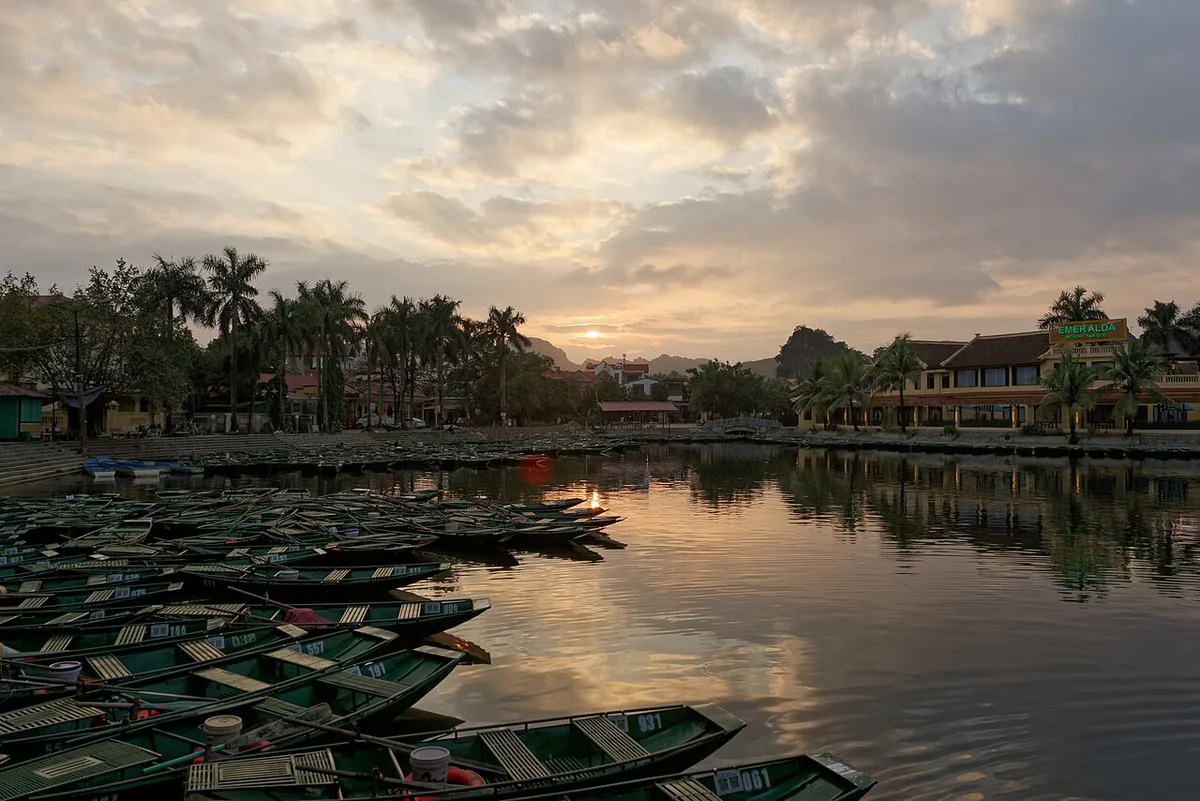
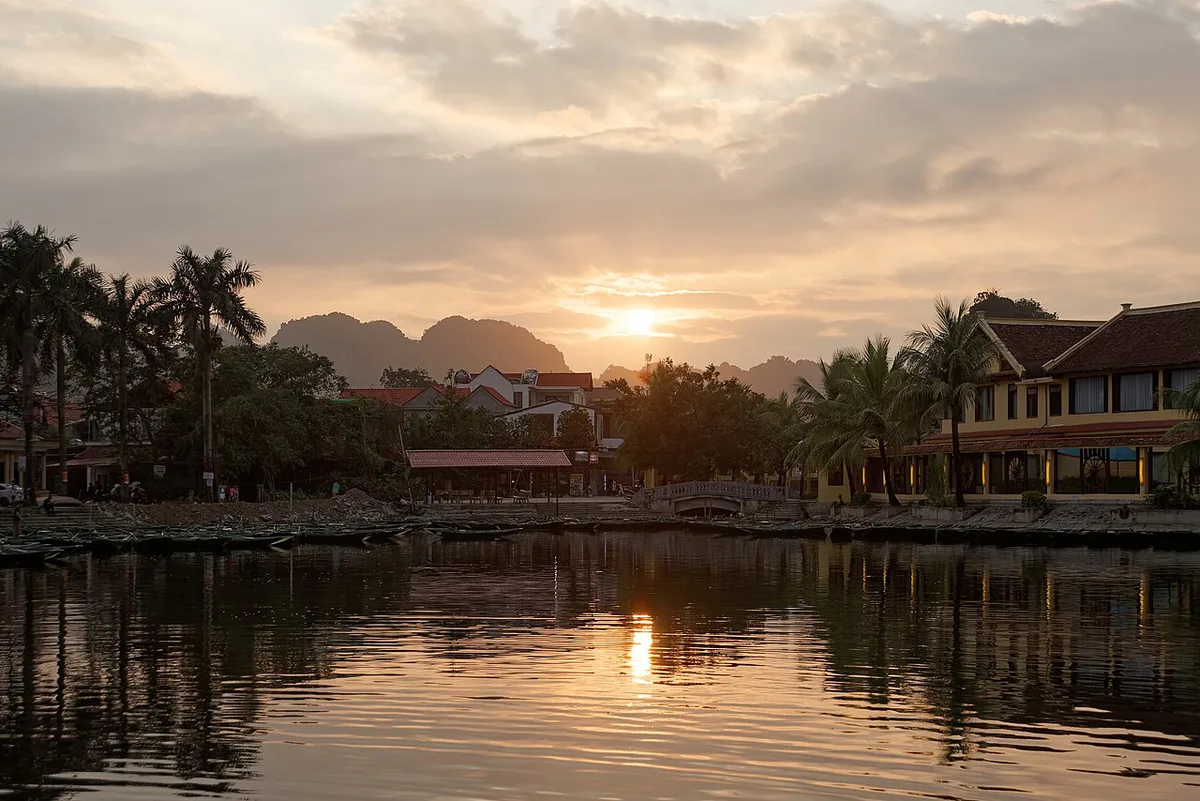
Morning route: climb Mua Cave first, then drop to the Tam Coc rice fields while the light is still soft. Afternoon route: take a Trang An boat tour, climb Mua Cave for sunset, then eat late in Tam Coc. This order keeps the steepest effort out of the midday heat. Bring a tripod for low-light frames and protect your gear from humidity and water splashes on the boats. Rice color changes the plan. Planting season, February to April, gives vibrant green fields. Harvest, typically late May to early June, gives golden ones. In those weeks the fields below Mua Cave are worth the early start.
- Morning: Mua Cave summit, then Tam Coc rice fields.
- Afternoon: Trang An boat tour, Mua Cave at sunset, late dinner in Tam Coc.
- Bring: tripod, water, headlamp for the descent, insect repellent.
Alternative Ninh Binh Sunset Spots Without the Climb
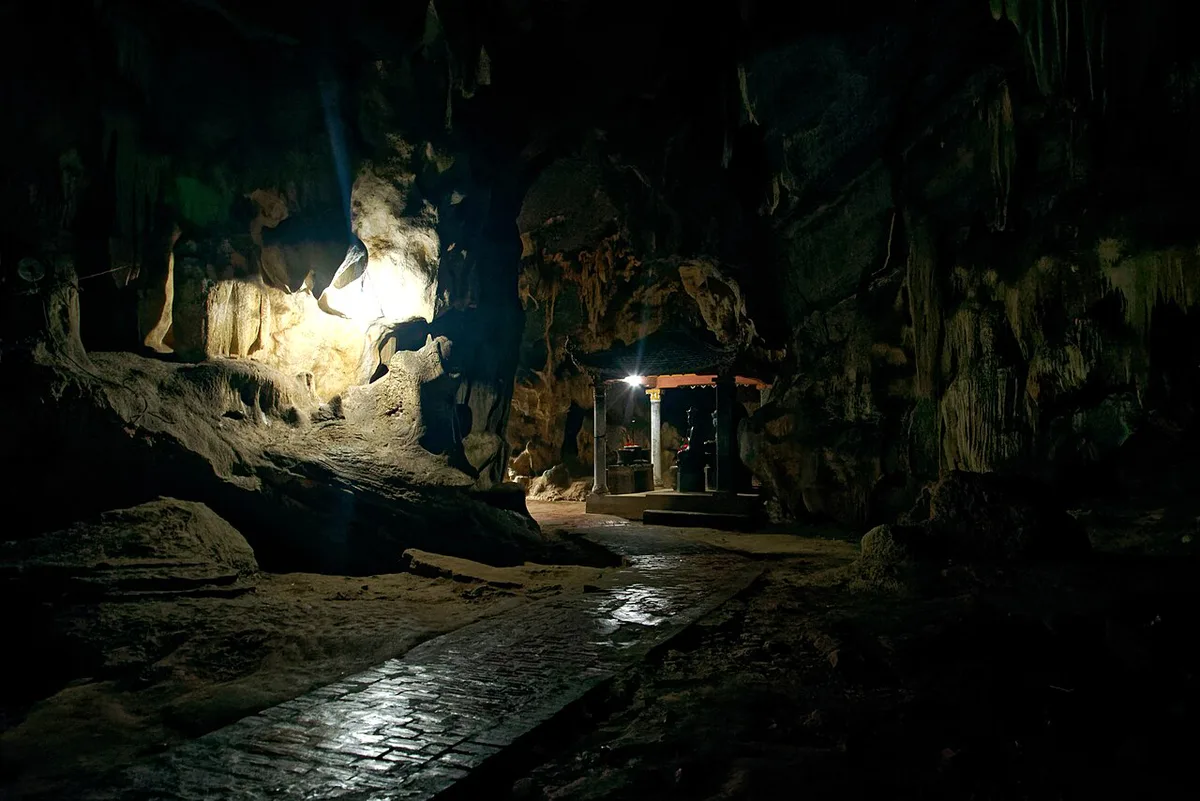
Van Long Wetland suits visitors who want sunset reflections and bird watching without any steps. Its still water gives the closest thing to mirror-like images in the area. A Tam Coc boat ride works too if you time it for late afternoon, when the sun drops behind the karsts along the Ngo Dong River. Bich Dong Pagoda is the third option, with lotus ponds that photograph well in fading light. Trang An's quieter edges also reward a late boat, with limestone cliffs and temples reflected at golden hour. For help choosing between the two boat areas, read about comparing river views at Tam Coc and Trang An. Lotus ponds bloom seasonally, so check conditions before you plan around them.
Weather and Season Decision Matrix
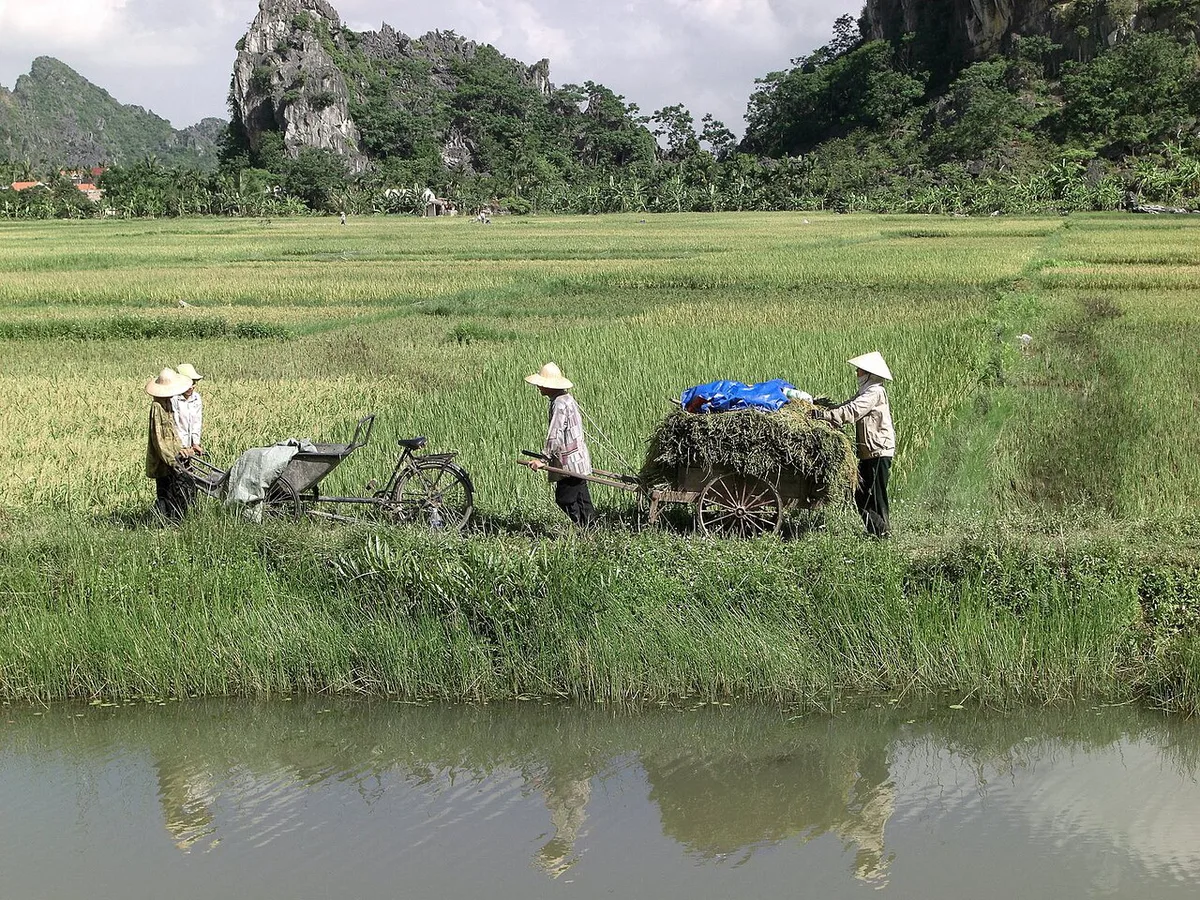
From May to August, sunrise is the sensible choice. The staircase is exposed, and 500 steps at 4:00 PM in June are far harder than at 6:30 AM. From December to February, northern Vietnam brings white mornings with mist or low cloud. That can make atmospheric photos, but it may hide the panorama you hoped for. A clear late afternoon can beat a foggy dawn. In the rainy season, wet stone gets slippery, so slow down on the descent and skip the climb during heavy rain or thunderstorms. Check the forecast shortly before you go. For broader month-by-month advice, see seasonal planning for Ninh Binh.
Keep the 6:30 AM start inside the 6:00–8:00 AM peak window, because 4:00 PM climbs on the 500 steps in June are far harder.
| Season | Best window | Reason |
|---|---|---|
| Feb–Apr | Sunrise or sunset | Green planting-season fields |
| Late May–early June | Sunrise | Golden harvest fields, strong heat |
| May–Aug | Sunrise | Heat and humidity on exposed steps |
| Dec–Feb | Sunset if clear | Morning mist can hide the view |
Planning Your Visit From Hanoi and Where to Stay
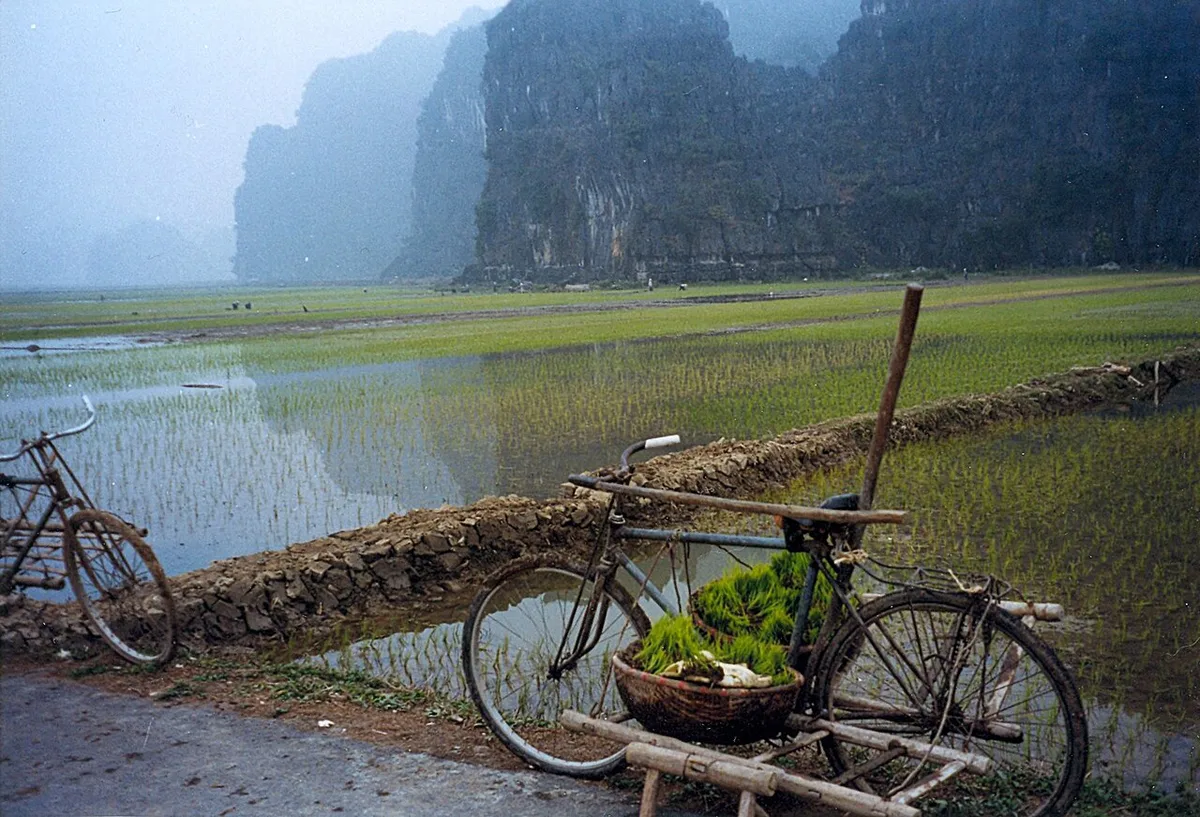
Group tours from Hanoi typically reach Mua Cave in the afternoon, which makes sunset the default. A sunrise on a day trip only works with a private driver leaving Hanoi around 3:30 AM. Staying overnight gives you far more control. Sleeping near Tam Coc puts the 6:00 AM opening within a short ride. See where to base yourself for the area trade-offs. Mua Cave also links easily with Hoa Lu Ancient Capital or a Trang An boat ride. A two-day plan can place sunrise on day one and a late boat on day two, as laid out in our two-day Ninh Binh route. The wider Ninh Binh overview covers transport.
Day trips from Hanoi need a private driver leaving around 3:30 AM, which leaves a long gap before Mua Cave opens at 6:00 AM.
Mistakes to Avoid at Sunrise and Sunset
Arriving too late is the most common error, because you miss the blue hour after the sun drops. Flip-flops are a poor choice for 500 uneven steps. Wear sneakers with grip. Do not step onto exposed rocks or narrow edges for a better photo. Skip any informal parking offer near the entrance and use the posted arrangements. Leave enough daylight for a careful descent, and carry a headlamp if you stay for the last light.
Frequently Asked Questions
What are some popular tourist attractions in Ninh Binh?
Mua Cave, Tam Coc and Trang An are the best-known. Hoa Lu Ancient Capital and Van Long Wetland round out most itineraries.
What time does it get dark in Ninh Binh?
Sunset time shifts with the season, so check a sunset table for your date. The peak late-afternoon light window runs roughly 4:00–6:00 PM. Carry a headlamp for the Mua Cave descent.
Take the route offline
Free: the Ninh Binh route notes
Where to base yourself and what it costs, a day-by-day route that avoids backtracking, real transfer times and fares, seasonal timing, and where it connects onward — condensed from our Ninh Binh guides and made to take offline.
Keep unfolding Vietnam
Continue along the route
Three nearby guides for the next decision in your trip.


