

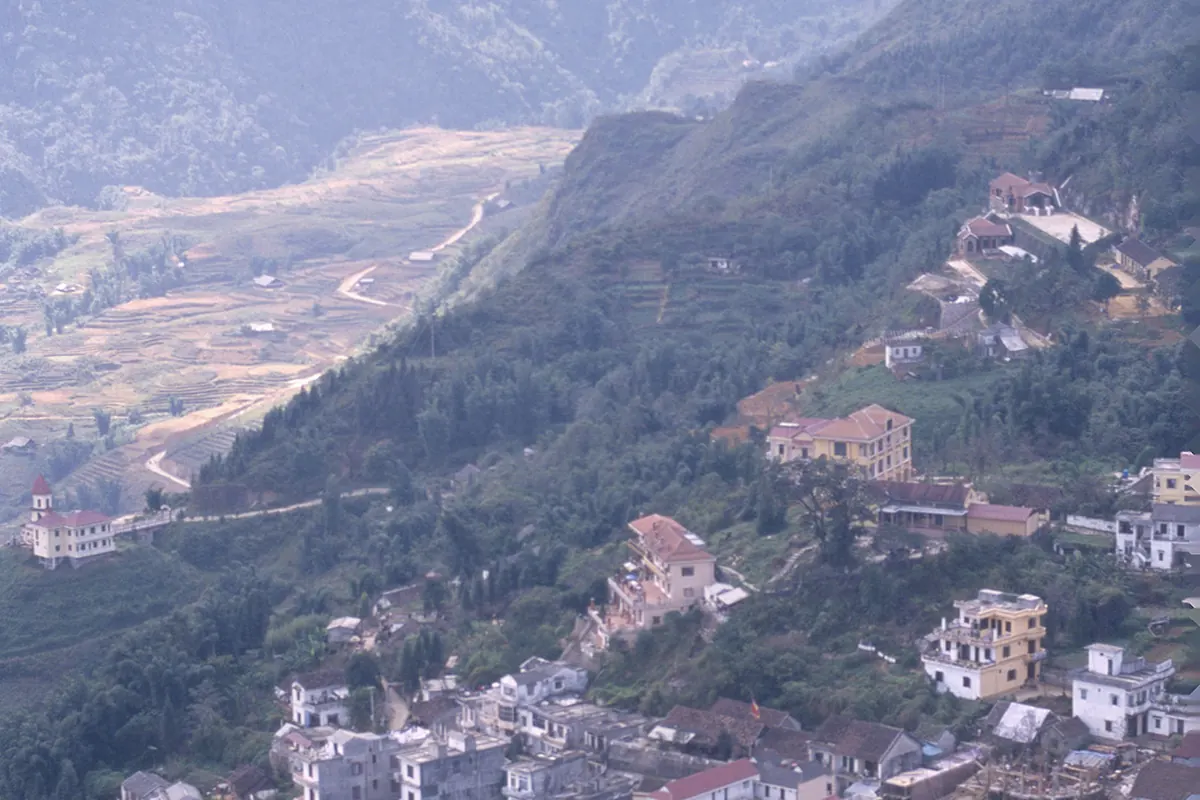
Photo: cosmicwindblown1 via Flickr (CC0 1.0)
Sapa to Ha Giang: Bus, Buffer and Route Guide 2026
Plan Sapa to Ha Giang in 2026 with realistic bus windows, pickup checks, mountain-road buffers, arrival plans, and sequencing before the Ha Giang Loop.
On this page
The Sapa to Ha Giang journey is a mountain transfer, not a short connector to squeeze between a trek and the first Loop riding day. Direct buses are sold in 2026, but pickup arrangements, vehicle type, road conditions, and arrival hour can turn a six-hour listing into a longer door-to-door day.
This guide shows how to choose a daytime bus, sleeper, private car, or multi-day road route; what to verify before paying; and where to place a buffer before the Ha Giang Loop. It does not pretend one timetable stays fixed all year.
Official tourism and operator pages were checked on August 15, 2026. Reconfirm the exact service for your travel date, especially during heavy rain, fog, road works, festivals, and Vietnamese holidays.
Key Takeaways
- Use a direct bus or limousine for the practical one-day transfer.
- Budget six to eight hours door to door, even when the advertised run is shorter.
- Confirm whether hotel pickup is a feeder van, an office meeting point, or the actual intercity bus.
- Do not start the Ha Giang Loop immediately after a late-night or overnight arrival.
- There is no useful direct train; Sapa's rail connection is down in Lao Cai.
- Self-driving between the two belongs in a multi-day mountain route, not a rushed transfer day.
Take the route offline
Free: the Sapa route notes
Where to base yourself and what it costs, a day-by-day route that avoids backtracking, real transfer times and fares, seasonal timing, and where it connects onward — condensed from our Sapa guides and made to take offline.
What Is the Best Way to Travel From Sapa to Ha Giang?
A direct bus or limousine is the practical default. Budget six to eight hours door to door, verify the exact Sapa pickup and Ha Giang drop-off, and sleep in Ha Giang City before beginning the Loop the next morning.
Current operator pages show direct, one-ticket services across morning, afternoon, and evening windows. “Direct” does not always mean the same vehicle collects you at the hotel. A local shuttle may bring passengers to a Sapa office or main coach, and the Ha Giang drop may be an operator office rather than the loop accommodation.
Travelers still planning the mountain sequence should read the three-day Sapa itinerary and the four-day Ha Giang Loop itinerary before booking the connection. Those two blocks determine whether the transfer belongs in daylight, overnight, or not at all.
Compare Sapa to Ha Giang Transport Options
| Option | Realistic planning window | Best for | Main risk |
|---|---|---|---|
| Daytime limousine or bus | Most of one day | First-time visitors and easier check-in | Loses daylight but protects sleep |
| Afternoon service | Afternoon into evening | A quiet Sapa morning and normal Ha Giang arrival | Road delay can push arrival late |
| Evening or sleeper bus | Evening into after midnight or early morning | Travelers with confirmed late reception | Poor sleep and awkward arrival |
| Private car | One flexible travel day | Groups, families, luggage, planned stops | High cost and still weather-dependent |
| Self-drive motorbike | Two or more days | Experienced, legally licensed riders building a separate route | Fatigue, navigation, weather, and insurance exposure |
| Return via Hanoi | Usually more than one travel day | A deliberate Hanoi stop or disrupted direct service | Large backtrack |
The fastest-looking ticket is not automatically the best. Arrival at 1:00am can cost more useful time than an afternoon arrival because the traveler still needs late check-in, sleep, breakfast, a briefing, and equipment checks before the Loop.

What Sapa to Ha Giang Costs in 2026
Budget roughly $15–$30 per seat for the direct transfer, or about $150 for a private car shared between up to four people. The bigger money decision is what waits at the other end: the Loop itself runs about $40–$80 self-driven or $150–$250 guided over three to four days.
The direct Sapa–Ha Giang leg is sold by regional operators rather than a national carrier, so seat prices move with vehicle type and season rather than a published fare table. The reference points below come from our own priced guides for the neighbouring legs, and they bracket what travelers actually pay.
| What you are paying for | Typical 2026 cost | Notes |
|---|---|---|
| Direct limousine or sleeper seat | About $15–$30 | Comparable regional legs run $13–$26; cabin and limousine seats sit at the top |
| Private car, Sapa to Ha Giang | Around $150 per vehicle | Matches the private-transfer rate for equivalent northern routes, up to four people |
| Backtrack via Hanoi | $10–$18 per leg, twice | Daytime van $12–$18; overnight sleeper $10–$15 on the Hanoi–Ha Giang leg |
| Loop motorbike rental | $6–$10 per day | 100–110cc; fuel, meals, and lodging billed separately |
| Guided Loop (3–4 days) | $150–$250 | Guide, fuel, meals, and homestay lodging included |
| Self-driven Loop, all in | $40–$80 | Bike, fuel, homestays, and meals across three to four days |
| Homestay night on the Loop | $8–$15 | Breakfast usually included; dorm beds $5–$8 |
Figures are 2026 planning estimates drawn from our Hanoi to Ha Giang transport guide, Ha Giang Loop itinerary, and Hanoi to Sapa guide. Carry cash: not every Ha Giang ATM accepts foreign cards, so withdraw 500,000–1,000,000 VND (about $20–$40) before you leave Sapa.
How the Direct Bus Actually Works
Direct Sapa–Ha Giang buses exist in current 2026 inventory. Ket Doan Travel's own route page, for example, publishes multiple direct services and describes a Sapa office meeting point with hotel-area pickup by minivan. Other operators use different offices, bus types, and Ha Giang drop points.
The important word is one-ticket, not “nonstop.” A service can be sold as direct while collecting passengers by feeder shuttle, consolidating at an office, stopping for breaks, or dropping different customers at separate points. None of those details is a problem when disclosed; they become a problem when a tight connection assumes otherwise.
- Hotel pickup: A small vehicle may collect you before the published coach departure.
- Sapa office: Some tickets require check-in at a named Dien Bien Phu Street office.
- Main mountain run: The intercity vehicle follows winding regional roads with passenger and rest stops.
- Ha Giang arrival: The default may be an operator office, bus station, hostel, or tour headquarters.
- Final transfer: A loop company may collect you only if that arrangement was confirmed beforehand.
“Will one vehicle take me from this pickup point to this drop-off point, or do I change between a shuttle and the main bus?” Save the written answer with the ticket.
How Long Does Sapa to Ha Giang Take?
Current direct listings commonly advertise roughly six to seven hours, but plan six to eight hours from the requested Sapa check-in time to the usable Ha Giang arrival. Weather, pickup rounds, road works, rest stops, traffic, and the exact vehicle can widen that window.
Published distances also vary because sellers measure different offices, roads, or hotel endpoints. The practical metric is not a single kilometer figure. It is whether the service reaches Ha Giang early enough for check-in, food, sleep, and the next day's confirmed briefing.
Do not connect the bus directly to a flight, international train, or fixed Hanoi departure. Mountain roads can slow after rain or fog, and the official Vietnam Tourism Loop guide warns that obstacles and construction can appear unexpectedly. Keep the transfer and the Loop separate from any hard onward connection.
Choose the Departure Window by Arrival Quality
Morning departure
A morning service gives the clearest arrival plan. It consumes a full Sapa day but should leave time to find the Ha Giang accommodation, eat, confirm the next morning's meeting point, and sleep. This is the safest default for a first independent transfer.
Finish the final Sapa trek the previous day. Do not schedule a distant homestay checkout and assume an office shuttle will wait while the group climbs back to town.
Afternoon departure
An afternoon service can preserve breakfast and a short walk in Sapa. It works when luggage is already back in town and the arrival is scheduled before the accommodation's late-reception cutoff. Add a meal plan because roadside breaks may not match normal dinner time.
Evening or overnight departure
A sleeper saves daylight on paper, not necessarily rest. Winding roads, stops, lights, and a midnight or early-morning arrival make deep sleep unlikely. Book a Ha Giang bed for the arrival night and obtain instructions for locked-door or staffed reception.
Do not accept a loop start only a few hours after arrival merely because a package makes the timeline fit. A full night's recovery is more valuable than saving one calendar square.
Limousine, Sleeper, or Cabin: What Are You Buying?
Vehicle labels are inconsistent across sellers. “Limousine” may mean a small reclining-seat van, a larger seated coach, or an upgraded sleeper. “VIP cabin” may mean a curtained single berth rather than a private room. Confirm layout, not marketing language.
| Question | Why it matters |
|---|---|
| Is the vehicle seated, lie-flat, or cabin-style? | Motion comfort and personal space differ sharply |
| Is the berth single or shared? | Some lower spaces are sold for two people |
| Upper or lower position? | Access and movement feel different on winding roads |
| What are the baggage limits? | Small vans and full sleepers may restrict large bags |
| Is there an onboard toilet? | Do not infer this from “VIP” |
| Where are rest stops? | Food and bathroom timing should not be assumed |
Travelers prone to motion sickness should discuss suitable medication with a qualified health professional before the trip, choose a seat or berth that works for them, eat lightly, and keep water and a small bag accessible.
Sapa to Ha Giang Booking Checklist
Do the first check before payment and repeat it 24 hours before departure. A booking screenshot is useful, but a current written confirmation is stronger when an office, shuttle, or vehicle has changed.
- Travel date and actual coach departure time
- Required check-in or pickup time
- Exact Sapa address and map pin
- Hotel pickup coverage and any feeder transfer
- Operator name, not only the reseller name
- Vehicle layout and assigned seat or berth
- Large-bag and daypack rules
- Exact Ha Giang drop-off and expected arrival window
- Late-check-in instructions for the arrival accommodation
- Change, cancellation, and weather policy
- Phone or messaging contact that answers on departure day
If the bus is bundled with a Loop tour, ask who is responsible for the transfer. The tour seller, bus operator, and Ha Giang hostel may be three separate businesses. Save each contact instead of relying on one marketplace chat.
Plan the Ha Giang Arrival Before Leaving Sapa
Ha Giang City is the gateway and briefing base for the Loop; it is not the first scenic pass. The official Vietnam Tourism destination guide describes public transport beyond the city as limited, while the official four-day Loop route begins outward on QL4C. Arrive first, then reset.
- Book the arrival night in Ha Giang City.
- Send the bus operator and accommodation the expected drop point.
- Confirm whether the accommodation collects late arrivals.
- Keep the address, phone number, and map pin offline.
- Eat, sleep, and attend the full Loop briefing before riding.
A daytime arrival supports a next-morning Loop start. A post-midnight arrival should be treated more cautiously. If sleep is short, delay the ride, use an easy rider, or take an additional recovery day rather than beginning tired on steep roads.
How to Sequence Sapa, the Transfer, and the Ha Giang Loop
The reliable sequence is Sapa activity days, one transfer day, an arrival night in Ha Giang City, then the Loop. Keep the final Sapa night in town or at a pickup-confirmed property. Keep the first Ha Giang commitment to briefing, fitting equipment, and rest.
| Day | Realistic plan | Avoid |
|---|---|---|
| Last Sapa day | Finish the main trek and return luggage to town | Remote homestay return timed tightly to a bus |
| Transfer day | Bus or private car, check in, eat, sleep | Fansipan plus a long mountain transfer |
| First Ha Giang morning | Briefing, licensing/insurance check, equipment, Loop departure | Riding after a two-hour sleep |
| Loop finish | Recovery night or flexible onward bus | Same-day hard flight from Hanoi |
The Northern Vietnam route guide helps decide whether both mountain regions fit the whole trip. The Hanoi planning hub covers the capital nights before or after the mountain block.
Should You Visit Both Sapa and Ha Giang?
Visit both when the trip has enough time for two different experiences and a dedicated transfer day. Sapa is organized around town, trekking valleys, Fansipan, and nearby villages. Ha Giang is organized around a multi-day road circuit that begins and ends in Ha Giang City.
Choose one when adding both would remove recovery time, shorten the Loop, or force back-to-back overnight buses. A three-day Sapa stay plus transfer plus a four-day Loop already occupies most of a week before Hanoi connections and a post-Loop buffer.
Travelers who want trekking and easier access may prefer Sapa. Travelers who prioritize a road journey and are comfortable joining an easy-rider or car tour may prefer Ha Giang. Neither is a day trip from the other.
When Going via Hanoi Makes Sense
Returning to Hanoi is a large backtrack, but it can be rational when direct Sapa–Ha Giang inventory is unavailable, the traveler needs a city rest, the route includes the Hanoi train, or a group must reorganize luggage. It is not a time-saving connection.
If reaching Sapa by rail, remember that the train terminates in Lao Cai rather than Sapa. The Hanoi to Sapa train guide explains that two-part journey. Returning down to Lao Cai does not create a direct railway to Ha Giang; the onward leg is still by road.
Travelers beginning the northern trip in the capital can compare the original legs in the Hanoi to Sapa transport guide and Hanoi to Ha Giang guide. Use those pages to choose an order rather than booking both return journeys automatically.
When a Private Car Is Worth It
A private car suits three or four travelers splitting the quote, families needing controlled stops, travelers with substantial luggage, and anyone requiring a specific pickup or check-in window. It also allows a daylight meal or viewpoint stop without managing a full coach's timetable.
Ask for a written route, vehicle size, licensed driver, inclusions, waiting policy, weather cancellation terms, and final Ha Giang address. A low quote can exclude tolls, driver accommodation for a multi-day detour, or the final hotel drop.
A private car does not remove mountain-road risk. It only improves control over stops and pickup. Keep the same buffer and avoid a hard connection at the end.
Should You Ride a Motorbike From Sapa to Ha Giang?
Not as a one-day shortcut. The road belongs in a separate multi-day itinerary for an experienced rider who is legally licensed for the motorcycle, explicitly insured, comfortable with mountain traffic, and able to assess weather and road conditions.
A scenic route through places such as Bac Ha, Xin Man, and Hoang Su Phi is not the bus transfer with photo stops added. It requires route research, fuel planning, daylight stages, suitable accommodation, luggage strategy, and time for changes. It may take two or more days before reaching Ha Giang City.
Official Vietnam Tourism guidance for the Loop advises caution at curves, daylight riding, and stopping after dark because obstacles and construction can appear. That advice is equally relevant before the Loop. A novice should take the bus and then join a reputable easy-rider or private-car trip.
A rental shop handing over a motorcycle does not prove the rider is legal, insured, or skilled enough for the route. Verify all three independently before considering self-drive.
Weather and Road Buffers
Sapa and Ha Giang can both be cold, wet, foggy, or intensely hot depending on season and elevation. The official destination pages describe chilly Sapa conditions from November through March and regular Ha Giang monsoon weather in July and August. A monthly description is not a live road report.
Check the forecast at both endpoints and ask the operator about the current road. Heavy rain can slow pickup rounds, road works can shift, and fog can reduce pace. Keep essential medicine, a warm or waterproof layer, water, and the arrival address in the daypack rather than under the bus.
Place at least one flexible night between the end of the Loop and a hard flight from Hanoi. The mountain transfer into Ha Giang is only the first place delays can accumulate.
Departure-Day Checklist
- Reconfirm pickup time, exact pin, and vehicle with the operator.
- Return from any valley homestay with a wide margin.
- Eat a light meal and use a restroom before pickup.
- Keep passport, money, medicine, water, warm layer, and phone charger in the daypack.
- Photograph or tag the large bag before loading it.
- Download both accommodation pins and operator contacts.
- Tell the Ha Giang accommodation if the bus is running late.
- Do not agree to begin riding at night after arrival.
Current Sources to Check
- Ket Doan Travel's direct Sapa–Ha Giang route page for one current operator's departure and pickup structure.
- Vietnam Tourism's Sapa destination guide for rail-via-Lao-Cai and mountain-access context.
- Vietnam Tourism's Ha Giang destination guide for gateway, weather, and onward-transport context.
- Vietnam Tourism's official four-day Loop route for sequencing and road-safety context.
- Vietnam Tourism's national transport overview for bus-booking and motorbike-planning basics.
Only the responsible operator can confirm a live departure, vehicle, seat, pickup, and drop-off. Recheck those details directly even when an aggregator or tour package issued the original voucher.
Frequently Asked Questions
Is Sapa or Ha Giang better?
Sapa is better for a town-based visit with trekking valleys, Fansipan, and nearby villages. Ha Giang is better for a multi-day road journey through high passes and remote towns. Choose Sapa for walking access and Ha Giang for the Loop experience.
How do I get from Sapa to Ha Giang by bus?
Book a direct bus or limousine, confirm the exact Sapa office or hotel pickup, and verify the Ha Giang drop-off. Plan six to eight hours door to door. A feeder minivan may connect the hotel pickup with the main intercity vehicle.
Do you go to Sapa on the Ha Giang Loop?
No. The standard Ha Giang Loop starts and ends around Ha Giang City and travels through places such as Quan Ba, Yen Minh, Dong Van, and Meo Vac. Sapa is a separate mountain destination reached by an additional road transfer.
How long is the bus from Sapa to Ha Giang?
Direct listings commonly show about six to seven hours, but allow six to eight hours from check-in or pickup to the usable arrival. Weather, feeder pickups, road works, rest stops, and the exact Ha Giang drop-off can extend the trip.
Is there a direct train from Sapa to Ha Giang?
No. Sapa has no railway station; its nearest rail connection is in Lao Cai. Ha Giang is not connected to Sapa by passenger train, so the practical direct journey is by bus, limousine, or private car.
Should you take a night bus from Sapa to Ha Giang?
A night bus can preserve daylight, but it may arrive after midnight or early in the morning and provide poor sleep on winding roads. Use it only with confirmed late check-in and enough recovery time before the Loop.
Can you start the Ha Giang Loop on the same day you leave Sapa?
It is not a sensible default. Treat Sapa to Ha Giang as the travel day, sleep in Ha Giang City, and begin after a proper briefing and rest. A late or overnight arrival needs an even larger recovery margin.
Protect the First Loop Day
A good Sapa to Ha Giang plan is measured by the quality of the arrival, not the shortest advertised duration. Choose a service with a clear pickup, usable drop-off, and enough margin to eat and sleep before the mountain circuit.

Give the transfer its own day, verify the booking twice, and keep a post-Loop buffer before any hard connection. Then use the Hanoi travel-planning hub to connect the mountain block with the rest of northern Vietnam.
Take the route offline
Free: the Sapa route notes
Where to base yourself and what it costs, a day-by-day route that avoids backtracking, real transfer times and fares, seasonal timing, and where it connects onward — condensed from our Sapa guides and made to take offline.
Keep unfolding Vietnam
Continue along the route
Three nearby guides for the next decision in your trip.


