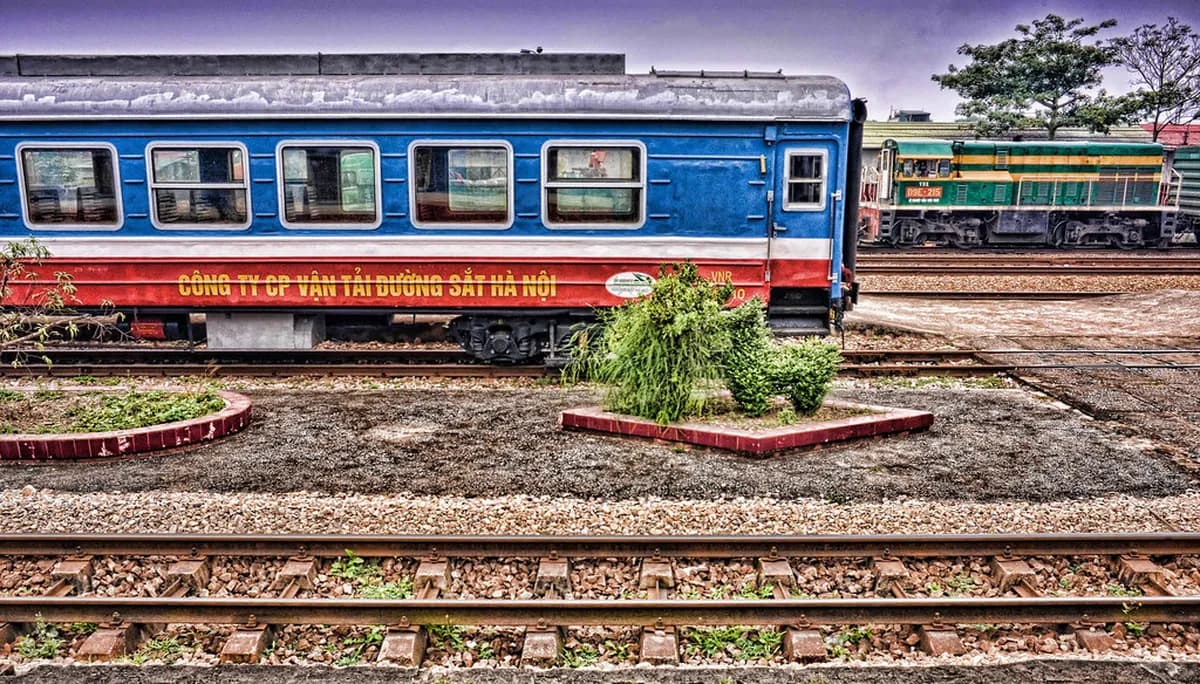
Photo: sridgway via Flickr (CC BY 2.0)
Hanoi to Sapa by Train: Complete 2026 Sleeper Guide
Take the Hanoi to Sapa train in 2026 with current sleeper schedules, berth and fare guidance, official booking steps, and the Lao Cai–Sapa transfer plan.
On this page
Taking the Hanoi to Sapa by train route in 2026 means booking an overnight service from Hanoi Railway Station to Lao Cai, then changing to a minivan, bus, taxi, or hotel transfer for the final climb to Sapa. There is no railway station in Sapa itself. The rail leg takes roughly eight hours, while the road connection usually adds another 45 to 70 minutes.
This guide stays deliberately train-specific: it explains the current train numbers, the difference between Vietnam Railways berths and privately fitted tourist cabins, how fares work, where to board, and how to avoid a poor connection at Lao Cai. If you are still choosing between rail, bus, minivan, and private car, use the broader Hanoi-to-Sapa transport comparison first.
Schedules and prices on this route are date-dependent. The practical figures below were checked on August 15, 2026 against Vietnam Railways information and official operator listings, but the ticket issued for your travel date is authoritative. Place this rail night inside the wider Hanoi travel planning hub before fixing hotels on either side.
Key Takeaways
- The train goes from Hanoi to Lao Cai, about 33–35 kilometers by road from Sapa.
- Plan roughly eight hours on the train plus 45–70 minutes for the uphill transfer.
- Vietnam Railways and private tourist-cabin operators sell different products on the same underlying railway service.
- SP3/SP4 and SP7 are the train numbers confirmed in Vietnam Railways' 2026 fare notice; exact operating days and times must be checked for your date.
- Book the train and Lao Cai transfer as two connected legs, with the pickup instructions saved offline.
Take the route offline
Free: the Hanoi route notes
Where to base yourself and what it costs, a day-by-day route that avoids backtracking, real transfer times and fares, seasonal timing, and where it connects onward — condensed from our Hanoi guides and made to take offline.
How Does Hanoi to Sapa by Train Work?
The Hanoi-to-Sapa train runs to Lao Cai, not Sapa. Allow roughly eight hours overnight by rail, then 45–70 minutes for the 33–35-kilometer road transfer uphill to Sapa.
The route has four distinct steps. First, reach the correct check-in point at Hanoi Railway Station or the lounge named by your tourist-cabin operator. Second, exchange any voucher if your operator requires a paper ticket. Third, ride overnight to Lao Cai. Fourth, meet the booked road transfer or choose one outside the station.
- Book Hanoi to Lao Cai: search the official railway system for your exact date before comparing private cabins.
- Confirm the product: identify whether the reservation is a Vietnam Railways berth, a shared tourist cabin, or a whole private cabin.
- Check in at Hanoi: follow the address and arrival time on the issued confirmation rather than a map result alone.
- Transfer at Lao Cai: keep the vehicle company, pickup point, destination, and phone number available offline.
This extra transfer is the route's biggest source of confusion. A listing may use “Sapa” as the destination for search convenience even though the rail ticket terminates at Lao Cai. Read the inclusions carefully: some products bundle a shared minivan, while others cover only the train.
Hanoi to Sapa Train Schedule for 2026
Vietnam Railways' July 1, 2026 notice names SP3/SP4 and SP7 on the Hanoi–Lao Cai route, confirming that these services were included in the railway's 2026 fare program. The exact days, departure times, and available accommodation remain date-specific, so use the official Hanoi–Lao Cai timetable and then reproduce the search on the official Vietnam Railways booking site.
| Service | Direction | Typical planning window | What to verify |
|---|---|---|---|
| SP3 | Hanoi to Lao Cai | Late evening to about 06:00 | Operating date, Hanoi check-in point, berth or cabin |
| SP7 | Hanoi to Lao Cai | Later evening to about 06:30 | Operating date, final arrival time, accommodation inventory |
| SP4 | Lao Cai to Hanoi | Evening to early morning | Pickup time from Sapa and Lao Cai boarding deadline |
The windows above are for itinerary planning, not a substitute for a ticketed schedule. Vietnam Railways has changed this line's times when weather, infrastructure work, or operating plans required it. A Vietnam Railways service notice, for example, documented a temporary 21:35 SP3 departure when the route reopened after storm repairs in September 2024.
Recheck the official booking result and operator message on departure day. A blog timetable, even one updated in 2026, cannot override an amended railway schedule or the train number printed on your issued ticket.
Arrive at the named check-in point at least 45 minutes before the printed departure time. Private operators may ask passengers to exchange an email voucher at a lounge or desk before boarding; the official Vicsapa site, for instance, instructs its customers to exchange a voucher at its waiting room beside Hanoi Railway Station.
Hanoi–Lao Cai Train Fares in 2026
There is no single “Hanoi to Sapa train price.” The amount depends on the travel date, train, berth class, deck or bunk position, discount eligibility, and whether a private operator has fitted and serviced the carriage. Treat every price as one-way unless the checkout explicitly says otherwise.
Vietnam Railways' July 2026 fare notice confirms a 3% reduction for SP3/SP4 and SP7 in late June 2026, but it does not publish one flat fare because the final amount varies by seat and date. As a historical official reference, Vietnam Railways quoted ₫280,000–₫420,000 one way across accommodation types when SP3/SP4 returned in September 2024. Use the live 2026 checkout—not that old range—to set the final budget.
| Product | Published price checked Aug. 15, 2026 | What the price means |
|---|---|---|
| Vietnam Railways accommodation | Date-specific; official historical reference ₫280,000–₫420,000 | Base railway place; verify current berth, insurance, and discount in official checkout |
| Vicsapa deluxe 4-berth | US$35 per person one way | One berth in a shared four-berth tourist cabin |
| Vicsapa luxury 4-berth | US$45 per person one way | Upgraded shared four-berth tourist cabin |
| Vicsapa private cabin | US$165–US$240 per cabin one way | Operator-listed VIP or suite cabin; occupancy and bed layout vary |
The Vicsapa amounts come from the operator's own cabin page and are useful for comparing tourist-carriage markups. They are not Vietnam Railways base fares and do not prove that every date is available. Confirm taxes, transfer inclusion, cancellation terms, child rules, and whether the charge is per berth or per cabin before paying.
For a realistic door-to-door total, add the Lao Cai–Sapa road connection. Vietnam Railways published a ₫55,000 one-way connecting vehicle price in its September 2024 service notice for drop-offs within two kilometers of Sapa Stone Church. That is a useful official benchmark, but confirm the 2026 transfer amount during booking because the route, vehicle, and coverage area may change.
Which Sleeper Berth or Cabin Should You Choose?
Start by separating berth class from operator brand. Vietnam Railways supplies the train and sells standard accommodation. Tourist operators lease or fit cabins on the same service, then add bedding, snacks, lounge access, staff support, or private-cabin arrangements. Paying more changes the cabin package; it does not create a faster railway journey.
| Choice | Best for | Main trade-off |
|---|---|---|
| Standard soft sleeper | Value-focused travelers who want a proper berth | Fewer extras and less control over cabin companions |
| Shared tourist 4-berth cabin | Couples or solo travelers wanting operator support | Higher per-person price; still shared unless all berths are bought |
| Private 2-berth cabin | Two travelers prioritizing privacy | Usually sold as a whole cabin at a substantial premium |
| Private 1-berth or double-bed suite | Solo travelers or couples with the highest comfort budget | Most expensive and limited inventory |
Lower berth or upper berth?
A lower berth is easier for boarding, luggage access, and nighttime movement, so it suits travelers with reduced mobility or frequent bathroom needs. An upper berth can feel more private but requires climbing. The exact headroom and ladder design vary by carriage, so ask the seller rather than assuming every “soft sleeper” has the same layout.
Shared or private?
A four-berth cabin is usually mixed-gender unless the product says otherwise. Booking two berths does not automatically privatize the compartment. If privacy is essential, buy a product explicitly labeled as a whole cabin and confirm the maximum occupancy in writing.
Standard carriage or tourist carriage?
Choose a standard Vietnam Railways sleeper for cost control. Consider a tourist carriage when a staffed lounge, English-language instructions, bundled transfer, fresher bedding package, or private-cabin configuration is worth the markup. Compare the actual inclusions rather than relying on words such as “deluxe,” “luxury,” or “VIP,” which are not standardized across sellers.
How to Book the Hanoi to Sapa Train
The safest process begins with the official railway inventory, even if you later choose a private cabin. That check proves which train numbers operate on your date and prevents a branded seller's route label from being mistaken for a direct train to Sapa.

- Search Hanoi to Lao Cai: use the official Vietnam Railways booking site, not “Hanoi to Sapa,” because Lao Cai is the rail terminus.
- Record the train number and time: note SP3, SP7, or another returned service and take a screenshot of the result.
- Compare accommodation: price a standard railway berth, a tourist-cabin berth, and a whole cabin on the same date.
- Read the unit: confirm whether the displayed amount covers one person, one berth, or the entire cabin.
- Add the road leg: select a Lao Cai–Sapa transfer only after checking its meeting point, luggage allowance, and drop-off zone.
- Match passenger details: enter names and document numbers exactly as required. Vietnam Railways' official ticket-check page states that the passenger's identification details must match the e-ticket.
- Save everything offline: keep the ticket, operator voucher, transfer confirmation, and support number available without mobile data.
Begin from an official Vietnam Railways domain such as dsvn.vn, giavere.dsvn.vn, or giotaugiave.dsvn.vn. A reseller can be legitimate, but its brand name and website address should match the operator named on the confirmation.
Popular Friday departures, Vietnamese holidays, and autumn weekends can reduce the choice of lower berths and private cabins. Booking early improves inventory, but no universal “three days is enough” rule applies. Search as soon as your Hanoi and Sapa hotel dates are firm, then check the seller's change and refund terms before completing payment.
Boarding at Hanoi Railway Station
Hanoi Railway Station is on Le Duan Street, west of the Old Quarter. Use the exact entrance, desk, or lounge in the confirmation because branded tourist cabins may handle check-in separately from passengers holding a standard Vietnam Railways e-ticket.

A sensible evening sequence is to finish dinner early, collect stored luggage, and leave the Old Quarter with traffic time in hand. The Hanoi luggage storage guide helps if hotel checkout and the late-evening train leave a long gap. Aim to reach the instructed check-in point at least 45 minutes before departure, or earlier if a voucher exchange is required.
- Keep passports or the identification used in the booking accessible.
- Show the train number, carriage, cabin, and berth on one screen or printed page.
- Confirm whether staff will escort passengers from a lounge to the platform.
- Buy water and simple snacks before boarding rather than depending on onboard stock.
- Keep valuables, medication, charging cables, and the Sapa transfer details in a small bag at the berth.
Do not use Hanoi Train Street as a boarding point. It is a viewing area along an active line, not a substitute for the station named on the ticket. Travelers interested in the railway setting can visit it separately using the safety and access guidance in the Hanoi Train Street guide.
What Is the Overnight Train Like?
The Hanoi–Lao Cai line is an overnight sleeper journey, not a silent hotel room on rails. Movement, wheel noise, braking, corridor activity, and station stops are normal. A private tourist cabin reduces interruptions from strangers, but it cannot remove the motion generated by the track.
Operator inclusions vary. Some tourist cabins advertise bottled water, snacks, blankets, power outlets, toiletries, or lounge access; standard railway accommodation may be simpler. Treat Wi-Fi and charging as bonuses rather than essentials. Charge devices beforehand and download maps, confirmations, entertainment, and the Sapa hotel address.
Pack in two layers
Put clothing and trekking gear in the main case, then keep a berth bag with identification, wallet, phone, power bank, earplugs, eye mask, water, tissues, hand sanitizer, warm layer, and any medicine. This avoids opening a large suitcase in a narrow compartment after other passengers are asleep.
Set realistic sleep expectations
Rail can be preferable to a sleeper bus for travelers who value a flat berth and the ability to stand in the corridor, but light sleepers may still rest poorly. Choose the train for the berth, railway experience, or road-avoidance preference—not because every cabin guarantees uninterrupted sleep.
Protect documents and valuables
Keep passports, money, electronics, and medicine at the berth rather than in luggage stored away from reach. Close the cabin door when appropriate, follow railway staff instructions, and do not accept an unofficial carriage change from someone who cannot verify the booking details.
Lao Cai Station to Sapa: Plan the Second Leg
Lao Cai Railway Station is the rail endpoint; Sapa lies roughly 33–35 kilometers away by road. Shared minivans commonly take about 60–70 minutes, while a private transfer may be closer to 45–60 minutes in good conditions. Fog, rain, traffic, and pickup circulation can make the connection longer.
| Transfer | Best for | Check before travel |
|---|---|---|
| Railway-sold connecting vehicle | Simple through-planning when offered | Current 2026 fare, drop-off radius, ticket inclusion |
| Tourist-cabin shuttle | Passengers wanting staff guidance | Whether it is bundled, vehicle name, meeting sign |
| Hotel transfer | Early arrivals, families, bulky luggage | Driver contact, waiting policy, hotel address |
| Taxi | Flexible private departure | Official queue, meter or agreed fare, destination in Vietnamese |
If a shuttle is bundled, do not assume “Sapa drop-off” means your hotel door. The Vietnam Railways notice that quoted the ₫55,000 connection defined its service area as within two kilometers of Sapa Stone Church. A hotel in Ta Van, Lao Chai, or another valley village may require a second vehicle and extra payment.
Morning trains can reach Lao Cai well before normal hotel check-in. Ask the Sapa property about luggage storage, breakfast, early transfer, and shower access before leaving Hanoi. Then shape the first day around a realistic energy level; the three-day Sapa itinerary groups trekking, Fansipan, and village time without forcing everything into the arrival morning.
Do not schedule a non-refundable trek immediately after the advertised train arrival. Leave at least 90 minutes for disembarking, finding the vehicle, loading luggage, and driving uphill—and more in poor weather.
Is the Train Better Than the Bus?
The train is better for travelers who want a flat berth, prefer rail to an overnight mountain-road journey, or value a private compartment. A direct bus is generally faster door to door and avoids the Lao Cai transfer. Neither option wins for everyone.
| Decision | Train via Lao Cai | Direct bus |
|---|---|---|
| Final stop | Lao Cai, then road transfer | Sapa or operator stop |
| Sleep format | Flat railway berth | Reclined sleeper seat or cabin bus |
| Door-to-door time | Usually about 9–10 hours including transfer | Usually shorter, depending on traffic and stops |
| Schedule flexibility | Limited train departures | More departures from multiple operators |
| Best reason to choose | Berth, privacy option, rail preference | Speed and direct arrival |
Keep this article open if rail already suits your priorities. If the transfer or longer total time changes the decision, return to the complete Hanoi-to-Sapa route guide for bus, minivan, private-car, and motorbike trade-offs.
Departure-Day Checklist
- Reopen the official booking or operator message and confirm the train is still operating.
- Match the date, train number, station, carriage, cabin, berth, and passenger name.
- Confirm whether an e-ticket is enough or a voucher must be exchanged.
- Leave central Hanoi with a traffic buffer and arrive at least 45 minutes early.
- Keep identification, ticket, and transfer details available offline.
- Message the Sapa hotel with the expected Lao Cai arrival and transfer method.
- Carry a warm layer and rain protection suited to the season; review the Hanoi seasonal planning guide before packing.
Weather matters at both ends. Heavy rain can affect rail operations and make the Lao Cai–Sapa road slower, while mountain fog can reduce visibility. Keep the first Sapa morning flexible and avoid tying a tight, non-refundable activity to the scheduled arrival minute.
Frequently Asked Questions
How long is a train from Hanoi to Sapa?
The overnight train from Hanoi to Lao Cai takes roughly eight hours. Add about 45–70 minutes for the 33–35-kilometer road transfer from Lao Cai station to Sapa, plus connection time. A realistic door-to-door plan is about 9–10 hours.
Can you get the train from Hanoi to Sapa?
You can take a train from Hanoi toward Sapa, but it terminates at Lao Cai Railway Station rather than Sapa. From Lao Cai, continue by minivan, shuttle, taxi, or hotel transfer for the final uphill road leg.
What is the most luxurious train from Hanoi to Sapa?
“Most luxurious” is not a standardized railway class. Private operators such as Vicsapa and Chapa sell upgraded cabins attached to Vietnam Railways services. Compare whole-cabin occupancy, bed layout, lounge access, bedding, transfer inclusion, cancellation terms, and current reviews before choosing.
What is the best way to go from Hanoi to Sapa?
The train is best for a flat berth, private-cabin option, or preference for rail. A direct bus is usually faster and avoids changing vehicles in Lao Cai. Compare all methods in the broader Hanoi-to-Sapa guide before buying a non-refundable ticket.
How much is the Hanoi to Sapa sleeper train in 2026?
Vietnam Railways fares vary by date and accommodation, so check the official live result. Its official 2024 operating reference was ₫280,000–₫420,000 one way. On August 15, 2026, Vicsapa listed shared tourist berths at US$35–US$45 and private cabins at US$165–US$240.
Which berth is best on the Hanoi to Lao Cai train?
A lower soft-sleeper berth is the easiest choice for luggage access and nighttime movement. An upper berth can offer more separation but requires climbing. For guaranteed privacy, book a whole cabin explicitly rather than assuming two tickets reserve all four berths.
Where do you book official Vietnam Railways tickets?
Start at giavere.dsvn.vn and search Hanoi to Lao Cai for the exact date. Verify the ticket through the official ticket-check page after purchase. If buying a tourist cabin, also confirm the private operator's exact domain, check-in desk, and voucher process.
Should you book the Lao Cai to Sapa transfer in advance?
Advance booking is sensible for early arrival, children, bulky luggage, or accommodation outside central Sapa. Confirm the meeting point and drop-off zone. A “Sapa” transfer may cover only the central area near Stone Church, not outlying villages.
Build the Train into a Realistic Northern Route
The Hanoi-to-Sapa train works best when treated as two connected reservations: an overnight berth to Lao Cai and a clearly documented road transfer to Sapa. Verify the official train result for your date, compare like-for-like cabin products, and leave flexibility around the mountain connection.

Once the rail night is fixed, return to the Hanoi travel planning hub to arrange the days before departure, then use the Sapa itinerary to pace the arrival. That sequence keeps the train from becoming an isolated booking and turns it into a workable northern Vietnam route.
Take the route offline
Free: the Hanoi route notes
Where to base yourself and what it costs, a day-by-day route that avoids backtracking, real transfer times and fares, seasonal timing, and where it connects onward — condensed from our Hanoi guides and made to take offline.
Keep unfolding Vietnam
Continue along the route
Three nearby guides for the next decision in your trip.