

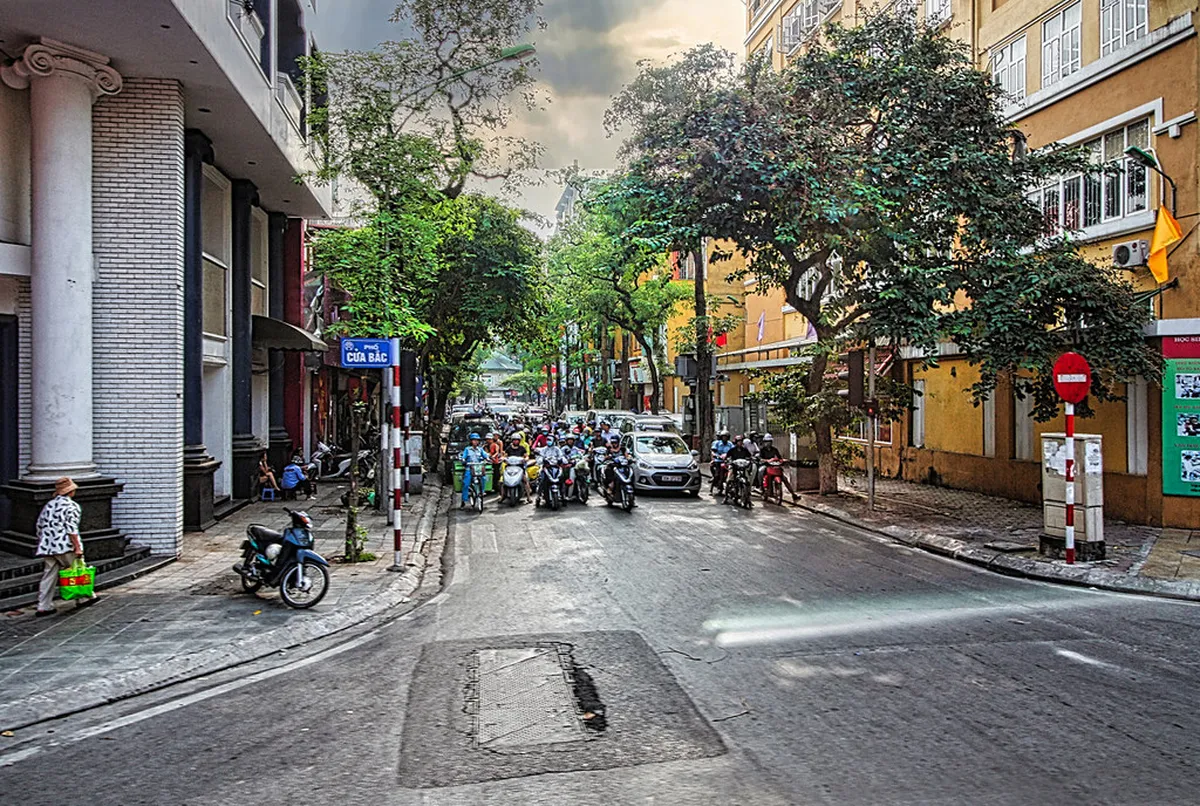
Photo: David McKelvey via Flickr (CC BY 2.0)
Vietnam Visa Requirements for Tourists: 2026 Official Guide
Check Vietnam tourist visa and exemption rules for 2026, including the official e-visa portal, fees, validity dates, entry points, and Phu Quoc.
On this page
Vietnam entry rules depend on your passport, the length and purpose of the trip, and where you enter. Some travelers qualify for a visa exemption; many others should obtain an e-visa before departure. This guide was checked against Vietnam Immigration and Ministry of Foreign Affairs information in July 2026.
Use it to understand the process, then confirm your own eligibility on an official Vietnamese government website before buying a non-refundable ticket. Immigration rules can change, and an airline may apply document checks before you board.
Key Takeaways
- Vietnam entry rules depend on your passport, the length and purpose of the trip, and where you enter.
- Some travelers qualify for a visa exemption; many others should obtain an e-visa before departure.
- This guide was checked against Vietnam Immigration and Ministry of Foreign Affairs information in July 2026.
- Use it to understand the process, then confirm your own eligibility on an official Vietnamese government website before buying a non-refundable ticket.
Take the route offline
Free: the Vietnam route starter
A two-week south-to-north route with real nightly rates by city, what to book first and how far ahead, region-by-region timing, and the transport costs between each leg — drawn from our published guides.
The Quick Answer: Do You Need a Visa?
Do not decide from a generic nationality group such as “EU,” “Western,” or “ASEAN.” Vietnam publishes exemptions by passport country and sometimes by passport type, travel purpose, or date-limited government resolution. The official Ministry of Foreign Affairs exemption list is the appropriate starting point.
Citizens of the United States, Canada, and Australia do not receive Vietnam’s standard unilateral 45-day tourist exemption as of this review. They generally need an e-visa or another valid immigration status unless a separate exemption applies. British ordinary-passport holders may qualify under the current unilateral policy, but British National Overseas passports are treated differently. This is why checking the exact passport is essential.
If you are not clearly exempt, use the official Vietnam Immigration e-visa portal. The government portal states that an e-visa can be issued for a maximum of 90 days and for either single or multiple entries.
The current government application domains include evisa.gov.vn and thithucdientu.gov.vn. A commercial domain containing words such as “Vietnam visa” is not automatically an official portal.
Vietnam E-Visa: Validity, Entries, and Government Fees
The e-visa application lets you request a validity window of up to 90 days. Choose single entry if you will enter Vietnam once, or multiple entry if you will leave and return during the approved period. Multiple entry matters for routes that include Cambodia, Laos, or another nearby country before returning to Vietnam.
Vietnam Immigration’s published instructions list a government fee of US$25 for a single-entry e-visa and US$50 for a multiple-entry e-visa. The fee is non-refundable if the application is refused. Pay only through the official portal’s payment flow and save the registration code and receipt.
The same instructions describe processing in three working days, but that is not a promise that every case will finish on the third day. Errors, identity checks, weekends, Vietnamese public holidays, and payment problems can add time. Apply early enough to correct a rejected photograph or a misspelled field without relying on an “urgent” commercial service.
The visa is valid from the “valid from” date through the “valid until” date printed on the approval. It does not automatically start when you happen to enter. You cannot arrive before the first date, and entering later does not extend the final date.
How to Apply on the Official E-Visa Portal
Prepare a clear image of the passport data page and a recent portrait that meets the portal’s instructions. Enter your name using the format requested by the form, and copy the passport number, nationality, date of birth, and expiry date exactly. Do not add or omit spaces because another website formatted your name differently.

- Open the official application form and read the current photo and passport-image requirements.
- Select single or multiple entry and enter the requested validity dates.
- Choose the intended entry and exit checkpoints from the portal’s lists.
- Review every field against the passport before submitting.
- Pay through the portal and save the registration code.
- Check the result through the government website; do not depend only on an email.
- Download the approved e-visa, verify every detail, and keep printed and offline copies.
If the approval contains a wrong name, passport number, date, or checkpoint, resolve it before travel. Do not assume an airline or border officer can edit the document at check-in.
Choose the Correct Entry Checkpoint
Your e-visa application asks for an entry checkpoint. Select the airport, land border, or seaport you actually intend to use and confirm that it appears on the current official list. Similar place names can refer to different crossings, and a bus company’s destination name is not always the formal Vietnamese checkpoint name.

Travelers arriving at Noi Bai, Tan Son Nhat, Da Nang, Cam Ranh, or Phu Quoc should also check the current Pre-Arrival Information instructions. The 2026 declaration helps immigration process passenger details but does not replace a visa or exemption. Use only the official pre-arrival portal.
When building a multi-country Vietnam itinerary, check whether the trip leaves and re-enters Vietnam. A single-entry e-visa cannot be reused after departure, even when time remains in its validity window.
Visa Exemptions and the 45-Day Policies
Vietnam’s Ministry of Foreign Affairs maintains the country-by-country exemption list and notes the legal basis and permitted stay. The widely discussed 45-day unilateral exemption applies to specified countries, not to every European or high-income passport. Separate temporary tourism-stimulus resolutions may cover additional countries and have their own effective dates and conditions.
An exemption is permission to enter without obtaining a visa for the covered stay; it is not a 90-day e-visa. If your planned stay exceeds the exemption period or your trip falls outside its conditions, obtain the appropriate visa before travel.
Passport validity conditions still apply. The MOFA list states that travelers using the unilateral exemption need a passport valid for at least six months from entry and must not fall within a category barred from entry.
Keep proof of onward travel and the address of your first accommodation available. Border officers decide admission, and an airline may request evidence that your planned stay fits the exemption.
The Phu Quoc 30-Day Exemption
Vietnam’s official exemption list notes a special rule for holders of foreign passports entering and remaining on Phu Quoc for no more than 30 days. It may also apply when a traveler transits through another Vietnamese international border gate before continuing to Phu Quoc under the specified conditions.
This exemption does not give blanket permission to tour mainland Vietnam. If your route includes Ho Chi Minh City, the Mekong Delta, Hanoi, or another mainland stop, make sure you independently qualify to enter Vietnam. Read the Phu Quoc ferry-versus-flight guide only after establishing your immigration status.
Airline routings and transit procedures can affect eligibility, so confirm the current rule with an official Vietnamese mission or immigration authority before relying on the island exemption.
Documents to Carry
- The passport used in the application, with adequate validity and condition.
- A printed and offline copy of the approved e-visa when one is required.
- The registration code and payment record in case you need to retrieve the result.
- Onward or return travel information appropriate to the permitted stay.
- The address and phone number of the first accommodation.
- The Pre-Arrival Information QR code when current instructions ask for it.
- Travel-insurance details and emergency contacts; see the Vietnam travel-insurance guide.
Store copies separately from the passport and make them available offline. Public airport Wi-Fi or mobile service should not be the only way to retrieve a document needed at immigration.
Common Visa Mistakes to Avoid
The most dangerous mistake is using a paid intermediary that imitates a government website. A service may submit an application on your behalf, but it cannot guarantee approval or rewrite Vietnam’s rules. Check the browser domain before entering passport or card details.
Other common errors include selecting the wrong checkpoint, requesting dates that do not cover the full stay, applying for single entry before a side trip, uploading an unreadable passport page, and typing a passport number incorrectly. Review the issued document immediately rather than discovering a mismatch at the airport.
Do not plan to obtain a routine tourist “visa on arrival” simply because an old blog describes it. Travelers should arrange the required permission before departure unless an official Vietnamese authority confirms a specific exception.
Finally, do not overstay. If plans change, contact Vietnam Immigration or a qualified immigration professional before the permitted period ends. Avoid relying on online claims about guaranteed extensions or fixed daily fines.
A Safe Planning Timeline
Check exemption eligibility before booking the international itinerary. Once dates and checkpoints are stable, submit the e-visa with a buffer well beyond the stated processing target. Review the result as soon as it appears and correct problems before the departure week.
Three days before arrival, recheck the current entry and Pre-Arrival Information notices, download every document, and confirm that the airline booking uses the same passport name. Pair this process with the first-time Vietnam checklist, airport guide, and offline travel-app setup.
Frequently Asked Questions
How long can a Vietnam e-visa be valid?
Vietnam Immigration states that an e-visa can be valid for a maximum of 90 days and can be issued for single or multiple entries. Your actual permitted window is the “valid from” through “valid until” period printed on the approval.
What is the official Vietnam e-visa website?
Use evisa.gov.vn or the linked thithucdientu.gov.vn government service. Confirm that the page identifies Vietnam’s Ministry of Public Security and Immigration Department before entering passport or payment information.
How much is the government e-visa fee?
Vietnam Immigration’s published instructions list US$25 for a single-entry e-visa and US$50 for a multiple-entry e-visa. The fee is non-refundable if the application is refused.
Can US, Canadian, or Australian tourists enter Vietnam visa-free?
Those passports are not covered by Vietnam’s standard unilateral 45-day exemption as of this July 2026 review. Most tourists holding them need an e-visa or another valid status unless a separate exemption applies. Always check the current MOFA list.
Does a Vietnam e-visa start when I enter?
No. It is valid only between the dates printed on the approval. Entering after the first date does not move or extend the final date, and you cannot enter before the “valid from” date.
Do I need a visa if I stay only on Phu Quoc?
Vietnam has a special exemption for eligible foreign-passport holders entering and remaining on Phu Quoc for no more than 30 days. It does not automatically authorize mainland travel, and route conditions matter, so verify eligibility before relying on it.
Use an official source for every visa decision: the Vietnam Immigration e-visa portal for applications and the Ministry of Foreign Affairs list for exemptions. Match the approval to your passport, dates, entry point, and number of entries, then keep the documents offline for travel day.
Take the route offline
Free: the Vietnam route starter
A two-week south-to-north route with real nightly rates by city, what to book first and how far ahead, region-by-region timing, and the transport costs between each leg — drawn from our published guides.
Keep unfolding Vietnam
Continue along the route
Three nearby guides for the next decision in your trip.


