

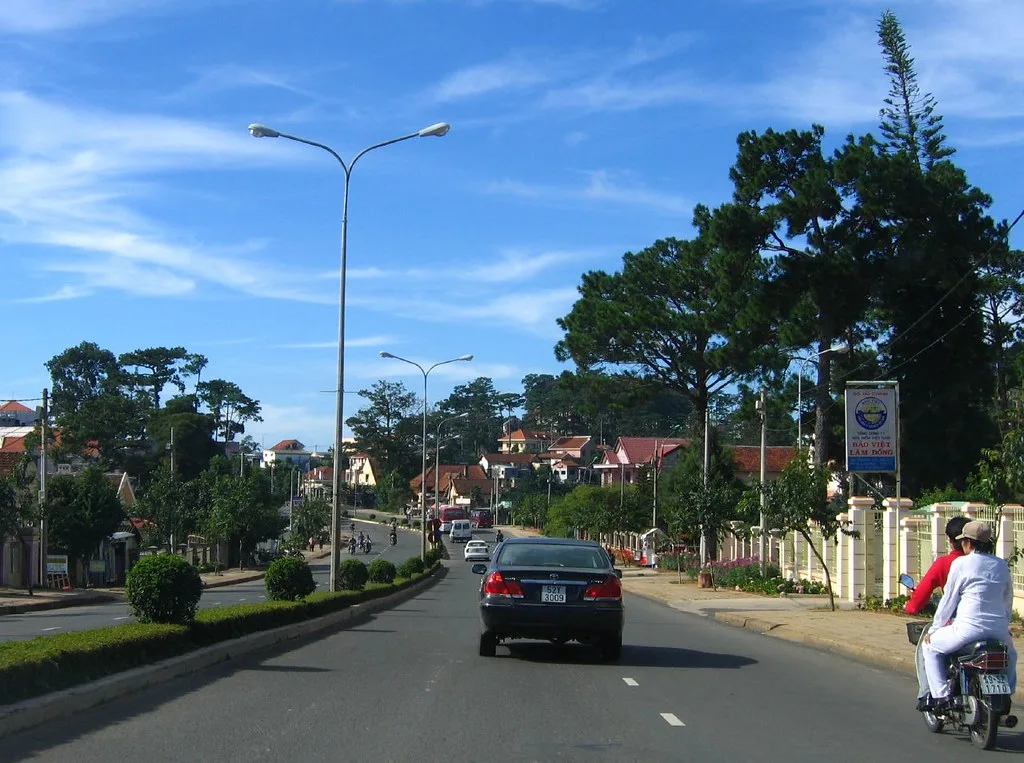
Photo: tuey via Flickr (CC BY 2.0)
Ho Chi Minh City to Da Lat Travel Guide
Compare flights, buses, and private cars from Ho Chi Minh City to Da Lat by cost, time, frequency, and comfort, with booking and packing tips.
On this page
Flying is fastest and most convenient: Vietnam Airlines and Vietjet depart 5–10 times daily from Tan Son Nhat, landing at Lien Khuong in roughly 1 hour, with one-way fares typically ₫800,000–₫1,200,000 ($33–$50 USD). For budget travelers with flexible schedules, sleeper buses from Mien Dong station cost ₫150,000–₫400,000 ($6–$17 USD) and take 7–8 hours of travel. This guide compares all viable options so you can book smartly based on your budget, schedule, and comfort needs.
Last updated July 2026. The 300-kilometer journey between Vietnam's bustling south coast and its cool mountain city offers multiple trade-offs in speed, cost, and experience. Whether you're escaping Saigon's tropical heat for Da Lat's refreshing climate or planning a quick weekend escape, choosing the right method depends on your priorities.
Da Lat sits at 1,500 meters elevation, keeping temperatures cool and pleasant year-round—typically 14–24°C (57–75°F) during the best season from November to March. The rainy season (April to October) brings afternoon showers but also lower hotel rates and fewer crowds, making it attractive for budget-conscious travelers. Most late arrivals find only night buses running after 10:30 p.m., so plan accordingly when booking late-afternoon or evening departures.
Key Takeaways
- Flying is fastest and most convenient: Vietnam Airlines and Vietjet depart 5–10 times daily from Tan Son Nhat, landing at Lien Khuong in roughly 1 hour, with one-way fares typically ₫800,000–₫1,200,000 ($33–$50 USD).
- For budget travelers with flexible schedules, sleeper buses from Mien Dong station cost ₫150,000–₫400,000 ($6–$17 USD) and take 7–8 hours of travel.
- This guide compares all viable options so you can book smartly based on your budget, schedule, and comfort needs.
- The 300-kilometer journey between Vietnam's bustling south coast and its cool mountain city offers multiple trade-offs in speed, cost, and experience.
Take the route offline
Free: the Ho Chi Minh City route notes
Where to base yourself and what it costs, a day-by-day route that avoids backtracking, real transfer times and fares, seasonal timing, and where it connects onward — condensed from our Ho Chi Minh City guides and made to take offline.
How Far is Da Lat from Ho Chi Minh?
The straight-line distance is about 300 kilometers (186 miles), but winding mountain roads and elevation changes make the actual journey longer than a map suggests. A nonstop flight is short, while buses and cars usually need most of a day. Da Lat is not connected to Vietnam's North–South main railway, so there is no direct passenger train from Ho Chi Minh City.
Most travelers face a clear decision matrix: speed versus cost, or comfort versus adventure. A flight saves time but costs more upfront; a bus saves money but requires an overnight commitment. Motorbikes and cars offer flexibility but demand more driving skill and physical stamina.
- Flight: Fastest in the air
- Flights leave Tan Son Nhat Airport (SGN) for Lien Khuong Airport (DLI), roughly 30 kilometers south of central Da Lat.
- Compare the full door-to-door time because check-in and the airport transfer can remove much of the apparent time saving.
- Schedules and fares change, so confirm them directly with the operating airline before booking.
- Bus or limousine van: Usually the lowest-cost practical option
- Several operators run day and overnight services, with different pickup points and seat layouts.
- Allow roughly 6–8 hours, then add a buffer for traffic, rest stops, and wet-season road conditions.
- Confirm the exact departure terminal, arrival point, luggage policy, and seat type before paying.
- Private car or motorbike: Most flexible
- A private car gives groups door-to-door travel and optional stops but normally costs more than a shared bus.
- The mountain approach is tiring in rain or fog. A motorbike is suitable only for experienced, properly licensed riders with appropriate insurance.
- Do not plan this route as a first motorbike ride in Vietnam.
- Train: No direct service
- Da Lat's surviving railway operates as a short tourist line to Trai Mat and does not connect to the North–South main line.
- Rail enthusiasts can take a main-line train to a coastal station and continue by road, but that is an indirect multi-leg journey rather than a Ho Chi Minh City–Da Lat train.
Compare Flight, Bus, Car, and Motorbike Options
Flying makes sense if you have limited time, value comfort, or want to minimize fatigue on arrival. Vietnam Airlines and Vietjet both serve this route with similar pricing and frequency. The catch: you'll pay a taxi or shuttle fee (usually ₫150,000–₫300,000 / $6–$12 USD) from Lien Khuong Airport to Da Lat city center, which isn't included in your ticket price.
Flying takes roughly 1 hour, but budget 40–60 minutes for road transfer from Lien Khuong Airport to central Da Lat, especially during rain or traffic. Arrange airport transportation before departing; late-night options become unreliable.
| Method | Typical Journey | Cost Pattern | Best For |
|---|---|---|---|
| Flight | Short flight plus check-in and 40–60 minute road transfer | Usually the highest shared-transport fare | Travelers prioritizing time in the air |
| Bus or limousine van | Roughly 6–8 hours, traffic dependent | Usually the lowest-cost direct option | Budget travelers |
| Private car | Most of a day with optional stops | Higher, but shareable by a group | Families, groups, and extra luggage |
| Motorbike | A demanding mountain-road ride | Rental, fuel, equipment, and insurance | Experienced and properly licensed riders only |
| Train | No direct service | Not applicable | Use road or air instead |
Buses and limousine vans are the usual economical choices. Seat layout, onboard amenities, pickup points, and luggage rules vary by operator, so compare the actual service rather than relying on a generic “sleeper” label.
Motorbike travel appeals to experienced riders, but rain, fog, road works, and unfamiliar mountain curves can turn the journey into a safety risk. Check licence and insurance validity before renting, use protective equipment, and choose a bus or car if this would be your first long ride in Vietnam.
There is no direct passenger train to Da Lat. The official destination overview explains that Da Lat's tracks no longer link to the national North–South railway; the remaining service is the local tourist train to Trai Mat. See Vietnam Tourism's Da Lat overview before planning a rail-based detour.
How to Book Your Tickets and Prepare for Travel
Booking in advance—typically 3–7 days before your trip—secures better prices and gives you time to arrange connections. During peak season (November to March), book even earlier; holidays can sell out domestic flights within days. Planning a broader Southern Vietnam itinerary helps you time this leg of your journey and avoid bottlenecks at bus stations.
For flights, visit Vietnam Airlines or Vietjet websites directly or use Google Flights to compare departure times and fares. For buses, Vexere and Sleeper Bus Vietnam are the most reliable booking platforms offering instant confirmation and customer support. For cars and motorbikes, work with your hotel concierge or an established rental company that provides international documentation.
Confirm your booking via email and keep proof on your phone and printed as backup. If booking a bus from a station rather than online, arrive 30–45 minutes early to secure your seat and stow luggage. Airport or station pickup can be arranged through your hotel; pre-booking saves the hassle of finding transport after arrival.
- Step 1: Decide which transport method fits your budget and timeline
- Flight is fastest (1 hour) but costs ₫800,000–₫1,200,000 ($33–$50 USD); best if you have little time and value comfort.
- Bus is cheapest (₫150,000–₫400,000 / $6–$17 USD) but takes 7–8 hours; ideal for budget travelers willing to overnight.
- Motorbike or car offers maximum flexibility but requires driving skill and costs ₫200,000–₫1,500,000 ($8–$62 USD) per day depending on vehicle type.
- Step 2: Book your ticket 3–7 days in advance for better pricing
- Use official airline websites (Vietnam Airlines, Vietjet) for flights or platforms like Vexere for buses to lock in rates early.
- Prices rise closer to departure, especially weekends and holidays; advance booking saves ₫100,000–₫300,000 ($4–$12 USD) on average.
- Verify the departure airport or station address since Ho Chi Minh has multiple bus stations serving different routes.
- Step 3: Arrange ground transportation from airport or bus station
- Pre-book a taxi, shuttle, or airport transfer through your hotel to avoid confusion after arrival; costs typically ₫150,000–₫300,000 ($6–$12 USD).
- Motorbike taxis (Grab, Be) are cheaper (₫80,000–₫150,000 / $3–$6 USD) but unsafe for large luggage; best for light travelers.
- At bus stations, use official taxi ranks outside rather than unofficial taxis; prices are metered and consistent.
- Step 4: Check weather and pack layers appropriate for Da Lat's cool climate
- Da Lat stays 14–24°C (57–75°F) year-round due to 1,500-meter elevation; warmer Ho Chi Minh clothing won't suffice.
- Pack a light sweater or fleece, a rain jacket for the rainy season (April–October), and comfortable walking shoes for hilly terrain.
- Sunscreen is essential even on cool days since elevation increases UV exposure; sunburn happens faster at altitude.
- Step 5: Prepare travel documents and notify your bank before departing
- Carry your passport, travel insurance documents, and hotel booking confirmation in case of emergency or unexpected delays.
- Notify your bank of travel dates so credit cards aren't flagged for fraud when used in Da Lat.
- Download your airline or bus booking confirmation to your phone as backup in case you lose your email or paper copy.
- Step 6: Plan your Da Lat activities and book accommodation in advance during peak season
- Peak season (November–March) fills hotels quickly; book accommodation and popular tours (flower festival, cable car, lake boat rides) at least 2–3 weeks ahead.
- Off-season (April–October) offers cheaper rates and shorter queues but expect afternoon rain and occasional fog that obscures mountain views.
- Research Da Lat attractions before arrival so you maximize daylight hours; many gardens and markets close by 5–6 p.m.
What to Pack and Prepare Before You Travel
Da Lat's high elevation and cool mountain climate demand different packing than tropical Ho Chi Minh City. Unlike the steamy coast, Da Lat requires layers, closed-toe shoes, and rain protection even during the dry season. Before leaving Ho Chi Minh, you can shop at Ben Thanh Market or local malls for any items you forget.
Da Lat's 1,500-meter elevation keeps temperatures 14–24°C (57–75°F) year-round. Pack layers, closed-toe shoes, and a rain jacket even during dry season. Most travelers underestimate how cold this feels after Ho Chi Minh's heat.
Most travelers underestimate how cold 14–24°C (57–75°F) feels after Saigon's heat; a sweater or light jacket is not optional. Rainy season travelers should pack a compact umbrella and water-resistant bag for electronics and documents. Comfortable walking shoes are essential since Da Lat is hilly; many attractions require 20–40 minutes of walking on uneven terrain.
- Clothing essentials for cool mountain weather
- Light sweater, fleece jacket, or long-sleeved shirt to layer over t-shirts and tank tops for warmth.
- Rain jacket or poncho (₫50,000–₫200,000 / $2–$8 USD) if traveling during rainy season April–October.
- Long pants or jeans for cooler evenings; shorts are fine during the day but bring one warmer option.
- Closed-toe walking shoes or sneakers for hilly streets and garden paths; sandals alone are not practical.
- Toiletries and personal care items to bring
- Sunscreen SPF 30+ since high elevation intensifies UV rays; reapply every 2 hours if outdoors all day.
- Prescription medications (2-week supply minimum) and common pain relievers since pharmacies may not stock your brand.
- Lip balm and hand moisturizer; cool, dry mountain air dries skin faster than coastal humidity.
- Feminine hygiene products if needed; availability varies in Da Lat and brands are limited.
- Electronics and documents to carry
- Passport and travel insurance documents in a waterproof pouch; airlines require original passport for check-in.
- Phone charger and portable power bank (₫150,000–₫400,000 / $6–$17 USD); Da Lat buses and guesthouses offer USB, but backup power is smart.
- Camera or smartphone for photos; Da Lat is one of Vietnam's most photographed cities with flower gardens and misty valleys.
- Travel adapters if your home country plug is different from Vietnam's two-pin or three-pin outlets.
- Money, cards, and valuables to secure
- ₫2,000,000–₫3,000,000 ($82–$123 USD) in cash for tips, small purchases, and emergencies when ATMs are closed.
- Credit or debit card from a major bank; notify your bank of travel dates so transactions aren't blocked for fraud.
- Keep valuables (passport, credit cards, extra cash) in a money belt or separate compartment from your day bag.
- Make copies of passport and visa pages; store digitally in email or cloud storage as backup if originals are lost.
- Luggage and travel accessories to consider
- Carry-on backpack or small suitcase (not oversized) for flights or buses; oversized luggage is charged extra on buses.
- Day pack (20–30 liters) for sightseeing in Da Lat to keep your hands free when walking gardens and markets.
- Travel insurance documents in a waterproof envelope; copy your policy number and emergency contact info.
- Plastic bags or dry-bag for electronics during rainy season; sudden afternoon showers can soak backpacks without protection.
Common Travel Problems and How to Solve Them
Travel between Ho Chi Minh and Da Lat is generally reliable, but unexpected delays and discomforts do happen. If your flight is delayed and you miss your connection, spend time in Ho Chi Minh's nightlife rather than stress. Knowing common issues and solutions helps you recover quickly and enjoy your trip.
- Flight delayed or cancelled
- Use the operating airline's app, desk, or hotline to confirm the options attached to your fare and the reason for disruption.
- Keep receipts and written notices if you plan to make an insurance claim; accommodation and rebooking rights depend on the circumstances and carrier policy.
- Compare the next flight with a road transfer before buying a replacement ticket.
- Bus disruption or uncomfortable conditions
- Contact the operator or booking platform directly about rebooking or refunds rather than assuming a universal entitlement.
- Confirm the seat layout before departure and keep medication you already use for motion sickness in your day bag.
- If driving appears unsafe, ask to stop at a staffed location and contact the operator or local emergency services.
- Unsure which option to book
- Compare the door-to-door schedule, cancellation terms, pickup address, and recent operator feedback.
- Book through the operator or an established platform and retain the confirmation offline.
- A private transfer can be worthwhile for a group, while a bus is usually the practical budget choice.
- Arriving late
- Tell your accommodation your expected arrival time and confirm late check-in before leaving Ho Chi Minh City.
- Arrange the Lien Khuong airport or bus-station transfer in advance when arriving after normal reception hours.
- Keep the property's Vietnamese address and phone number available offline.
- Illness or injury
- Tell the driver or crew immediately and contact your insurer's assistance line for an appropriate nearby facility.
- Ask your accommodation or emergency services for current local medical guidance rather than relying on a facility in another city.
- Keep policy details, allergies, prescriptions, and an emergency contact accessible offline.
- Weather concerns
- Check a current forecast and road alerts shortly before departure, especially in the wet season.
- Fog and rain can slow the mountain approach even when conditions in Ho Chi Minh City are clear.
- Carry a warm layer and rain protection in your day bag.
Getting from Lien Khuong Airport to Central Da Lat
Lien Khuong Airport is about 30 kilometers south of central Da Lat, so the one-hour flight does not represent the full door-to-door journey. Allow roughly 40–60 minutes for the road transfer, with extra time during rain or heavy traffic on the approach to the city. Before departure, confirm whether your accommodation provides an airport pickup and whether the quoted rate covers the entire vehicle or each passenger.
Metered taxis and pre-booked cars are the simplest choices for travelers carrying luggage. Use the official taxi queue outside the terminal, confirm that the meter is running, and show the driver your hotel’s Vietnamese address. App-based cars may also be available, but pickup points and driver supply can vary, particularly after the final evening flights.
If your hotel is near Da Lat Market, Xuan Huong Lake, or Hoa Binh Square, mention that landmark to reduce confusion because properties with similar names are common. Travelers arriving late should arrange transport before flying; public and shared transfer options become less dependable at night, while the airport is too far from central Da Lat to improvise cheaply on foot or by local city bus.
Official Planning Checks Before You Go
Use the official Vietnam Tourism Da Lat guide for destination context and the official Vietnam Tourism transport overview for a second official baseline. Recheck any opening hour, fare, timetable, closure, access rule, weather risk, or booking condition with the responsible operator shortly before travel; an official destination overview is not a live inventory or service guarantee.
Frequently Asked Questions
When is the best season to visit Da Lat?
Da Lat is cooler than Ho Chi Minh City throughout the year. Drier conditions are more common from roughly November to March, while the wetter months can bring afternoon rain and slower mountain-road journeys. Check a current forecast before departure.
What are the cheapest flights from Ho Chi Minh to Da Lat?
There is no permanently cheapest airline or fare. Compare the operating airlines for your exact date and include baggage, airport transfers, and change conditions in the total before booking.
What's the difference between a sleeper bus and a regular bus?
Seat layout and amenities vary by operator. A sleeper service uses reclined berths, while limousine vans and seated coaches use different chair configurations. Confirm photos, pickup points, luggage rules, and the actual vehicle type before paying.
What should I do if my flight is cancelled?
Contact the operating airline through its app, desk, or hotline and ask which rebooking or refund options apply to your fare and the disruption. Keep written notices and receipts for any insurance claim. Compare the next available flight with a road transfer before buying a replacement ticket.
Can I rent a car or motorbike for the journey?
A private car with a driver is a practical option for a group. A motorbike is appropriate only for experienced riders whose licence and insurance are valid in Vietnam; the mountain approach can be hazardous in rain or fog.
Is there a train from Ho Chi Minh to Da Lat?
No direct passenger train connects Ho Chi Minh City with Da Lat. Da Lat's operational railway is the short tourist service to Trai Mat and does not join the North–South main line.
Traveling from Ho Chi Minh City to Da Lat is straightforward once you choose between a short flight with airport transfers, a direct bus or van, and a private road transfer. Compare the complete door-to-door time and cancellation conditions, arrange your arrival transport, and pack a warm layer for Da Lat's cooler highland climate.
There is no direct passenger train. Whether you fly or travel by road, allow a buffer for traffic or weather and keep the booking details available offline.
Take the route offline
Free: the Ho Chi Minh City route notes
Where to base yourself and what it costs, a day-by-day route that avoids backtracking, real transfer times and fares, seasonal timing, and where it connects onward — condensed from our Ho Chi Minh City guides and made to take offline.
Keep unfolding Vietnam
Continue along the route
Three nearby guides for the next decision in your trip.


