

Photo: dcpetit via Flickr (CC BY-SA 2.0)
Marble Mountains Guide Travel Guide
Plan your Marble Mountains visit with cave guides, temple routes, practical costs, timing tips, and best transportation from Da Nang.
On this page
Marble Mountains (Ngu Hanh Son in Vietnamese) are five dramatic limestone peaks rising from coastal flatlands just 9 km south of Da Nang. This cluster of ancient Buddhist temples, hidden caves, and spiritual shrines draws thousands of international visitors each year seeking stunning bay views and cultural immersion. Last updated July 2026.
Key Takeaways
- Thuy Son is the main visitor peak, combining caves, pagodas, steep stairs, viewpoints, and an optional elevator.
- Wear shoes with reliable grip and allow more time after rain because stone steps and cave floors can become slippery.
- Check current ticket categories, access restrictions, and opening hours with the site authority before visiting.
Take the route offline
Free: the Da Nang route notes
Where to base yourself and what it costs, a day-by-day route that avoids backtracking, real transfer times and fares, seasonal timing, and where it connects onward — condensed from our Da Nang guides and made to take offline.
What Makes Marble Mountains Special
The Marble Mountains stand as one of Da Nang's most iconic natural and cultural destinations. The five peaks—Thuy Son, Moc Son, Kim Son, Hoa Son, and Tho Son—blend geological drama with deep spiritual significance. Buddhist altars and ancient pagodas dot the mountains, creating a journey that mixes outdoor adventure with meditative exploration of centuries-old worship sites.
What sets these mountains apart is their accessibility and variety packed into one compact area. You can climb steep stone staircases carved from solid rock, explore mysterious cave systems, visit temples dating back centuries, or simply enjoy panoramic coastal views. The mix appeals to active hikers, families with children, cultural travelers seeking spiritual depth, and photographers hunting compelling compositions and natural light.
The surrounding Non Nuoc Stone Craft Village adds another layer of interest to any visit. Artisans have carved marble sculptures here for generations, filling shops with Buddha statues, decorative bowls, and architectural elements. Morning arrivals at 7 AM reward early risers with cooler air, uncrowded mountain paths, and dramatically shorter elevator queues—a local insight that transforms your experience from rushed to reflective.
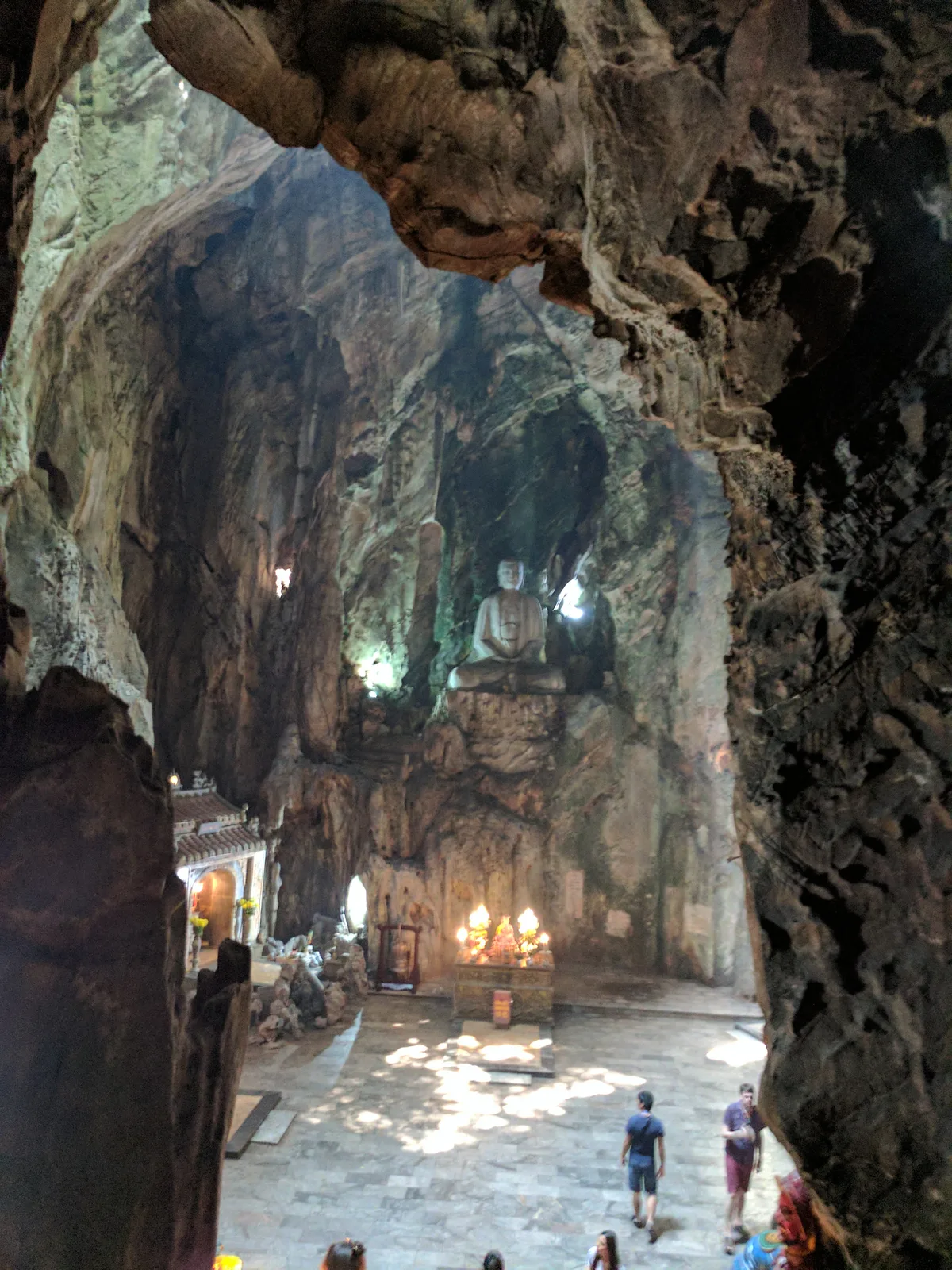
Must-See Attractions and Caves
Thuy Son (Water Mountain) forms the main climbing area and hosts multiple temples and Buddhist shrines throughout its elevations. The most recognizable feature is the stone staircase carved directly into the rock face—steep, long, but manageable for anyone with basic cardiovascular fitness. This central peak rewards climbers with the Marble Mountains' highest vantage point overlooking Da Nang Bay where container ships and fishing boats dot the horizon.
Five named caves await exploration, each offering distinct chambers, spiritual significance, and physical challenges requiring different fitness levels. Huyen Khong Sanctuary Cave, the largest and most visited, features natural ceiling openings that pour sunlight directly onto Buddha altars and devotional areas below. Tang Chon, Van Thong, Linh Nham, and Hoa Nghiem caves each offer unique chamber configurations, varying access difficulty, and different spiritual artifacts that reflect centuries of pilgrimage.
Key temples to prioritize include Xa Loi Tower, Linh Ung Pagoda, and the interconnected trio of Tam Thai, Ton Tam, and Tu Tam Pagodas. Linh Ung Pagoda sits at higher elevation and offers particularly dramatic coastal views that shift throughout the day with changing light angles. Most temples remain open and welcoming throughout your visit, allowing flexible routing based on your energy level, photography interests, and spiritual inclinations.
The Am Phu Cave sits structurally below the main mountain complex and operates independently with separate entrance fees and ground-level access routes. Inside, a completely paved path winds through interconnected chambers filled with Buddhist sculpture, offering altars, and devotional items accumulated over centuries of worship. The cave experience feels more intimate and meditative than the outdoor mountain climbing, attracting visitors seeking quieter spiritual reflection away from open-air crowds.
- Huyen Khong Sanctuary Cave
- Type: Largest cave with natural ceiling skylight
- Access: Via main staircase on Thuy Son mountain
- Time needed: 15-20 minutes full exploration
- Features: Multiple Buddha altars, dramatic natural lighting
- Xa Loi Tower
- Type: Ancient pagoda structure on mountainside
- Access: Mid-mountain elevation on marked trail
- Best for: Historical interest and architectural photography
- Views: Coastal landscape, city skyline, stone village
- Linh Ung Pagoda
- Type: Active Buddhist temple at peak elevation
- Access: Highest elevation requiring more climbing effort
- Views: Most panoramic coastal vistas in region
- Best time: Sunset for golden-hour photography angles
- Tang Chon Cave
- Type: Medium cave with natural chamber formations
- Access: Multiple entry points from upper trails
- Features: Stone formations and smaller Buddha altars
- Difficulty: Moderate climbing, some tight passages
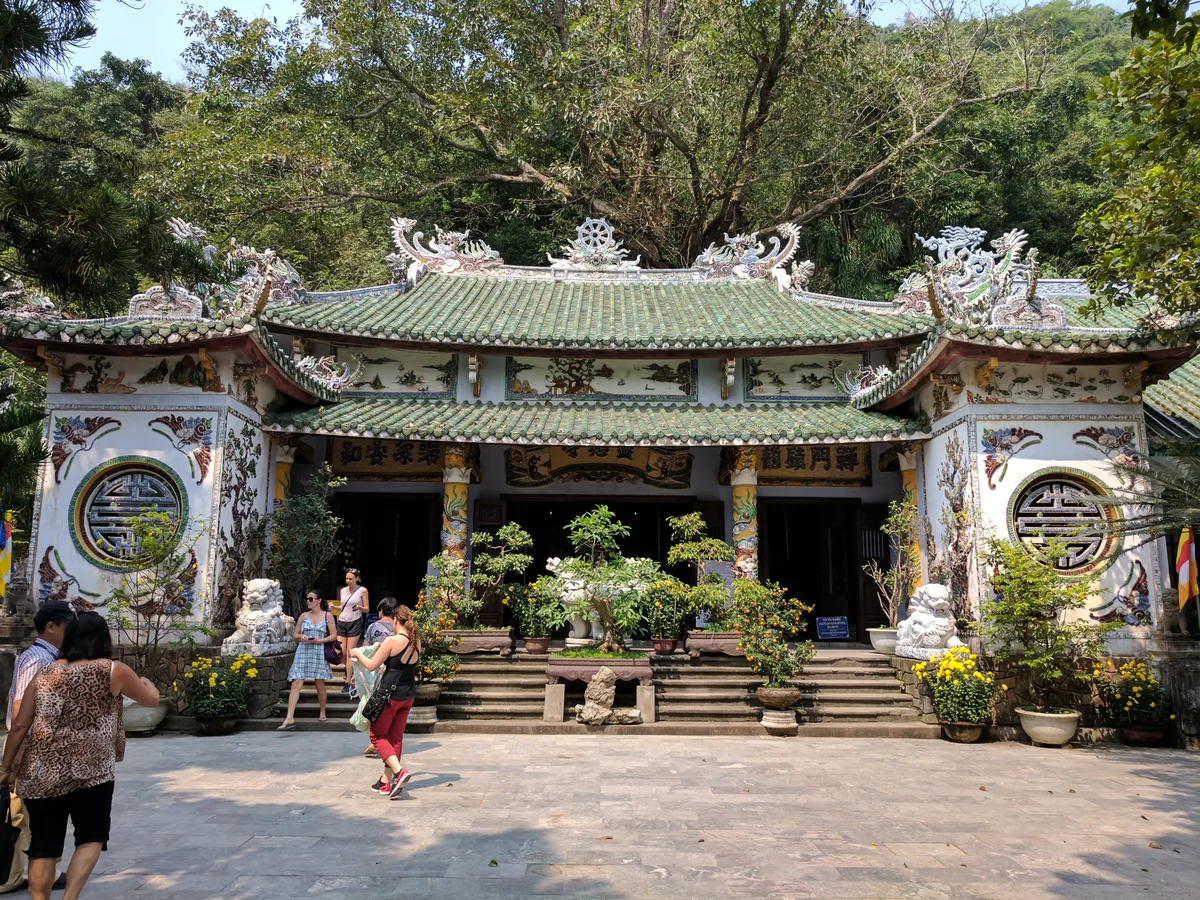
Visiting Am Phu Cave
Am Phu Cave differs significantly from the mountain caves in access point, atmospheric conditions, and overall logistics. Located at ground level beneath the main Marble Mountains structure, this cave requires a separate 20,000 VND entrance fee ($1 USD) paid independently from the mountain ticket. The cave entrance sits to the left of the main mountain elevator, making it easy to add as either a pre-climb or post-climb activity without backtracking.
Am Phu Cave features ground-level access and a completely paved walkway, making it suitable for visitors with limited climbing ability or joint issues who find main mountain caves challenging.
Inside, you'll navigate a completely paved walkway throughout all accessible chambers—an essential feature because the floor stays perpetually wet and slippery. Dripping water from the cave ceiling keeps humidity levels high, so expect to feel moisture and possibly notice damp patches on clothing by the end. Good electric lighting throughout makes navigation straightforward even for first-time cave explorers, though the narrow passages aren't suitable for anyone experiencing claustrophobia.
The cave chambers hold Buddha statues, offering altars, religious sculptures, and spiritual artwork accumulated over centuries of pilgrimage and worship. Most visitors spend 20–30 minutes walking through all accessible chambers at a relaxed pace, taking photos and observing devotional practices of local pilgrims. The experience feels more intimate, spiritual, and introspective than the outdoor mountain exploration, creating a different energy that attracts visitors seeking quieter reflection.
A common time-saving strategy is to skip Am Phu Cave if your schedule runs tight, since Huyen Khong and other mountain caves offer similar spiritual experiences. However, the ground-level access makes this cave perfect for visitors with limited climbing ability, joint issues, or energy reserves for extensive stair-climbing. Combine it with the mountain visit when planning a full half-day itinerary (3-4 hours total) that explores both attractions comprehensively without exhaustion.
Planning Your Visit: Hours, Costs, and Physical Demands
Timing your arrival correctly transforms the experience from crowded and challenging to contemplative and manageable. Aim to arrive between 7:00 AM and 8:00 AM when mountain air feels cool and climbs remain pleasant without excessive heat exhaustion. Later arrivals (after 9 AM) mean longer elevator queues (afternoon waits of 30+ minutes by 2 PM), hotter climbing conditions, and crowds on narrow staircase sections.
Arrive between 7–8 AM for cooler mountain air, uncrowded paths, and minimal elevator queues. Afternoon arrivals after 9 AM mean longer lines, hotter conditions, and crowded staircases.
| Season | Dates | Weather Conditions | Best For |
|---|---|---|---|
| Dry season | March–May | Cool temperatures, minimal rain | Most pleasant climbing weather |
| Hot season | June–August | Heat intensity, occasional afternoon rain | Heat-tolerant travelers |
| Monsoon arrival | September onwards | Cooler temperatures, increased monsoon risk | Weather-flexible travelers |
| Peak season | November–February | Clearest skies, mildest conditions | Most comfortable hiking |
The Marble Mountains officially open at 7:00 AM and close at 5:30 PM daily without seasonal variation. Am Phu Cave opens at the same 7:00 AM start time but closes 30 minutes earlier at 5:00 PM, and the ticket booth closes around 5:00 PM. This timing detail matters if you want to combine both attractions—plan accordingly so you finish Am Phu Cave before its 5:00 PM gate closure.
Entrance fees remain straightforward and budget-friendly: 40,000 VND (approximately $2 USD) for mountain access, 20,000 VND for Am Phu Cave ($1 USD). An optional elevator ride costs 15,000 VND ($0.75 USD) per trip, typically used for ascending and strategically recommended for saving leg energy for the descent. Total cost for a comprehensive day exploring both attractions remains under $5 USD total, ranking among Vietnam's most affordable major attractions per experience value.
Physical demands deserve honest self-assessment before your visit to avoid disappointment or injury on-site. You'll encounter hundreds of steep stone stairs carved from solid rock, uneven surfaces, and numerous sections without handrails or safety equipment. Bring comfortable, well-fitting hiking shoes with excellent ankle support—flip-flops and fashion sneakers without proper arch support lead to tired feet, slipping hazards, and regrettable injuries.
The dry season (March through May) offers the most pleasant climbing weather with cool temperatures and minimal rain. June to August brings heat intensity and occasional afternoon rain showers but remains visitable for heat-tolerant travelers. September onwards sees cooler temperatures returning but increased monsoon risk; November to February delivers the clearest skies, mildest conditions, and most comfortable hiking overall.
- Pack genuine hiking shoes with ankle support
- Avoid: flip-flops, fashion sneakers, sandals
- Best choice: trail-specific boots or hiking shoes with treads
- Why: Stairs are steep, many sections lack handrails
- Wear breathable, modest clothing for temple respect
- Avoid: dresses, shorts above knee, revealing tops
- Best choice: lightweight pants or capris, lightweight t-shirt
- Why: Climbing generates perspiration, temples expect respectful dress
- Bring adequate water and sun protection
- Type: 1.5-2 liters of water minimum per person
- Also pack: sunscreen SPF 30+, wide-brimmed hat, sunglasses
- Note: Tree shade is limited above mid-elevation areas
- Arrive before 8:00 AM for optimal conditions
- Opening time: 7:00 AM daily (no exceptions)
- Why: Avoid crowds, elevator lines, and peak heat
- Elevator closes: approximately 5:00 PM daily
Getting to Marble Mountains from Da Nang and Hoi An
The Marble Mountains sit 9 km south of Da Nang city center, reachable in roughly 20 minutes by taxi or ride-share application. Using the Grab app (Southeast Asia's equivalent of Uber) offers the most convenient, transparent pricing, and safest option for independent travelers unfamiliar with Vietnamese taxi systems. Expect to pay 50,000–80,000 VND ($2–3 USD) depending on traffic congestion, exact pickup location, and time of day departure.

For travelers based in Hoi An, the Marble Mountains sit approximately 30 minutes south, making an ideal half-day side trip from accommodation or tour activities. A Grab ride from Hoi An Old Town costs roughly 100,000–120,000 VND ($4–5 USD), representing reasonable value for transportation comfort and safety. Many travelers combine a Marble Mountains morning visit with Hoi An Old Town afternoon exploration in a single jam-packed day using two separate Grab trips.
If you're exploring Central Vietnam itineraries spanning multiple days across the region, Marble Mountains fit naturally into a Da Nang-based day without excessive travel. The proximity to accommodations throughout Da Nang means most hotels sit just 15–20 minutes away, allowing flexible scheduling and spontaneous decisions.
Scooter rental options exist throughout Da Nang, but traffic congestion, aggressive Vietnamese driving patterns, and left-hand traffic make them risky for unfamiliar travelers. If you do rent a scooter, expect to negotiate parking fees at the mountain base with attendants (locals pay 5,000–10,000 VND; tourists often face higher requests). Parking attendants typically expect a small tip (5,000 VND) when you retrieve your scooter, a custom worth respecting even if the initial fee felt high.
Guided tour alternatives include half-day and full-day options booked through Hoi An hotels, Da Nang travel agencies, or international online platforms like Viator and Klook. Tours typically include round-trip transportation, entrance fees, and a Vietnamese-speaking guide providing historical and cultural context, costing $20–40 USD per person. This option suits travelers uncomfortable navigating independently, preferring deeper historical interpretation, or wanting to avoid transportation logistics entirely.
Nearby Experiences and What Else to Do in Da Nang
The Non Nuoc Stone Craft Village surrounds the Marble Mountains, making it a natural and seamless add-on to your itinerary without extra travel. Dozens of marble carving shops line the main road, displaying Buddha statues, decorative bowls, decorative urns, and architectural elements in various stages of completion. Most shops welcome browsers even if you're not purchasing; watching artisans actively carve marble in open workshops is completely free and provides valuable insight into centuries-old Vietnamese craftsmanship.
Budget-conscious travelers can combine a Marble Mountains morning visit with beach time at nearby My Khe Beach without excessive scheduling pressure. The beach sits just north of the mountains and offers free access, lifeguard stations, and seaside restaurants serving affordable seafood lunches. A Grab between the mountains and beach costs under $1 USD, making the pairing an economical full-day itinerary for travelers seeking nature plus culture plus relaxation.
The Lady Buddha Pagoda (another name for Linh Ung Pagoda) sits at the highest elevated point, offering the most dramatic sunset views across Da Nang Bay. For culture seekers willing to extend their itinerary, My Son Sanctuary lies approximately 40 kilometers west representing Vietnam's largest and most impressive Hindu temple complex from the Cham era. This full-day option pairs beautifully with Marble Mountains for travelers spending 3+ days in Central Vietnam who prioritize historical and cultural immersion over beach time.
Water sports enthusiasts can book kayaking, paddleboarding, jet-skiing, or windsurfing afternoon sessions from Da Nang's beachfront clubs and resorts. Evening activities include sunset river cruises on the Han River visible from higher mountain elevations, offering a completely different perspective of the city. These extensions create valuable flexibility for different energy levels, interests, and weather conditions within a single comprehensive day exploring Da Nang and its surroundings.
A Practical Walking Route Through Thuy Son
To see Thuy Son efficiently without repeatedly climbing the same stairs, enter at Gate 2 and take the elevator or adjacent staircase to the Xa Loi Tower level. Visit Linh Ung Pagoda and Tang Chon Cave first, then follow the signs uphill toward Van Thong Cave. Van Thong has a confined, uneven upper passage, so travelers uncomfortable with tight spaces can view the main chamber and return by the entrance.
Continue across the mountain toward Tam Thai Pagoda, stopping at the viewpoints when visibility is clear. Near Tam Thai, enter Hoa Nghiem Cave before proceeding into the larger Huyen Khong Cave, where openings in the limestone ceiling illuminate the shrines below. These are active religious spaces; keep voices low, avoid blocking worshippers, and do not touch statues or offerings.
Finish by descending the long stone staircase at Gate 1. This one-way route covers the principal pagodas and caves while limiting backtracking. Allow at least two hours, and photograph the site map near the entrance because smaller junctions can be confusing and mobile reception inside the caves may be unreliable.
Official Planning Checks Before You Go
Use the Vietnam Tourism trip-planning portal for destination context and the official Vietnam Tourism transport overview for a second official baseline. Recheck any opening hour, fare, timetable, closure, access rule, weather risk, or booking condition with the responsible operator shortly before travel; an official destination overview is not a live inventory or service guarantee.
Frequently Asked Questions
Do I need a guide to explore Marble Mountains independently?
Independent exploration works well since main paths are clearly marked with handrails in key climbing sections and temples have signs. However, a local guide adds invaluable historical context, spiritual significance explanations, and insider tips unknown to casual visitors. Tours from Hoi An or Da Nang ($20–40 USD) include transportation, entrance fees, and interpretation—ideal for first-time visitors or those uncomfortable navigating solo with language barriers.
How much time should I plan for a Marble Mountains visit?
Budget minimum 2 hours for the main mountains alone allowing proper temple exploration and cave visits. Add 20–30 minutes if visiting Am Phu Cave. A full half-day itinerary including the Non Nuoc Stone Village, rest breaks, and photographs typically totals 3–4 hours. Starting early (7-8 AM) maximizes comfort while keeping afternoon schedules open for beach time or other activities.
Is climbing Marble Mountain difficult for average fitness levels?
The climb is moderately challenging with hundreds of steep stone stairs requiring reasonable fitness, stable knees, and no significant joint issues. Many sections lack handrails, increasing mental engagement with safety. However, the optional elevator ($0.75 USD) takes you partway up, reducing climbing demands significantly. Recommended strategy: take the elevator up to save energy, then descend via stairs to protect knees—a smart approach used by locals and experienced travelers.
Is morning or afternoon better for visiting Marble Mountains?
Morning visits (7–8 AM start) offer cooler air, completely uncrowded paths, short or nonexistent elevator lines, and best natural light for photography. Afternoon arrivals mean hotter climbing conditions, visible crowds on staircases, and 30+ minute elevator waits particularly after 2 PM. If sunset photography interests you, arrive by mid-afternoon (2-3 PM) to secure high-elevation positions before light fades below the horizon.
Can people with mobility issues access Marble Mountains?
Unfortunately, the site isn't wheelchair accessible and isn't suitable for anyone with significant mobility limitations or joint issues. Hundreds of stairs and uneven terrain exclude most people with walking difficulties entirely. The elevator reaches a lower level but doesn't eliminate stair-climbing requirements or steep terrain challenges. Am Phu Cave's paved path works better for limited mobility, though still challenging. Contact your hotel in advance for honest assessment of your specific physical needs and constraints.
Marble Mountains combine natural drama, spiritual depth, and practical accessibility that makes them essential for any serious Da Nang or Hoi An visitor. The distinctive blend of ancient temples, mysterious caves, dramatic clifftop viewpoints, and panoramic bay views rewards both brief visits and extended exploration. Whether you arrive early seeking solitude or join afternoon crowds for social energy, the site delivers the authentic cultural immersion and outdoor adventure that defines memorable Central Vietnam travel experiences.
Start early, wear proper hiking footwear, pack plenty of water, and embrace the steep climbing as core part of the authentic mountain pilgrimage experience. The reasonable entrance fees (under $5 total), proximity to accommodations (9-30 km), and efficient half-day timing make Marble Mountains ideal for travelers on any schedule or budget constraint. Book your Grab ride, set your alarm for 7 AM, and discover why this dramatic limestone cluster has captivated Vietnamese Buddhists and international travelers for generations.
Take the route offline
Free: the Da Nang route notes
Where to base yourself and what it costs, a day-by-day route that avoids backtracking, real transfer times and fares, seasonal timing, and where it connects onward — condensed from our Da Nang guides and made to take offline.
Keep unfolding Vietnam
Continue along the route
Three nearby guides for the next decision in your trip.


