

Hue Travel Planning Hub: Complete Guide
Use this Hue travel planning hub to compare transport, neighborhoods, and itineraries for a smoother central Vietnam trip. Start planning today.
On this page
Hue sits at the center of any central Vietnam route, linking Hanoi, Da Nang, and Hoi An by rail, road, and air. This Hue travel planning hub breaks down transport options, neighborhoods, timing, and itinerary choices before you book. You will find practical costs, journey times, and links to deeper itinerary guides throughout this hub. Last updated July 2026.
Many travelers treat Hue as a quick stopover between Hoi An and the north, but that often shortchanges the city. The former imperial capital rewards travelers who plan around its monuments, river geography, and seasonal weather patterns. This guide focuses on decisions: where to stay, how many days to allocate, and which routes connect Hue to nearby destinations.
This guide works as a planning hub rather than a simple sightseeing list, pointing you toward deeper route and transport guides as needed. Use the sections below in order, or jump straight to the part that matches your current planning stage. Either way, you will leave with clear next steps for booking transport, choosing a base, and setting a realistic pace.
Key Takeaways
- Hue sits at the center of any central Vietnam route, linking Hanoi, Da Nang, and Hoi An by rail, road, and air.
- This Hue travel planning hub breaks down transport options, neighborhoods, timing, and itinerary choices before you book.
- You will find practical costs, journey times, and links to deeper itinerary guides throughout this hub.
- Many travelers treat Hue as a quick stopover between Hoi An and the north, but that often shortchanges the city.
Take the route offline
Free: the Hue route notes
Where to base yourself and what it costs, a day-by-day route that avoids backtracking, real transfer times and fares, seasonal timing, and where it connects onward — condensed from our Hue guides and made to take offline.
Hue Travel Planning Hub: Getting There
Hue connects to the rest of Vietnam through Phu Bai International Airport, the reunification rail line, and National Highway 1A. Most travelers arrive by air from Hanoi or Ho Chi Minh City, or overland from Da Nang and Hoi An. Phu Bai Airport sits about 15 kilometers south of the city center, roughly a 20 to 25 minute taxi ride. Domestic carriers run several daily flights connecting Hue to Vietnam's major hubs.
By car, the trip from Da Nang to Hue takes around 2 hours along the coastal highway and Hai Van Pass. Traveling from Hoi An adds roughly an hour, bringing that journey closer to 3 hours door to door. Travelers based in Lang Co can expect a shorter ride of about 90 minutes to 2 hours into central Hue. Compare seat costs and schedules on the Hue to Hoi An transport routes before booking a private car or bus.
The reunification railway also links Hue to Da Nang through a scenic coastal stretch near the Hai Van Pass. Open-tour buses run multiple daily departures between Hue, Da Nang, and Hoi An at lower cost than private transfers. If your route continues through Da Nang first, check Da Nang to Hoi An transport options to sequence the leg efficiently. Booking a seat two to three days ahead usually secures better pricing during peak season.
Once in Hue, most tourist sites sit within a 15 to 20 minute drive of one another, based on prior visitor reports. A private car with driver can run about US$15 per hour, or roughly 2,460,000 Vietnamese dong for a full day of touring. Ride-hailing apps and metered taxis also cover the city center and nearby tombs at lower cost for shorter hops. Confirm current rates directly with drivers or apps, since fuel prices shift these numbers from year to year.
Grab and traditional taxis both operate at Phu Bai Airport, with metered fares typically cheaper than fixed hotel pickups. Pre-booking an airport transfer through your hotel adds convenience for late-night arrivals. Domestic flight schedules change seasonally, so confirm exact departure times a few days before travel.
Where to Stay in Hue: Neighborhoods and Costs
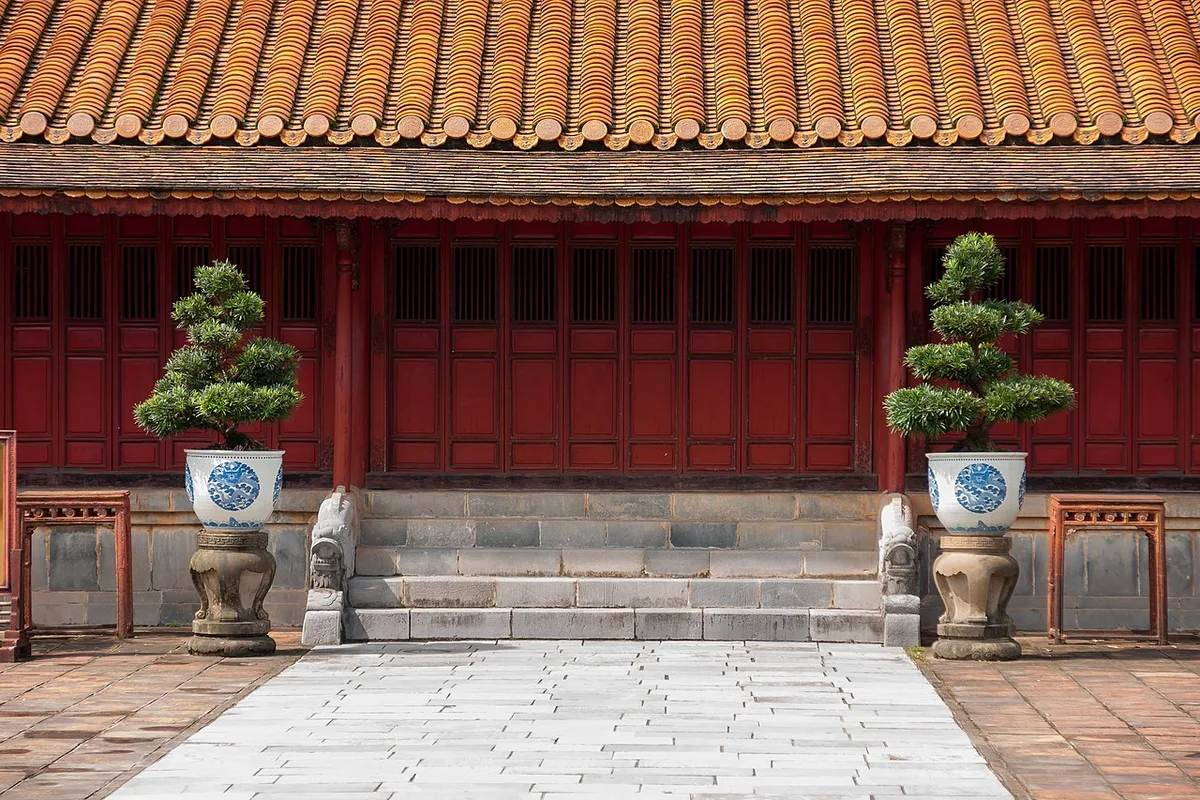
Hue splits into two main areas: the old city north of the Perfume River and the newer district to the south. The old city sits closest to the Citadel, markets, and most riverside restaurants. It suits travelers who want walkable access to monuments and nightlife within a short stroll. The newer southern district feels more residential, with quieter streets and mid-range hotels.
Book accommodation at least two to three weeks ahead during festival season or major holidays. Hotel rates climb noticeably around Tet and during the biennial Hue Festival, so advance planning matters.
| Neighborhood | Best For | Distance to Sights | Price Range | Trade-off |
|---|---|---|---|---|
| Old City (north of Perfume River) | Walkable Citadel access | 5-10 minute walk | US$15-60 per night | Busier streets, more noise |
| Newer district (south of river) | Quieter, modern stays | 10-15 minute ride | US$25-80 per night | Less walkable to monuments |
| Lang Co coastal base | Beach-and-city combination trips | 60-90 minute drive | US$40-150 per night | Longer transfer into Hue |

Budget guesthouses in the old city typically run around US$40 per night for a private room with breakfast. Mid-range boutique stays and homestays often add river views or garden courtyards for a modest premium. The Purple Hue Central Hub sits within easy walking distance of the Citadel gates. Luxury travelers can expect rates well over US$200 per night at former colonial-era properties near the river.
Three base options cover most travel styles, from backpacker budgets to coastal getaways. Compare distance, price, and trade-offs below before locking in a neighborhood.
Book accommodation at least two to three weeks ahead during festival season or major holidays. Hotel rates in Hue climb noticeably around Tet and during the biennial Hue Festival. Shoulder-season travelers usually find more flexibility and lower nightly rates.
Solo travelers and backpackers gravitate toward hostels clustered near Le Loi Street and the central market. Families often prefer serviced apartments or larger rooms in the newer district for extra space. Couples celebrating a special trip sometimes splurge on a riverside boutique stay for one night. Matching room type to travel style avoids paying for space or amenities you will not use.
- Old City north of Perfume River
- Best for: walkable Citadel access
- Distance to sights: 5-10 minute walk
- Price range: US$15-60 per night
- Trade-off: busier streets, more noise
- Newer district south of the river
- Best for: quieter, modern stays
- Distance to sights: 10-15 minute ride
- Price range: US$25-80 per night
- Trade-off: less walkable to monuments
- Lang Co coastal base
- Best for: beach-and-city combination trips
- Distance to sights: 60-90 minute drive
- Price range: US$40-150 per night
- Trade-off: longer transfer into Hue
Must-See Hue Attractions and Time to Budget
Hue's historic core centers on the Imperial Citadel, part of the UNESCO-listed complex of monuments in Hue. Inside its walls, the Forbidden Purple City and remaining palace halls trace the Nguyen dynasty's history from 1802 to 1945. Plan at least 1 to 2 hours to explore the Citadel grounds and its main monuments. Early morning visits help you avoid both crowds and the midday heat.
Avoid fitting the Citadel, three tombs, and a boat trip into one afternoon. That pace skips meals and rest breaks. Spread sightseeing across 2 full days instead to enjoy each monument.
Beyond the Citadel, the royal tombs scattered south of the city hold some of Hue's most detailed architecture. The Khai Dinh Tomb rewards at least 30 minutes for its mosaic-covered interior and hillside setting. Thien Mu Pagoda, perched above the Perfume River, adds another notable stop for most day plans. Grouping two or three tombs with the pagoda usually fills a comfortable half-day route.
Five stops anchor most Hue sightseeing days, each with a different time commitment. Use the list below to budget the day before adding meals or rest breaks.
A common planning mistake is trying to fit the Citadel, three tombs, and a river cruise into one afternoon. That pace leaves little room for meals or rest breaks between stops. Families with young children often do better pairing one tomb with the Citadel and saving the rest for a second day. Check the Hue 2-day itinerary for a paced breakdown that avoids this rush.
Pairing sightseeing with a meal stop helps break up a long day of walking between monuments. Local cooking classes near the Citadel teach traditional Hue dishes in a hands-on afternoon session. Booking a class alongside a tomb visit turns one stop into a fuller half-day experience. Confirm class timing in advance, since sessions often run on a fixed daily schedule.
- Imperial Citadel and Forbidden Purple City
- Time: 1 to 2 hours minimum
- Location: north bank, old city
- Cost: paid entry ticket required
- Tip: visit early to avoid heat
- Khai Dinh Tomb hillside mausoleum
- Time: 30 minutes minimum
- Location: south of city center
- Known for: mosaic interior details
- Best for: architecture-focused travelers
- Thien Mu Pagoda river viewpoint
- Time: 30 to 45 minutes
- Location: Perfume River, north bank
- Known for: seven-story tower views
- Pair with: river boat trip
- Dong Ba Market local food stalls
- Time: 45 minutes to 1 hour
- Location: central old city, riverside
- Best for: street food and souvenirs
- Tip: go early for freshest stalls
- Perfume River boat trip
- Time: 1 hour round trip
- Location: dragon boat piers, Le Loi Street
- Cost: shared boat, low per-person rate
- Best for: sunset or evening rides
Building a Hue Itinerary: Day-by-Day Options
Most travelers allocate 2 full days to Hue before continuing toward Hoi An or Da Nang. That window covers the Citadel, two tombs, and one evening along the Perfume River. Travelers with deeper interest in imperial history often extend the stay to 3 days. A shorter half-day stop works only as a rushed add-on to a longer central Vietnam route.

A structured day-by-day plan maps attraction order, meal breaks, and transfer timing without guesswork. Travelers connecting Hue with Hoi An and Da Nang can follow a broader Central Vietnam Itinerary: A 10-Day Route Guide for full route sequencing. That approach treats Hue as one leg of a longer central coast trip rather than an isolated stop. It also helps balance driving time against sightseeing time across multiple cities.
Travelers with 10 days or more can slot Hue into a longer loop through Hanoi, Ninh Binh, and the south-central coast. The central Vietnam 10-day itinerary shows how Hue fits between northern and southern legs. This works best for travelers who prefer fewer transit days and longer stays per city. Shorter trips of 5 to 7 days usually skip the far north and focus purely on the central coast.
Travelers on a tight 4 or 5 day central coast trip sometimes need to choose between Hue and extra Hoi An time. History-focused travelers should protect at least 2 full days for Hue regardless of total trip length. Beach-focused travelers can trim Hue to a single day and prioritize Hoi An or Da Nang instead. Matching the split to your interests avoids an itinerary that feels rushed everywhere.
Long stretches of temple and tomb visits can feel repetitive without a planned break. Building in one relaxed morning, such as a market stroll or river walk, helps balance the pace. This mix keeps history-heavy days from feeling rushed or overwhelming for the whole group.
Hue Throughout the Year: Weather and Festivals
Hue's climate runs warm most of the year, with daily temperatures averaging around 30 degrees Celsius, or 86 Fahrenheit. Even the hottest stretch of the day, typically around 2 in the afternoon, rarely climbs past 33 degrees Celsius, or 91 Fahrenheit. Humidity stays high through the summer months, so midday breaks between sightseeing stops help. Pack light, breathable clothing and sun protection regardless of season.
Central Vietnam's wet season runs roughly from September through January, bringing the heaviest rain to Hue. Flooding can occasionally disrupt road and rail links during peak rainy months, so build in flexible transfer days. The dry season from February through August offers steadier conditions for walking tours and boat trips. March through May often balances comfortable temperatures with lower rainfall risk.
Hue hosts a recurring festival of traditional arts and royal court performances, typically scheduled every two years. Event dates and venues shift between editions, so confirm current listings before building a trip around them. Review the 2024 Hue festivals schedule for a sense of past programming and typical event structure. Hotel rates and room availability tighten noticeably during festival weeks.
Photography-focused travelers often prefer January and February for cooler air and softer light over the Citadel. Families traveling with children may prefer March through May, avoiding both peak heat and heavy rain. Budget travelers chasing lower rates sometimes target the shoulder months just before the rainy season starts. Whatever the season, check transfer schedules a few days ahead since weather can shift road conditions quickly.
Vietnamese dong remains the currency accepted at most local vendors and small guesthouses. Exchange rates hover near 23,000 to 25,000 dong per US dollar or euro, though rates shift daily. Carrying small denominations helps with market stalls and short taxi rides around the city. Larger hotels and tour operators typically accept card payments or bank transfers as well.
Road Trips and Day Routes Beyond Hue
Several beaches sit within easy reach of Hue for a half-day escape from monument-heavy sightseeing. Thuan An Beach and Hai Duong Beach both sit about 15 to 20 kilometers from the city center. Lang Co Beach, Canh Duong Beach, and Ham Rong Beach lie further out, roughly 50 to 70 kilometers away. The farther beaches pair well with a stop at the Hai Van Pass on the way toward Da Nang.
Beyond beaches and monuments, the traditional Hue Garden Houses offer a quieter look at local architecture and family gardens. These century-old homes sit mostly in Kim Long and Vy Da, a short ride from the city center. Visits usually run 30 to 45 minutes and pair well with a riverside cycling route. Food-focused travelers can extend the stop with a specialty cooking session in the same afternoon.
A handful of day-trip destinations extend a Hue base without demanding a full itinerary change. Each works as an add-on day rather than a replacement for city sightseeing.
Many itineraries treat Hue as the bridge between the far north and the Hoi An and Da Nang coastline. Travelers often ask whether to prioritize Hue or Hoi An when time runs short on a shared trip. The Hue or Hoi An comparison breaks down that trade-off by interest, pace, and travel days. Both cities work well together for travelers with 4 or more days to split between them.
Renting a private car with driver remains the most flexible way to combine several of these stops in one day. Group tours from Hue typically bundle two or three sites for a fixed per-person rate. Mountain roads near the Hai Van Pass can get foggy during the rainy season, so add buffer time then. Confirm pickup times the night before to beat both the heat and the crowds.
- Bach Ma National Park hill station
- Distance: about 40 km from Hue
- Time needed: half day to full day
- Best for: hiking and cooler air
- Cost: park entry fee applies
- Tam Giang Lagoon fishing villages
- Distance: about 15 km from Hue
- Time needed: 2 to 3 hours
- Best for: sunrise photography and boats
- Cost: low-cost local boat rides
- Lang Co Bay beach stop
- Distance: about 60 to 70 km
- Time needed: half day round trip
- Best for: beach time near Hai Van Pass
- Cost: free beach access, paid meals
How to Get Around Hue
Hue’s main sights are spread across both banks of the Perfume River, so walking alone is impractical for a full sightseeing day. The Imperial Citadel and Dong Ba Market are close enough to combine on foot, while Thien Mu Pagoda lies farther west and the royal tombs are scattered south of the city. Grab, metered taxis, and private drivers are the simplest options for linking these areas.
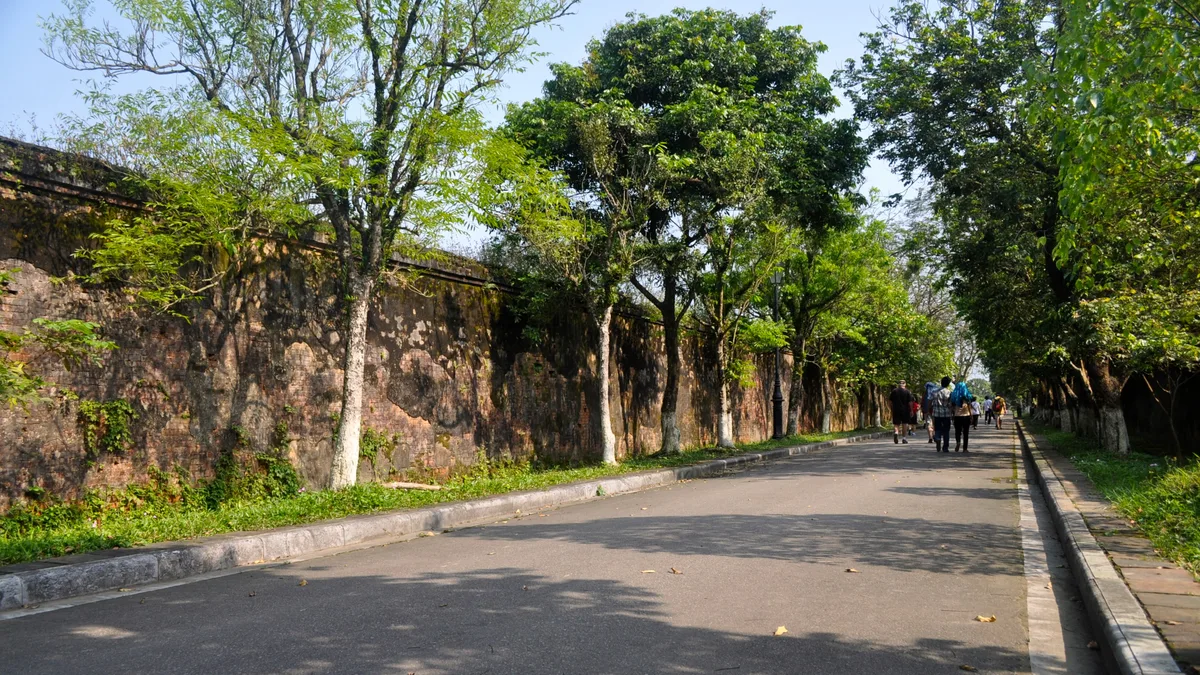
For a tomb-focused day, arrange a car or motorbike route that groups Tu Duc, Minh Mang, and Khai Dinh rather than returning to the center after each stop. Confirm whether waiting time, parking, and the return journey are included before leaving. Confident riders can rent a scooter, but traffic, summer heat, and wet-season roads make a driver the easier choice for many visitors.
Dragon boats provide a scenic connection from the city’s riverfront piers toward Thien Mu Pagoda, but they do not replace road transport for the southern tombs. Bicycles work best for short rides around the Citadel, Kim Long garden houses, and quieter riverside lanes. Save an offline map before departure because mobile coverage can weaken on rural approaches outside central Hue.
Official Planning Checks Before You Go
Consult official Vietnam Tourism Hue guide and the UNESCO’s Complex of Hue Monuments listing. These official references explain Hue’s destination and heritage context. Check the Hue Monuments authority or the responsible venue for current tickets, restoration closures, and opening times.
For the wider route context, continue with Hue 2-Day Itinerary: A First-Timer's Plan, and Best Area To Stay In Hue (2026 Visitor's Guide) before fixing this stop in your itinerary.
Frequently Asked Questions
How many days should you plan for Hue?
Plan at least 2 full days for Hue, covering the Imperial Citadel, two royal tombs, and one evening along the Perfume River. Travelers with a strong interest in imperial history often add a third day. History-light travelers passing through en route to Hoi An can manage a rushed single day instead.
Is Hue worth visiting on a short central Vietnam trip?
Hue is worth including on most central Vietnam trips longer than 4 days, given its UNESCO-listed monuments and distinct food scene. Travelers with only 3 or 4 total days sometimes trade Hue time for extra Hoi An or Da Nang days instead. The right call depends on whether history or beach time matters more.
What is Hue best known for?
Hue is best known as Vietnam's former imperial capital, seat of the Nguyen dynasty from 1802 to 1945. Its Citadel, royal tombs, and pagodas draw most visitors, while locals also point to a distinct food scene and slower pace. History-focused travelers also find well-documented wartime sites nearby.
How do you get from Hue to Hoi An or Da Nang?
Travel between Hue and Da Nang or Hoi An by car, bus, or train, with private cars taking about 2 to 3 hours depending on the exact route. Trains follow a scenic coastal line past the Hai Van Pass. For more route ideas across the region, browse the Viet Unfold travel blog before booking transfers.
What should first-time visitors avoid when planning a Hue trip?
First-time visitors often overpack their Hue schedule, trying to fit the Citadel, three tombs, and a boat trip into one afternoon. That pace skips meals and rest breaks, and it rushes each monument. Spread sightseeing across 2 full days instead, and confirm hotel bookings early during festival weeks.
Which neighborhood in Hue suits first-time visitors best?
First-time visitors usually do best in the old city, close to the Citadel, markets, and riverside restaurants. Rooms there run roughly US$15 to 60 per night depending on comfort level. Travelers who prefer quiet nights can choose the newer southern district instead, trading walkability for a calmer stay.
Hue rewards travelers who treat it as more than a quick photo stop between Hoi An and the north. Its Citadel, tombs, and river geography reward a full 2 to 3 days of unhurried exploration. Getting the transport and neighborhood choices right early makes the rest of the trip easier to plan.
Start with a realistic day count, then build backward into transport bookings and hotel choices. Confirm festival dates, weather patterns, and transfer times close to your travel dates. Matching your base, your pace, and your route keeps the trip from feeling rushed.
Whether Hue anchors a short coastal loop or a longer central Vietnam trip, the same planning basics apply. Book transport and lodging early, budget real time for each monument, and leave room for one slower day. With those pieces set, Hue fits naturally into almost any central Vietnam itinerary.
Take the route offline
Free: the Hue route notes
Where to base yourself and what it costs, a day-by-day route that avoids backtracking, real transfer times and fares, seasonal timing, and where it connects onward — condensed from our Hue guides and made to take offline.
Keep unfolding Vietnam
Continue along the route
Three nearby guides for the next decision in your trip.


