

Photo: jonolist via Flickr (CC BY-SA 2.0)
Best Area To Stay In Hue (2026 Visitor's Guide)
Choose the best area to stay in Hue with our guide to neighborhoods, hotels, and practical tips for every traveler type and budget.
On this page
Hue is Vietnam's historic heart, home to the Imperial Citadel and royal tombs designated as UNESCO World Heritage sites. Most travel guides focus heavily on these attractions, but they overlook one crucial detail: 99% of Hue's major sights sit outside the central accommodation area. This geographic reality shapes every staying decision you make.
Unlike sprawling cities such as Hanoi or Ho Chi Minh City, where neighborhood choices span kilometers, Hue's best lodging clusters in one small, walkable zone south of the Perfume River. The real decision isn't whether to stay downtown or venture elsewhere; it's which neighborhood vibe, price point, and proximity to nightlife or work spaces matches your travel style. Every area discussed here sits within 20 minutes of central restaurants, bars, and walking streets.
Last updated July 2026. This guide breaks down five major neighborhood options—from backpacker-friendly Pham Ngu Lao to the budget haven of Vy Da—and answers the timing, transport, and hotel-selection questions that drive real booking decisions. Use the practical details to match your priorities with the best fit.
Key Takeaways
- Hue is Vietnam's historic heart, home to the Imperial Citadel and royal tombs designated as UNESCO World Heritage sites.
- Most travel guides focus heavily on these attractions, but they overlook one crucial detail: 99% of Hue's major sights sit outside the central accommodation area.
- This geographic reality shapes every staying decision you make.
- Unlike sprawling cities such as Hanoi or Ho Chi Minh City, where neighborhood choices span kilometers, Hue's best lodging clusters in one small, walkable zone south of the Perfume River.
Take the route offline
Free: the Hue route notes
Where to base yourself and what it costs, a day-by-day route that avoids backtracking, real transfer times and fares, seasonal timing, and where it connects onward — condensed from our Hue guides and made to take offline.
Where to Stay in Hue: The Main Options
Hue's central accommodation zone sits on the southern bank of the Perfume River, stretching roughly from Dong Ba Market in the east to the colonial French Quarter in the west. This compact area measures about 3 km across and is fully walkable within 30 minutes on foot. Roughly 90% of visitor hotels, hostels, and guesthouses occupy this band, making neighborhood choice mostly about vibe rather than access to basic services.
All neighborhoods sit within 20 minutes of each other. Neighborhood choice primarily affects evening entertainment and restaurant access rather than daytime sightseeing logistics, since major attractions require motorized transport regardless of location.
| Neighborhood | Price/Night | Key Features | Best For |
|---|---|---|---|
| Pham Ngu Lao | $20–$100 | Tour agencies, backpacker hostels, crowded nightlife | First-time visitors, budget groups, families |
| Le Loi | $40–$80 | Bars open until 3am, nightlife, more English | Solo travelers, younger groups, nightlife seekers |
| Riverside & Colonial Quarter | $50–$100+ | French architecture, authentic Vietnamese cuisine, quieter | Cultural explorers, photographers, couples |
| Imperial Citadel & Riverside | $40–$75 | Under 10 min walk to Citadel, fewer amenities | Heritage travelers, photographers |
| Nguyen Cong Tru | $25–$110 | Cafes with WiFi (20–50 Mbps), workspace, calm mornings | Digital nomads, remote workers |
| Vy Da Ward | $10–$25 | Most local vibe, Dong Ba Market nearby, low noise | Budget travelers, backpackers, cultural immersion |
The Imperial Citadel lies immediately north across the Perfume River, accessible via raised-sidewalk bridges from several points in the central zone. Royal tombs, Thien Mu Pagoda, and other major sights radiate 2–8 km outward, requiring taxi or motorbike transport regardless of where you sleep in the main area. This is the critical planning insight: your neighborhood choice affects evening entertainment and restaurant access far more than daytime sightseeing logistics.
Five distinct neighborhoods within the central zone cater to different traveler profiles: first-timers, budget seekers, digital workers, nightlife enthusiasts, and cultural explorers. Each carries distinct atmosphere, typical hotel price ranges ($10–$120 per night), and proximity to specific attractions or amenities. Understanding these micro-zones helps you book confidently without worrying you've chosen poorly.
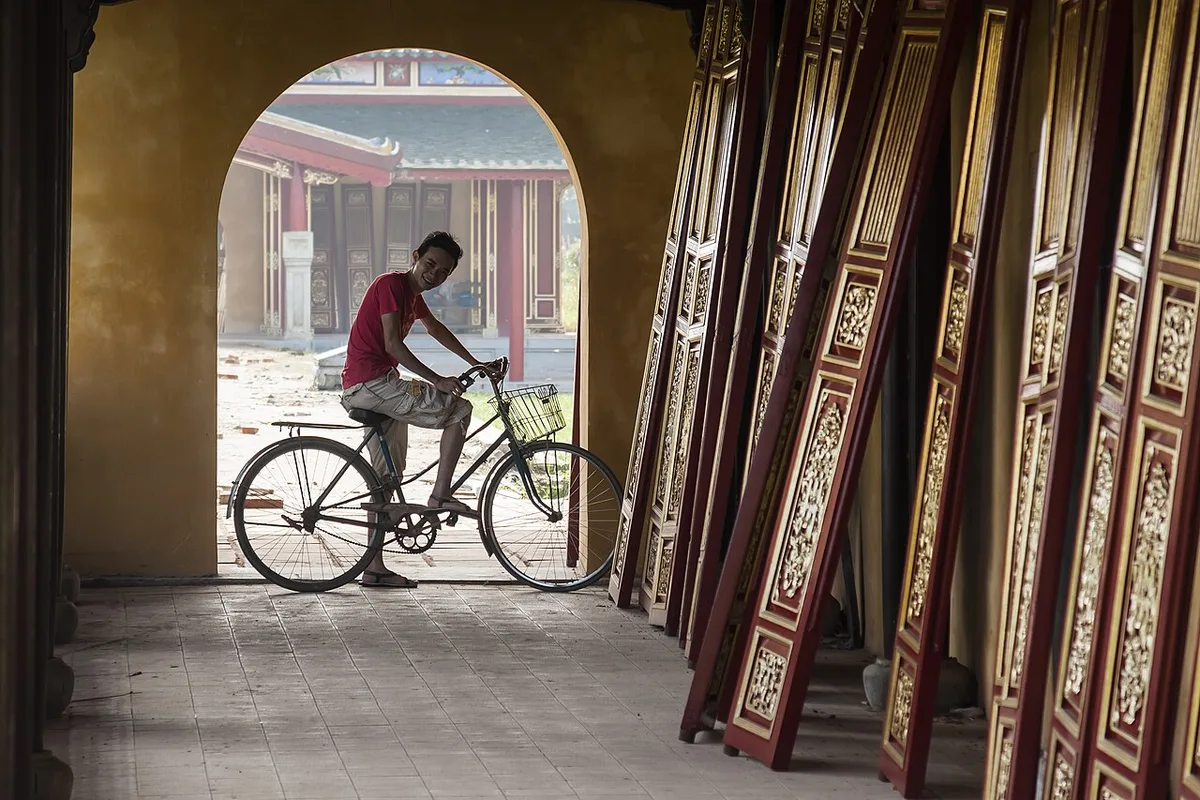
Pham Ngu Lao: Central Hub for First-Time Visitors
Pham Ngu Lao is Hue's most established traveler neighborhood, stretching several blocks north from Dong Ba Market toward the riverfront. The district buzzes with tour agencies, money changers, Western restaurants, and backpacker hostels, making it ideal for first-time visitors who want minimal friction. Walking distance to the market (for local food and souvenirs) and two major bridges means you can reach the Imperial Citadel on foot in 20–30 minutes if you choose.
Hotels range from $20–$30 per night for basic but clean rooms to $60–$100 for mid-range comfort with pools and quality breakfasts. The Scarlett Boutique Hotel (around $50–$70/night) and Senna Hue (five-star, $80–$120/night) offer great value in this zone. Budget options like the now-legendary Pisces Hotel in nearby Phu Hoi ward priced around $25/night, though availability shifts seasonally.
Noise and crowds peak at night, especially around bars and late-night food stalls. Pushy tour vendors and souvenir hawkers are common, so set clear boundaries if you prefer quiet exploration. The tourist vibe can feel intense for travelers seeking authentic local experience, but for first-timers prioritizing convenience, trade-offs are worth it.
Best for: solo travelers, first-time visitors, those with limited mobility, budget-conscious groups, families wanting walkable access to food and amenities. Avoid if: you're seeking a tranquil, fully local atmosphere or planning to rely heavily on walking to attractions (taxis remain necessary).
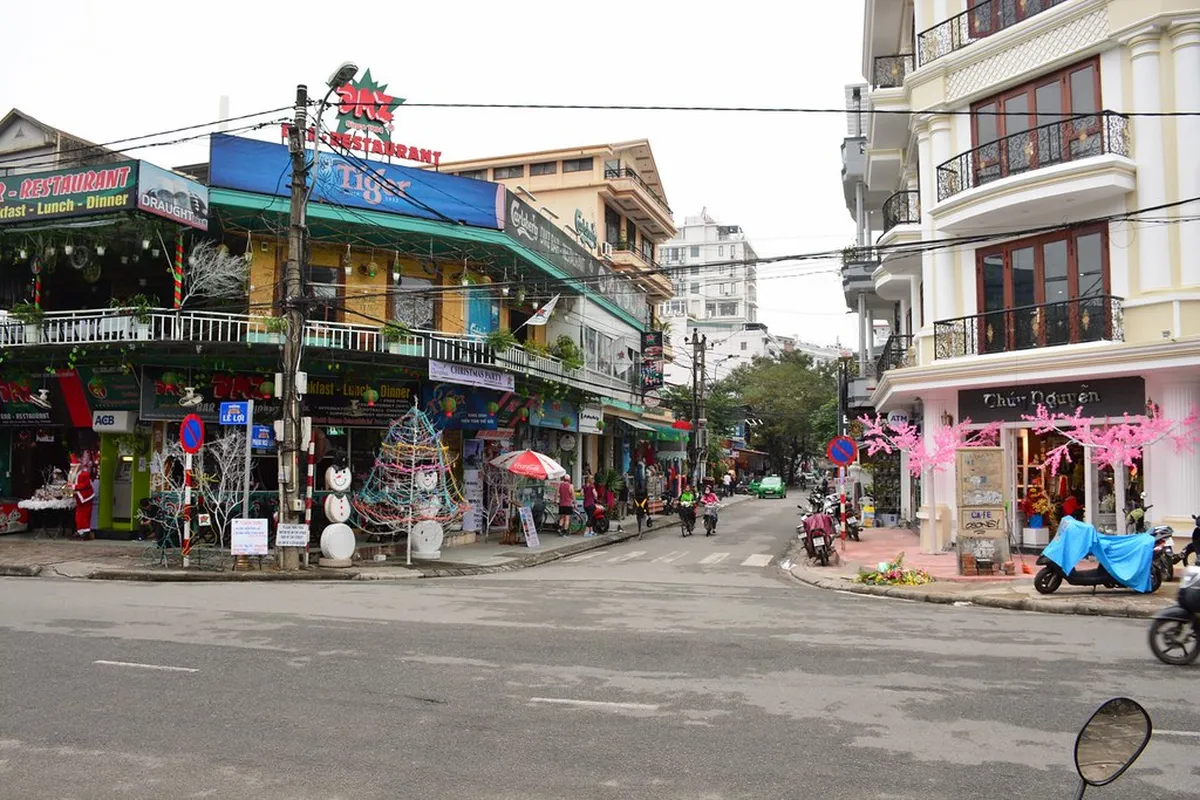
Le Loi: Best Area in Hue for Nightlife
Le Loi Street runs east-west through central Hue and anchors the city's primary nightlife district, distinct from but overlapping with Pham Ngu Lao. Bars and lounges cluster densely here, with several open until 3am or later, catering to younger travelers, expats, and Vietnamese night owls. The vibe shifts dramatically after dark; daytime restaurants and cafes transform into energetic social hubs.
Boutique and mid-range hotels dominate, typically $40–$80/night, slightly pricier than budget Pham Ngu Lao but less expensive than upscale riverfront properties. The Chum Boutique (around $50–$70/night) exemplifies the neighborhood's character: stylish, walkable to nightlife, but designed more for social travelers than quiet rest. Most hotels offer free WiFi and can arrange tour transport, since 99% of attractions still require vehicle access.
Street food improves noticeably; vendors and small restaurants cater to late-night crowds with pho, banh mi, and grilled meats. The cultural experience leans Western—English is spoken more here than in residential zones, and expat cafes cluster nearby. Note: if nightlife noise bothers you, rooms on interior courtyards (requested at booking) reduce street-level sound.
Best for: solo travelers seeking social atmosphere, younger groups, digital nomads wanting evening socializing, anyone comfortable with energetic crowds. Avoid if: you prefer early nights, quiet streets, or want to avoid Western tourist culture overlap.
Riverside & Colonial Quarter (Truong Tien Bridge Area)
The Truong Tien Bridge and surrounding colonial quarter sit on the southern riverbank, offering a distinct vibe from the backpacker zones: historic French-era architecture, tree-lined streets, and a quieter pace. This neighborhood appeals to travelers seeking atmosphere over convenience, willing to trade some walkability for immersion in Hue's colonial past. Hotels here tend toward boutique, mid-range ($50–$90/night), and upscale ($100+/night), reflecting the more curated clientele.
The riverfront location offers psychologically distinct settling; you're parallel to the Citadel and royal monuments rather than across from them. Walk-time to the raised-sidewalk Truong Tien Bridge is 5–10 minutes, granting easy pedestrian access to the Citadel complex and Meridian Gate. Local restaurants serving authentic central Vietnamese cuisine (including bun bo Hue, the regional beef noodle specialty) cluster more densely than in tourist zones.
Downsides: fewer tour agencies, fewer money exchanges, less English spoken among vendors, and fewer late-night eating options. Taxis take slightly longer to arrive if you're not on main streets, though this is rarely a major inconvenience. The trade-off is worth it if cultural immersion and architectural charm rank above maximum convenience.
Best for: cultural explorers, photographers interested in colonial architecture, couples seeking romantic riverside settings, travelers with modest mobility willing to use taxis. Avoid if: you lack Vietnamese language basics and need constant English signage, or if nightlife access is essential.
Imperial Citadel & Riverside (Old Hue North)
Staying directly north of the Perfume River, within or immediately adjacent to the Imperial Citadel zone, offers maximum proximity to Hue's primary UNESCO attraction. Hotel options here are far fewer than in the central south zone; the area is primarily a historic monument rather than a developed tourist quarter. This means less competition for bookings but also fewer restaurants, bars, and convenience stores within walking distance.
Walk-time to the Meridian Gate (main entrance) is under 10 minutes from hotels in the immediate area, versus 20–30 minutes from central Pham Ngu Lao. You'll spend less time in taxis for the major sight but more time planning transport for food, shopping, and nightlife. The neighborhood vibe is quieter, more residential, and more focused on the monument's grandeur than on tourist amenities.
Typical pricing for hotels here runs $40–$75/night, similar to mid-range central options but with fewer choices and less frequent availability. Most hotels offer transportation to royal tombs and other sights as packages, a practical convenience if you dislike negotiating taxis. Booking ahead is essential; many dates fill quickly because supply is limited.
Trade-off clarity: you gain Citadel immersion and walk-time efficiency but sacrifice nightlife proximity, restaurant density, and spontaneous exploration ease. Best for: heritage-focused travelers, those planning long Citadel visits, visitors prioritizing silence and historical atmosphere, photographers. Avoid if: nightlife is a priority, or if you want maximum restaurant and bar variety within walking distance.
Nguyen Cong Tru: Best for Digital Nomads
Nguyen Cong Tru Street has quietly become Hue's de facto digital nomad hub, with a critical mass of cafes offering fast, reliable WiFi and power outlets. Several boutique hotels and hostels specifically market to remote workers, often providing dedicated work spaces, printer access, and ergonomic seating. The neighborhood sits central enough for social meetups but calm enough for focused work during mornings.
Pricing is reasonable: $25–$45/night for hostel beds, $40–$70/night for budget hotels, $70–$110/night for more upscale options with workspace. Internet speeds consistently reach 20–50 Mbps, reliable by Vietnam standards, and most hotels offer fiber or fixed-line backups. The Canary Boutique Hotel exemplifies the category: affordable, work-friendly, with social common areas and central location.
Daytime beats nightlife; most cafes close by 10pm, and the nightlife scene is muted compared to Le Loi. However, the trade-off is quieter mornings and fewer drunk tourists at 2am. International grocery stores and Western-style coworking spaces are minimal, so pure digital nomads may find fewer services than in Da Nang or Hanoi.
Best for: remote workers staying 2+ weeks, freelancers valuing focus over partying, long-term travelers seeking affordable rates with work infrastructure. Avoid if: you need 24-hour coworking spaces, frequent video calls requiring enterprise internet, or strong nightlife preference.
Vy Da Ward: Best for Budget Travelers
Vy Da Ward sits slightly south and east of central Pham Ngu Lao, offering the cheapest consistent accommodation in Hue's main cluster: $10–$25 per night for clean, basic rooms. Vietnam Backpacker Hostels – Hue and Purple Hue – Riverside anchor this zone with dorm beds under $15/night and private doubles $18–$25/night. Quality is modest but reliable; expect spartan decor, no-frills breakfast, and shared bathrooms in hostels, but functioning plumbing and clean linens.
The neighborhood is markedly more local than Pham Ngu Lao; fewer tour buses, fewer Western menus, and more Vietnamese families on the streets. This authenticity comes with trade-offs: restaurants require basic Vietnamese language or patient gesturing, ATMs are scarce nearby, and tour agencies don't cluster on every corner. A 10–15 minute walk (or $1–$2 taxi ride) reaches the denser tourist zones if you need Western services.
Proximity to Dong Ba Market makes supply shopping easy and cheap; street vendors sell prepared food for 30,000–50,000 VND ($1.25–$2) per meal. Noise levels are lower than backpacker zones, though morning street commerce begins early (5–6am) and can be loud. Laundry services are available but check rates; one competitor source noted 20,000 VND per kilogram at Dong Da Hue, competitive by Hue standards.
Best for: true budget travelers, backpackers on extended Southeast Asia trips, cultural immersion seekers, solo travelers comfortable with minimal English. Avoid if: you require constant English signage, prefer tour convenience, or need premium comfort amenities.
Choosing the Right Hotel in Hue
After selecting a neighborhood, the hotel decision hinges on four variables: budget, star rating, proximity to river vs. inland, and walking access to nightlife. Most travelers reason backward: fix a nightly budget, then scan that neighborhood's available hotels rather than comparing across all zones at one price point. This method works fine if neighborhoods are equally walkable—they're not, so understand each zone's trade-offs before filtering by price.
Budget ranges clarify: $10–$25/night secures basic but clean rooms, mostly hostels and ultra-budget guesthouses; $25–$50/night adds character and minor amenities; $50–$100/night brings mid-range comfort with breakfast and tours included; $100+/night is boutique or upscale. Hotels in Hue are widely available on booking platforms, but seasonal price swings are mild (monsoon season, roughly Sept–Nov, sees modest discounts). Book 2–4 weeks ahead during peak travel (Dec–Feb and July–Aug) to secure neighborhood preference; off-peak booking can be last-minute.
One overlooked factor: laundry services are frequently overpriced at hotels (often $2–$5 per item), so budget travelers should locate public laundry shops before arrival. Star ratings on booking sites correlate weakly with experience; a 3-star riverside colonial hotel may feel more luxurious than a 4-star backpacker hostel with better ratings. Read recent guest reviews mentioning WiFi speed, noise levels, and staff English fluency—these matter far more than room photo aesthetics.
Location on a map matters more than street name; pull up Google Maps or where to stay in Hue map overlays to verify distance to river bridges, Dong Ba Market, and nightlife clusters. Request a room away from street-facing walls if noise concerns you; corner and interior courtyard rooms are quieter.
How Long Should You Stay in Hue?
The answer depends on your priority: main sights only, or deeper cultural immersion and regional exploration. Most travelers underestimate time needed; Hue's spread-out layout and multiple tombs require more transport than first glances suggest. Plan conservatively and extend if enchanted, rather than rush and regret skipped sights.
Plan 3+ nights during rainy season (September–November) when frequent afternoon downpours shorten productive sightseeing hours. Extra time allows visiting sites without rushing or skipping attractions.
One night minimum covers a quick Imperial Citadel walk (2–4 hours), local dinner, and early morning departure—sufficient for transport connections but not immersive. Two nights allow one full day for the Citadel plus a royal tomb (Tu Duc or Khai Dinh, each 1–2 hours with travel), leaving evening time for food and rest. Three nights add a second tomb, Thien Mu Pagoda, or a day trip to nearby hills or countryside, balancing rushed sightseeing with leisure.
Hue pairs well with Hoi An (1–2 hours by bus or 2+ hours by train) and Da Nang (1.5 hours by bus or 2+ hours by train), so consider regional itinerary length. A typical central Vietnam 5-day loop (Hue → Hoi An → Da Nang) allocates 2 nights in Hue, 2 in Hoi An, 1 in Da Nang; this pace works if you're scanning highlights rather than lingering. Add extra time if you want day trips to Phong Nha-Ke Bang caves (3 hours away) or slow exploration of colonial neighborhoods.
Weather affects timing: Hue in rainy season (September–November) sees frequent afternoon downpours, shortening productive sightseeing hours; consider 3+ nights to buffer weather disruptions. Dry season (Dec–Aug) permits tighter schedules.
Getting to Hue and Around the City
Phu Bai International Airport lies 30 minutes south of central Hue via taxi or airport shuttle (typically $5–$10 for shared shuttle, $15–$20 for private taxi). Most hotels arrange airport pickup for $10–$15 if booked in advance; this removes arrival stress and avoids overpaying touts. Flight options are limited; most travelers arrive via Da Nang airport (1.5 hours away) where more international routes operate, then bus or train to Hue.

Within the city, walking covers the central neighborhood zone fully (30 min end-to-end), but reaching attractions requires motorized transport. Taxis are metered and reliable; rides within central Hue cost $1–$3, and trips to royal tombs run $10–$15 depending on distance. Motorbike rentals (around $5–$8/day) work for confident riders but are riskier for inexperienced drivers unfamiliar with Vietnamese traffic norms.
Buses connect Hue to Da Nang (1–1.5 hours, $2–$5), Hoi An (2–2.5 hours, $3–$6), and Hanoi (12–16 hours, $12–$25); most operate from the central bus station 2 km south of main hotels. Trains to Da Nang (2+ hours, $5–$15 depending on class) and Hanoi (12–16 hours, $15–$40) run from Hue Railway Station on the south bank. Both bus and train are comfortable, affordable, and preferred by tourists avoiding long-distance driving stress.
Getting around for sightseeing: book organized tours through your hotel (full-day royal tomb tours typically $15–$25 including transport and guide) or hire a taxi with driver for the day ($30–$50). Walking is not viable for royal tombs (2–5 km outside center), so plan transport before sightseeing—don't assume "nearby" based on map appearance.
For the wider route context, continue with Hue Travel Planning Hub: Complete Guide, and Hue 2-Day Itinerary: A First-Timer's Plan before fixing this stop in your itinerary.
Frequently Asked Questions
How many days in Hue is enough?
Two nights is the practical minimum for the Imperial Citadel and one royal tomb. Three nights allows a more leisurely pace with two tombs, Thien Mu Pagoda, or a day trip. Five+ days works if combining with nearby Hoi An and Da Nang as a regional loop.
Is it worth staying overnight in Hue?
Yes. Major attractions require full days; a quick day trip from Da Nang or Hoi An is rushed and exhausting. Overnight stays let you explore the Imperial Citadel thoroughly, dine on local bun bo Hue, and absorb the historic atmosphere without hurrying.
Which is better, Hue or Hoi An?
Both serve different purposes. Hue focuses on imperial history and Buddhist sites; Hoi An emphasizes colonial architecture and cultural shopping. A 3–5 day central Vietnam loop visiting both maximizes experience. See detailed itineraries for comparison.
Is Hue expensive compared to other Vietnam cities?
Hue is not an expensive place to stay or live. Hostels run $10–$25/night, mid-range hotels $40–$75/night, and meals cost $1–$3 at local spots. Upscale dining and boutique hotels are available but not necessary for comfort.
When is the best time to visit Hue?
December through February offers cool, dry weather ideal for sightseeing. July and August are hot and crowded with school holidays. September to November brings frequent afternoon rain and occasional typhoons, shortening active hours. March to May and June to August are warm but manageable with early starts.
Choosing where to stay in Hue depends less on geography than on personality: budget concerns, nightlife desires, work needs, or cultural depth priorities. All five main neighborhoods sit within 20 minutes of each other, so transport logistics favor only the Imperial Citadel zone (where you save 10–20 minutes on the major sight). Instead, match your traveling style to the neighborhood vibe and hotel type.
Book 2–4 weeks ahead during peak season (Dec–Feb, July–Aug) to secure your preferred area. Verify location on a map before confirming, and read recent guest reviews mentioning noise and WiFi reliability. Once settled, embrace the central area's walkability for food and evening exploration, and budget transport time for sightseeing—Hue rewards those who plan logistics carefully and leave room to linger.
Take the route offline
Free: the Hue route notes
Where to base yourself and what it costs, a day-by-day route that avoids backtracking, real transfer times and fares, seasonal timing, and where it connects onward — condensed from our Hue guides and made to take offline.
Keep unfolding Vietnam
Continue along the route
Three nearby guides for the next decision in your trip.


