
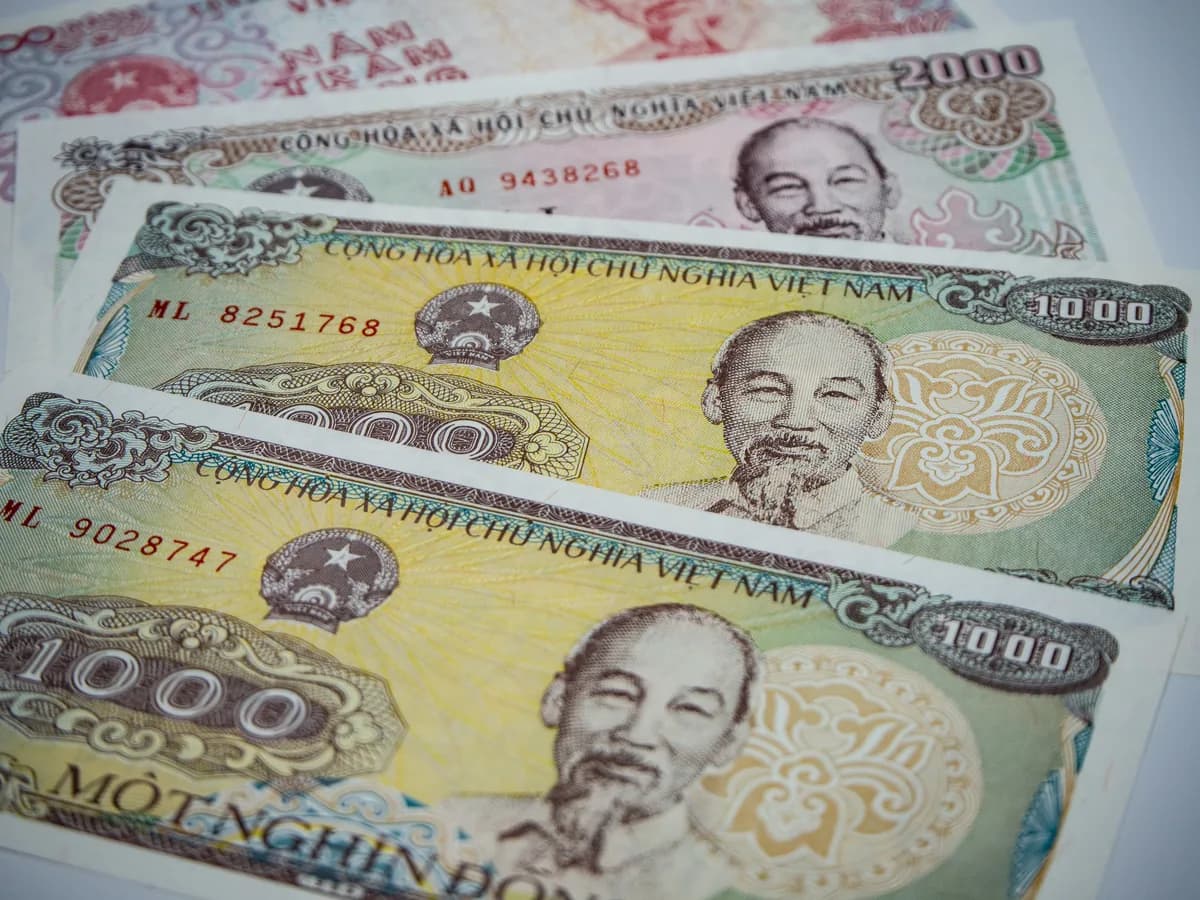
Photo: forextime.com via Flickr (CC BY 2.0)
Vietnam Currency And Payments Guide Travel Guide
Complete Vietnam currency guide: master exchange rates, ATM withdrawals, digital payments, money scams, and safety tips for your 2026 trip.
On this page
Handling money in Vietnam can feel overwhelming at first. Seeing prices in hundreds of thousands seems strange to many Western travelers. Understanding your currency, exchange rates, and payment options makes your entire trip far smoother.
This guide covers everything you need to know about the Vietnamese dong: exchange rates, banknotes, ATMs, digital payments, and money safety. Last updated July 2026, it includes current rates and payment trends for foreign visitors. Whether you prefer cash, cards, or mobile payments, you'll find practical tips here for handling money confidently throughout Vietnam.
Key Takeaways
- Handling money in Vietnam can feel overwhelming at first.
- Seeing prices in hundreds of thousands seems strange to many Western travelers.
- Understanding your currency, exchange rates, and payment options makes your entire trip far smoother.
- This guide covers everything you need to know about the Vietnamese dong: exchange rates, banknotes, ATMs, digital payments, and money safety.
Take the route offline
Free: the Vietnam route starter
A two-week south-to-north route with real nightly rates by city, what to book first and how far ahead, region-by-region timing, and the transport costs between each leg — drawn from our published guides.
Understanding the Vietnamese Dong and Exchange Rates
Vietnam's currency is the Vietnamese Dong, abbreviated VND and symbolized by ₫. The State Bank of Vietnam (SBV) issues all currency. Since 2011, Vietnam has used only banknotes—no coins are in circulation. This makes cash transactions simpler once you understand the different denominations.
Exchange rates fluctuate daily, but knowing approximate rates helps you budget your trip. As of 2026, one US dollar is worth roughly 26,300 VND. One euro equals about 30,000 VND, and one British pound is approximately 35,000 VND. Banks, ATMs, and licensed currency exchangers may offer slightly different rates, so check before converting large amounts.
You don't need a calculator for every purchase. A common traveler shortcut is to drop the last three zeros from any price, then divide by 25. For example, 100,000 VND becomes 100; divided by 25 equals roughly $4 USD. This quick mental math helps when shopping, ordering meals, or negotiating at local markets.
Exchange rates impact your budget, so monitor them before your trip. Many travelers use apps or websites to track USD to VND rates daily. Within a couple of days of arrival, this mental conversion becomes automatic. You'll stop needing the calculator for everyday price estimates.
Vietnamese Dong Denominations Explained
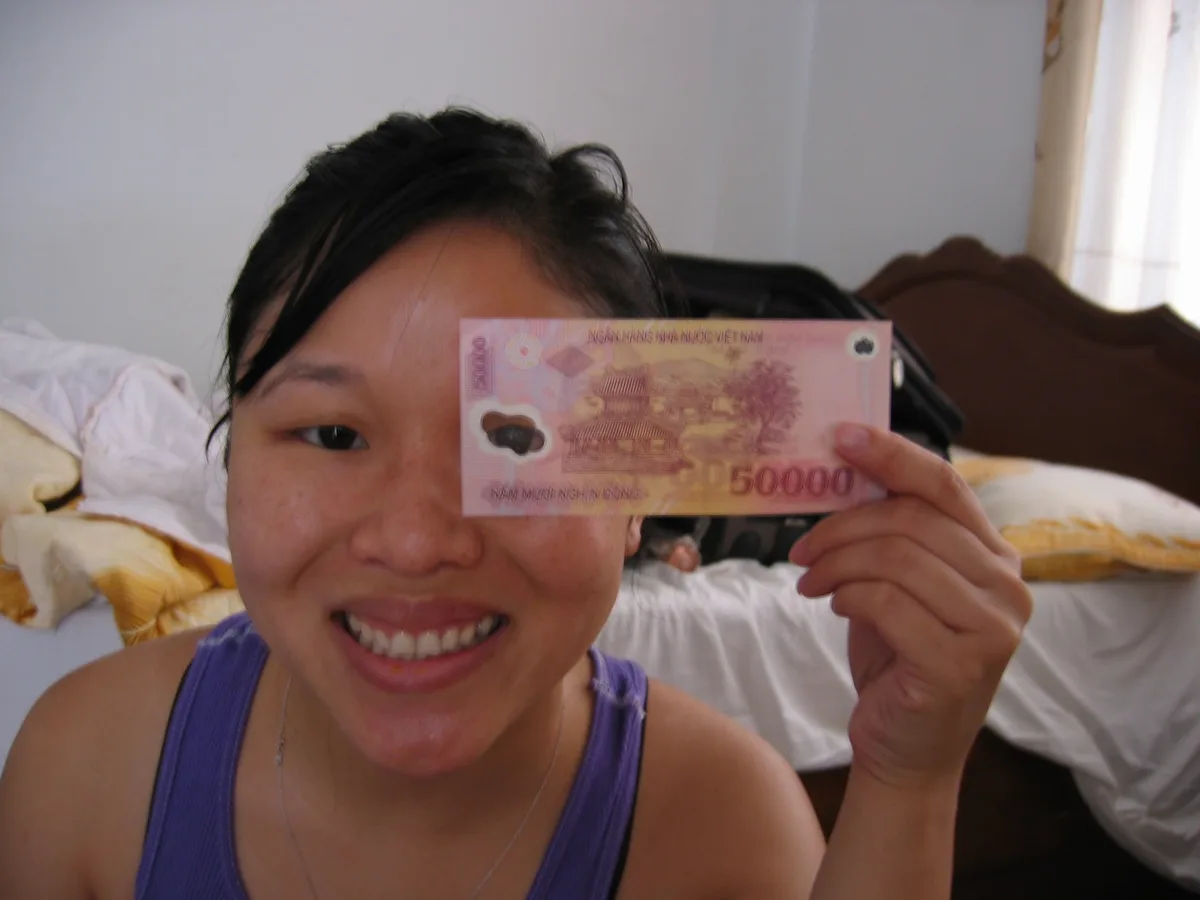
Vietnamese banknotes come in two types: polymer notes and cotton notes. Most money you'll use is polymer, which is waterproof, durable, and harder to counterfeit. Cotton notes exist only for very small denominations and see limited use among tourists.
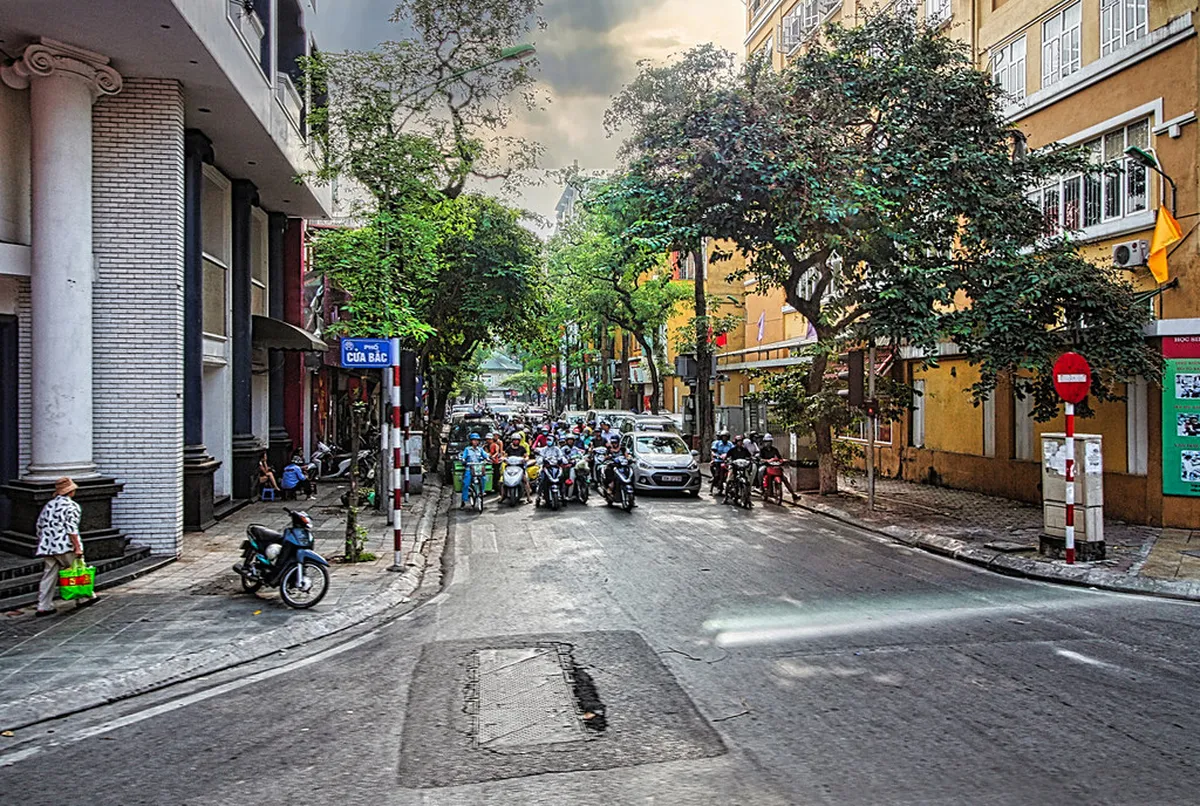
Polymer notes come in denominations of 10,000, 20,000, 50,000, 100,000, 200,000, and 500,000 VND. You'll use these for nearly all transactions: meals, transportation, shopping, and entertainment. The 20,000 VND note is roughly the minimum needed for a basic street food meal. Denominations from 20,000 and above become your most frequently used bills.
| Denomination | USD Value | Primary Use |
|---|---|---|
| 10,000 VND | ~$0.40 | Very small purchases only |
| 20,000 VND | ~$0.75 | Basic street food or coffee |
| 50,000 VND | ~$2.00 | Small restaurant meals |
| 100,000 VND | ~$4.00 | Most common for daily expenses |
| 200,000 VND | ~$8.00 | Mid-range restaurants and activities |
| 500,000 VND | ~$20.00 | Largest note; use at supermarkets |
- 10,000 VND (Polymer)
- Value: roughly $0.40 USD
- Use: very small purchases only
- Feature: rarely seen in daily use
- 20,000 VND (Polymer)
- Value: roughly $0.75 USD
- Feature: features Hoi An's Japanese Bridge
- Use: basic street food or coffee
- 50,000 VND (Polymer)
- Value: roughly $2 USD
- Warning: easily confused with 20,000 VND
- Use: small restaurant meals
- 100,000 VND (Polymer)
- Value: roughly $4 USD
- Feature: displays Hanoi's Temple of Literature
- Use: most common for daily expenses
- 200,000 VND (Polymer)
- Value: roughly $8 USD
- Feature: shows Ha Long Bay
- Use: mid-range restaurants and activities
- 500,000 VND (Polymer)
- Value: roughly $20 USD
- Warning: largest note, may lack change
- Strategy: use at supermarkets to break
Vietnamese Dong Denominations Explained (continued)
The 500,000 VND note (worth roughly $20 USD) is Vietnam's largest banknote. Many small street vendors lack change for it. Use large bills at supermarkets, shopping malls, or convenience stores first. Keep your largest notes separate from daily spending money.
A common mistake is confusing the blue-green 20,000 and 50,000 VND notes. They look surprisingly similar if you're paying quickly, especially at night. Always verify denominations carefully before handing cash over. Good practice: keep your 100,000 VND and higher notes in a separate wallet section.
Cotton notes (1,000, 2,000, 5,000 VND) are used for very small expenses only. These include parking fees, public buses, or tiny purchases at local markets. Think of them as Vietnamese equivalents of carrying a few coins. You won't use them often as a tourist, but they still have value.
Why Vietnamese Money Has So Many Zeros
Many first-time visitors wonder why even a simple meal costs tens of thousands of VND. The answer lies in Vietnam's economic history during the 1980s. The country experienced significant inflation that devalued the currency substantially. As inflation continued, the State Bank issued increasingly large denominations for everyday needs.
Today, this means everyday purchases involve big-looking numbers that surprise tourists. The largest note is 500,000 VND, worth roughly $20 USD. So daily shopping naturally involves numbers that appear much larger than visitors expect. This doesn't mean things are expensive—it's just how the currency system works.
Learning to mentally drop three zeros helps normalize these large-looking figures. A bowl of pho for 60,000 VND becomes $2.28 USD when you do the math. Withdrawing 2,000,000 VND from an ATM feels like withdrawing $76 USD. Once you adopt this mental conversion habit, prices feel reasonable.
Getting Money: ATMs, Cards, and Currency Exchange
ATMs are the easiest and often cheapest way to get Vietnamese dong. You'll find ATMs in nearly every city, town, and tourist area throughout Vietnam. Most international cards (Visa, MasterCard, Discover) work, but notify your bank of travel dates beforehand. This prevents fraud blocks that might freeze your account during your trip.
International bank ATMs typically allow withdrawals between 5 million and 10 million VND per transaction. Local bank ATMs limit you to 2 million to 3 million VND per transaction. Choose international ATMs if you need larger amounts and want fewer transactions. Check your card's daily withdrawal limits before traveling.
Credit and debit cards are widely accepted in hotels, restaurants, shopping malls, and tourist establishments. However, small street vendors, local markets, and rural areas typically accept only cash. Carrying both cash and cards provides flexibility for any situation. Always have some cash on hand for cash-only vendors.
A smart strategy is exchanging only $50–100 USD upon arrival at the airport. This covers airport transportation, a local SIM card, and your first meal. Then exchange remaining amounts later at licensed currency exchange booths in city centers. City-center exchangers and gold shops offer better rates than airports or hotels. When entering or leaving Vietnam with more than $5,000 USD or 15,000,000 VND, you must declare it to customs. Larger denominations, such as $100 bills, receive better exchange rates than smaller notes.
Using Money in Vietnam: Payment Methods
Cash is still the preferred payment method for most Vietnamese businesses. It's required for many small vendors, taxis, street food, and local markets. Keep small denominations handy for these inevitable cash-only situations. Larger bills make change difficult in rural areas, so break large notes at supermarkets as you travel.
Carry 70 percent as cash and 30 percent accessible on cards. This balance provides security without overexposing yourself to cash loss in case one payment method fails.
Your daily spending depends on your travel style and preferences. Budget travelers spend $30–50 per day on food, transportation, and activities. Mid-range travelers spend $50–100 per day for more comfort and dining variety. Plan accordingly based on your Vietnam itinerary and activity level.
Major cities like Hanoi and Ho Chi Minh City have increasingly card-friendly establishments. Cards work especially well in tourist areas, shopping malls, and international restaurants. Always carry backup cash because not all places accept cards. Internet connectivity can fail, leaving card readers offline.
Many travelers follow a 70-30 rule for their spending money. Carry 70 percent as cash and 30 percent accessible on cards for emergencies and larger expenses. This balance provides security without overexposing yourself to cash loss. Count your cash carefully after any transaction to verify correct amounts.
Be cautious when receiving change late at night or in busy areas. Verify genuine bills immediately in good light before leaving any transaction. Tipping is not mandatory in Vietnam, though rounding up at tourist-friendly restaurants is appreciated. Budget for meals starting as low as 50,000 VND ($2 USD) for street food up to 200,000–300,000 VND ($8–12 USD) for sit-down restaurants.
Digital Payments and Contactless Payment Apps
Digital payments are growing rapidly in Vietnam, particularly among younger merchants. Mobile wallet apps make payments convenient and reduce carrying large amounts of cash. Popular payment apps include MoMo, Zalo Pay, and ViettelPay, accepted at many modern establishments. Hotels, restaurants, and shops in major cities increasingly support these digital options.
International travelers increasingly use contactless payments when available in Vietnam. Visa contactless payments are accepted at many modern establishments including convenience stores. Supermarkets, shopping malls, and tourist-friendly restaurants support contactless technology. Contactless options reduce the need to handle cash or enter PIN codes.
Coverage for digital payments remains limited outside major urban areas. Always verify card acceptance before ordering in smaller restaurants or street vendors. For most travelers, a mix of cash and cards works best in Vietnam. Digital payment apps are useful if you're staying extended time, but tourists visiting for a week rarely need them.
Check if your mobile payment apps from home work in Vietnam before arriving. Keep emergency cash separate from your daily spending wallet in case you lose one. Consider travel insurance when planning your payment strategy and overall trip logistics. This protection covers unexpected money-related incidents during your travels.
Money Scams and Safety Tips
Tourist areas, airports, hotels, and unauthorized currency exchangers pose risks for unsuspecting travelers. Some scammers offer seemingly attractive exchange rates before hitting you with hidden fees. Others shortchange you or pass off counterfeit banknotes to unsuspecting tourists. Unauthorized taxi drivers sometimes forget to turn on the meter, leading to inflated fares.
When an ATM or card terminal offers to charge in your home currency, select Vietnamese dong instead. Dynamic currency conversion set by the operator typically results in worse rates than your card issuer's conversion.
Bar and restaurant scams targeting tourists include inflated bills or pressure to purchase expensive rounds. Always verify bills before paying and avoid pressure from staff. Ask for itemized receipts at establishments catering to tourists. If something feels wrong, it probably is—trust your instincts.
Always use licensed currency exchange services, never unauthorized street exchangers. Banks and official ATMs provide better rates and legitimate services. Avoid exchanging money at airports and hotels, which charge premium fees. These locations appear convenient and trustworthy but offer rates 10–15 percent worse than city-center exchangers.
After any transaction, count banknotes carefully immediately and verify denominations. Never wait to check later—address any discrepancies on the spot. Examine bills under good light to confirm they're genuine before leaving. Keep most of your money in your hotel safe or divided between bags and pockets.
Avoid displaying large cash amounts in public or busy tourist areas. Use ATMs in secure locations like bank lobbies or shopping malls. Avoid street-side ATMs and late-night withdrawals when possible. Never accept currency exchanges from strangers offering black-market rates—these are scams.
Avoid ATM and Card Conversion Traps
When a Vietnamese ATM or card terminal offers to charge you in your home currency, choose Vietnamese dong (VND) instead. The home-currency option uses dynamic currency conversion, where the ATM operator or merchant sets the exchange rate. Selecting VND lets your card network and issuing bank handle the conversion, which is usually more transparent. Review the confirmation screen carefully because the conversion offer may be presented as a convenient “guaranteed” rate.
Use ATMs attached to staffed bank branches or located inside shopping centers in Hanoi, Ho Chi Minh City, Da Nang, Hoi An, and other major destinations. These locations are safer and make it easier to seek help if the machine retains your card. Check the displayed withdrawal fee before confirming, and remember that your own bank may add a separate foreign-transaction or cash-advance fee.
Carry a second card on a different payment network and store it separately. For card purchases, keep the terminal in sight, request a receipt, and check the amount in VND before entering your PIN. If a transaction fails, confirm that no charge was posted before trying repeatedly or moving to another ATM.
Official Planning Checks Before You Go
Use the Vietnam Tourism trip-planning portal for destination context and the Vietnam Tourism destination directory for a second official baseline. Recheck any opening hour, fare, timetable, closure, access rule, weather risk, or booking condition with the responsible operator shortly before travel; an official destination overview is not a live inventory or service guarantee.
For the wider route context, continue with Vietnam Travel Budget: Complete Guide, and Vietnam First Time Travel Tips Travel Guide before fixing this stop in your itinerary.
Frequently Asked Questions
How much cash should I bring to Vietnam?
Most travelers bring $50–100 USD and exchange more at local banks or ATMs after arrival, which offers better rates than exchanging before departure. For a one-week trip, budget $200–700 USD depending on your travel style and activity level. Budget travelers spend $30–50 per day, while mid-range travelers spend $50–100 per day. Avoid bringing large amounts of cash, as it's harder to protect and exchanges at less favorable rates than smaller bills.
Is it better to carry cash or use cards in Vietnam?
Both have advantages: cash is accepted everywhere and avoids foreign transaction fees, while cards provide security and are useful for large purchases. Carry both—aim for roughly 70 percent cash and 30 percent available on cards. Credit cards work at hotels, restaurants, and shops in major cities, but cash is essential for street food vendors, markets, small restaurants, and rural areas. This balanced approach ensures you're never stranded without an accepted payment method.
Should I exchange money before traveling to Vietnam or after arriving?
Exchange $50–100 before arriving only if you want to avoid airport hassles, but this typically means poor rates. A better strategy is to arrive with minimal cash and exchange remaining funds at licensed city-center exchangers or ATMs, which offer significantly better rates. Banks and gold shops in city centers provide competitive rates during business hours. Licensed exchange services usually beat airport rates by 5–10 percent, saving substantial money on large exchanges.
What should I do if I receive counterfeit money or incorrect change?
Count all cash immediately after transactions in good light before leaving the merchant. If you find counterfeit notes, Vietnamese locals won't accept them—handle the situation at that moment with the vendor. For incorrect change, politely ask the merchant to recount and verify the transaction. Keep your hotel contact information handy and notify your travel insurance if you suspect organized scams, as hotel staff can provide local guidance and sometimes help resolve disputes.
Are there any restrictions on bringing money into Vietnam?
You must declare any money over $5,000 USD or 15,000,000 VND to Vietnamese customs when entering or leaving the country. Failure to declare can result in fines or confiscation. Bring a credit card as backup and consider travelers checks as an emergency backup, though checks are increasingly difficult to exchange in Vietnam. This declaration requirement applies to all currencies combined, so plan your money distribution accordingly before traveling.
Understanding Vietnamese currency, exchange rates, and payment methods removes major travel stress. With these practical tips, handling money in Vietnam becomes straightforward. Whether you prefer cash, cards, or digital payments, planning your money strategy before departure ensures smooth transactions throughout your trip.
Familiarize yourself with exchange rates a few days before traveling. Notify your bank of travel dates and plan a mix of cash and cards. Consider how money fits into your overall transportation costs and dining budget when planning your trip. With these foundations in place, you can focus on enjoying Vietnam's culture, food, and attractions without money worries.
Take the route offline
Free: the Vietnam route starter
A two-week south-to-north route with real nightly rates by city, what to book first and how far ahead, region-by-region timing, and the transport costs between each leg — drawn from our published guides.
Keep unfolding Vietnam
Continue along the route
Three nearby guides for the next decision in your trip.


