

Photo: Josh Hickinbotham via Flickr (CC BY 2.0)
Best Time to Visit Vietnam by Region: Travel Guide
Discover the best time to visit Vietnam by region, comparing north, central, and south weather, prices, and events to help you plan smarter today.
On this page
Mid-February to early April is the best time to visit Vietnam by region for pleasant weather nationwide. Shoulder season from September to October is the other sweet spot, especially for central and northern Vietnam. Vietnam's north, center, and south run on different climate clocks, so timing shifts by destination. This guide breaks down weather, crowds, prices, and events region by region so travelers can pick dates with confidence.
Last updated July 2026. Vietnam stretches more than 1,600 kilometers from north to south, based on typical geography data. That length means Hanoi's winter chill and Ho Chi Minh City's year-round heat rarely align on a calendar. Regional planning matters more in Vietnam than in most single-climate countries.
Typhoon season hits the central coast from August through November, so beach plans there need care. Booking two to three months ahead is wise for Tet week and the July-August peak, when domestic flights fill fast. Pairing timing with a solid route matters too, and this Vietnam itinerary guide shows how the pieces fit.
Key Takeaways
- Mid-February to early April is the best time to visit Vietnam by region for pleasant weather nationwide.
- Shoulder season from September to October is the other sweet spot, especially for central and northern Vietnam.
- Vietnam's north, center, and south run on different climate clocks, so timing shifts by destination.
- This guide breaks down weather, crowds, prices, and events region by region so travelers can pick dates with confidence.
Take the route offline
Free: the Vietnam route starter
A two-week south-to-north route with real nightly rates by city, what to book first and how far ahead, region-by-region timing, and the transport costs between each leg — drawn from our published guides.
Best Time to Visit Vietnam by Region Overview
Northern Vietnam runs cold and dry from December to February, with Hanoi lows near 12-15°C / 54-59°F. Sapa's mountains get colder still, occasionally dropping to 4°C / 39°F overnight in January, based on typical climate data. March through April and September through November bring the clearest skies and best trekking conditions. Locals call the persistent early-year drizzle mưa phùn, a damp chill that can linger into March.
Vietnam's north, center, and south follow different climate patterns. Northern winters are cold and dry, the central coast faces typhoons from August through November, and the south stays warm year-round with afternoon showers in wet months. Timing each region separately prevents washed-out or sweltering itineraries.
Central Vietnam follows its own calendar, with typhoon season from August through November. Heavy rain and flooding risk around Hue and Hoi An peak in October, per Selectiveasia.com. February through August brings the region's best weather, with July and August highs near 30-33°C / 86-91°F. Hoi An's Old Town floods occasionally during the wettest weeks, so low-lying riverside guesthouses can see disruption.
Southern Vietnam stays warm year-round, with a dry season from December to May. The wet season runs June through November, though showers are usually short, sharp afternoon downpours. March through May gets uncomfortably hot, with Ho Chi Minh City highs reaching 34-38°C / 93-100°F. Phu Quoc and the Mekong Delta rarely see travel disrupted by rain, even in peak monsoon weeks.
Choosing a single best month for all three regions is difficult given these mismatched patterns. Travelers splitting time between Hanoi, Hoi An, and Ho Chi Minh City benefit from checking each region's calendar separately. For deeper contrast between the three regions, this north-central-south comparison breaks down the differences further. Matching a trip's region mix to the calendar avoids both scorching heat and washed-out itineraries.
Da Lat, in the southern highlands, breaks from the region's heat with a cool, spring-like climate. Temperatures there stay near 16-24°C / 61-75°F most of the year, unlike the sweltering coast nearby. This makes Da Lat a useful escape hatch when the south or center runs uncomfortably hot.
Vietnam Season Comparison by Region
The table below compares Vietnam's four seasons side by side for quick reference. Each row lists typical weather, crowd levels, price swings, and signature events by month range. Regional notes are folded into the weather column, since north, center, and south rarely match.

Prices swing hardest around Tet and the July-August peak, based on typical seasonal demand patterns. A Hanoi-to-Ho Chi Minh City flight often costs 20 to 30 percent more during Tet week than in June. Halong Bay overnight cruise cabins follow the same pattern, with the steepest rates in December and early January.
Tet Nguyen Dan, the Lunar New Year, is the single busiest stretch nationwide, typically falling in late January or February. Hue Festival in April and the Mid-Autumn Festival in September draw smaller but noticeable crowd bumps. Outside these windows, crowd levels track closely with the dry-season months in each region.
Vietnam's weather runs on two named monsoon systems, not just one wet-dry cycle. The winter northeast monsoon brings the north its cold, dry air from November to March. The summer southwest monsoon then drives the wetter pattern across the south from May onward. Knowing which monsoon is active explains most of the regional weather differences in the table.
Major festivals like Tet and the Hue Festival benefit from early planning each year. Domestic flight and train tickets for Tet week often sell out four to six weeks ahead. Booking Halong Bay cruises two to three months ahead secures better cabin choices in peak months.
| Season | Weather (region notes) | Crowds | Prices | Events | Best for |
|---|---|---|---|---|---|
| Spring (mid-Feb to Apr) | North 20-27°C/68-81°F dry; Central 28-33°C/82-91°F; South hot, building past 34°C/93°F | High near Tet, easing by March | Peak in Feb, easing 15-20% by April | Tet Nguyen Dan (late Jan-Feb), Hue Festival (April) | First nationwide trips, Halong Bay cruising |
| Summer (May to Aug) | North 28-34°C/82-93°F humid with storms; Central sunny 30-33°C/86-91°F; South short daily showers | Moderate, spikes in July-Aug school holidays | Central coast resorts near peak rates | Summer school holidays, local Hue events | Central beach time, early Sapa treks |
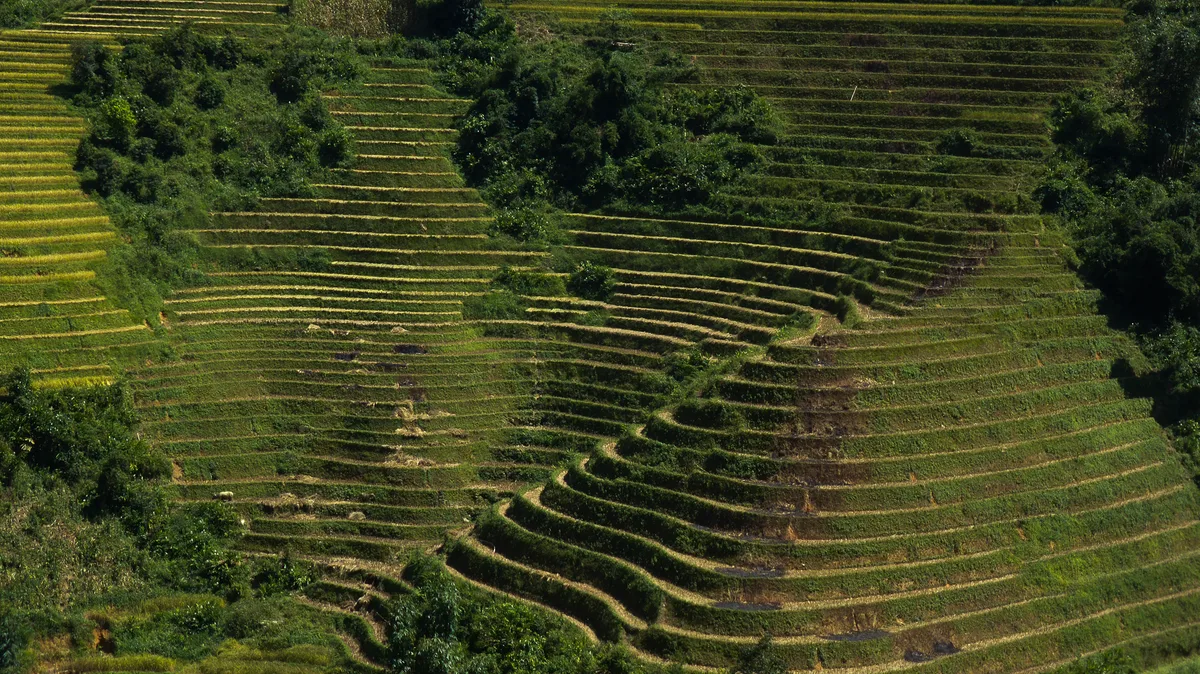
| Fall (Sept to Nov) | North mild 22-28°C/72-82°F; Central typhoon risk, heavy rain; South wet season tapering | Low in Central due to storm risk | Lowest Central coast rates of the year | Mid-Autumn Festival (September), Mekong flood-season markets | Mekong photography, golden rice terraces |
| Winter (Dec to mid-Feb) | North cold, dry 12-20°C/54-68°F, Sapa near 4°C/39°F; Central cool, drying out; South warm, dry 25-31°C/77-88°F | Rising toward Tet in late January | Climbing steadily into Tet week | Christmas and New Year city lights, Tet prep | South and Central sightseeing, city breaks |
When Should You Avoid Visiting Vietnam?
Central Vietnam's typhoon season, from August through November, is the clearest avoid-if-possible window. Storms can force last-minute Halong Bay cruise and Cat Ba ferry cancellations, per Vietnam.travel's climate guide. Mekong Delta flooding also intensifies from September to November, occasionally closing low-lying roads.
Southern Vietnam's hottest stretch runs March through May, with Ho Chi Minh City topping 34-38°C / 93-100°F. Humidity makes this heat feel worse, and mosquito activity rises in the wet months that follow. Travelers sensitive to heat should shift southern plans to December through February instead.
Tet week, usually late January or February, closes many family-run restaurants and shops nationwide. Hotel rates climb and domestic transport sells out days in advance during this stretch. Choosing well-reviewed lodging matters more during this squeeze, as this Vietnam Accommodation Guide: Where to Stay in 2026 explains. Travelers who prefer quiet streets over festival energy should plan around Tet, not during it.
Low season brings its own closures worth planning around, region by region. Ferries to Phu Quoc and Con Dao can suspend service during rough seas from July through September. Many Hoi An riverside restaurants and some Cat Ba Island guesthouses close temporarily during the wettest fall weeks. Sapa's high mountain trails sometimes shut after heavy rain damages trekking paths between July and September.
Health-wise, mosquito-borne illness risk rises during the wet months in low-lying areas. Travelers heading to the Mekong Delta or coastal wetlands should pack repellent for this reason. This risk drops noticeably during the dry winter months in the north and center.
Which Season Is Right for You?
Different travelers weigh weather, crowds, and cost differently, so no single month fits everyone. The list below matches common traveler priorities to Vietnam's regional calendar. Use it alongside the regional notes above to fine-tune a specific itinerary. Booking lead time also shifts by season, especially around Tet and July-August peaks.
Book transport and accommodations two to three months ahead for Tet week and July-August peaks. Domestic flights fill within four to six weeks, and popular Halong Bay cruise cabins sell out quickly. Early booking secures better cabin choices and more stable pricing on competitive routes.
Weigh three factors before locking dates: rainfall risk, crowd tolerance, and flexible working hours. Remote workers and retirees can chase shoulder season easily, since they can shift dates fast. Travelers locked into school holidays usually land in July or August regardless of crowd cost.
Booking flexibility also matters when choosing a season, especially for slow-travel itineraries. Travelers with fixed return flights should build in a buffer for weather delays. This buffer matters most during Central Vietnam's typhoon season and the northern winter fog.
- Pick March or April for balance
- Dry skies across most regions
- Fewer crowds than Tet week
- Best Halong Bay cruise visibility
- Pick July or August for beaches
- Sunny Hoi An and Da Nang coastline
- Warm water for swimming
- Higher resort rates in peak weeks
- Pick September for photography and quiet
- Emerald Mekong rice fields
- Lower Central Vietnam hotel rates
- Some typhoon risk to monitor
- Pick December for budget city trips
- Cooler dry weather in South
- Lower rates before Tet climb
- Good for Ho Chi Minh City
- Pick October or November for trekking
- Cool clear conditions in Sapa
- Fewer trekkers on mountain trails
- Watch Central coast typhoon risk
What to Pack for Each Vietnam Season
Packing lists shift by region and season more than in most single-climate countries. Layering matters most for trips spanning north and south within the same week. The checklist below covers four common seasonal and regional scenarios. Checking a week-ahead forecast before departure helps fine-tune the final packing list.
Footwear choice also shifts by season, since wet trails call for grippy, quick-dry shoes. Dry-season trips leave more room for sandals or lighter walking shoes instead. Central Vietnam's typhoon months call for genuinely waterproof footwear, not just water-resistant ones.
A universal item across every season is a lightweight rain shell, since showers hit somewhere year-round. Modest clothing also matters for temple visits, regardless of season or region. Packing cubes help separate damp gear from dry clothes when regions change quickly.
- Northern winter, December to February
- Warm fleece or light jacket
- Compact umbrella for drizzle
- Layers for Sapa's colder mornings
- Dry season, March to April
- Sunscreen and a sun hat
- Light breathable clothing
- Rain jacket for stray showers
- Central typhoon season, August to November
- Waterproof bag for electronics
- Quick-dry clothing and sandals
- Flexible itinerary buffer days
- Southern hot season, March to May
- Lightweight loose cotton clothing
- Reusable water bottle
- Mosquito repellent for evenings
Best Time to Visit Vietnam by Activity
Trekking in Sapa and the northern highlands peaks from October to December and March to April, according to Intrepidtravel.com. Rice terraces turn golden in September and October, drawing photographers alongside hikers. Trails often close temporarily after heavy summer rain damages mountain paths. Spring trekking from March to April also avoids the coldest overnight mountain temperatures.
Beach time works best in central Vietnam, Hoi An and Da Nang, from February through August. Phu Quoc and southern islands stay warm and swimmable nearly year-round. Central beaches see rougher surf and occasional closures once typhoon season starts in August.
Halong Bay cruising is clearest from October to December, with calm seas and blue skies. Mekong Delta floating markets look most vivid during the September to November flood season. Comparing ferry, bus, and flight options in advance helps, and this Vietnam Transport Guide: Trains, Buses, Flights & Grab breaks down the trade-offs.
Street food and market tours work well in any season, since most stalls operate rain or shine. Cycling through the Mekong Delta or central countryside is easiest from November to April, before the heat peaks. Matching an activity list to these windows narrows down the right month fast.
Activity cost shifts with season too, since peak-month tours and cruises charge premium rates. Booking a Halong Bay cruise in the October-December window often costs more than in summer. Trading a little clarity for savings by booking early or mid-summer can still work well.
Vietnam Month by Month: Regional Turning Points
January and February bring dry, sunny weather to Ho Chi Minh City, the Mekong Delta, and Phú Quốc, while Hanoi, Sapa, and Ha Giang can be cold, misty, and damp. Tet may fall in either month, affecting transport schedules and opening hours. March and April offer the strongest regional overlap: northern temperatures become milder, Huế and Hội An are generally dry, and the south remains sunny but increasingly hot.

May starts the southern rainy season and brings greater heat and humidity to Hanoi. June through August favor beach trips around Đà Nẵng, Hội An, Quy Nhơn, and Nha Trang, although northern mountain trails can become muddy and southern cities receive frequent afternoon downpours. Travelers using ferries to Côn Đảo or Phú Quốc should allow flexibility during rough weather.
September and October bring golden rice terraces and improving trekking conditions around Sapa and Mù Cang Chải, but heavier rain and storm risk increase along the central coast. November is typically more dependable in Hanoi and southern Vietnam than in Huế or Hội An. December begins the south’s dry season, while northern destinations turn cooler and Halong Bay may experience mist or reduced visibility.
Frequently Asked Questions
What are the best and worst months to visit Vietnam?
The best months are mid-February through April, when most regions stay dry and mild. The worst stretch is August through November on the central coast, when typhoon season brings heavy rain and possible flooding. Southern Vietnam's hottest, most humid weeks, from March to May, also feel harsh for heat-sensitive travelers.
Is November a good time to visit Vietnam?
November suits southern and northern Vietnam better than the central coast. Ho Chi Minh City and the Mekong Delta enjoy drier, cooler days by late November. Central Vietnam, though, still sits inside typhoon season, so Hoi An and Hue can see heavy rain.
What is one of the biggest mistakes travelers make in Vietnam?
One common mistake is picking one nationwide date range without checking each region. Vietnam's north, center, and south rarely share the same weather window at once. Building a route around a single region's calendar, as this trip-length guide shows, works better than guessing.
How bad are the mosquitoes in Vietnam?
Mosquitoes are most active during the wet season, roughly May through November nationwide. They're especially noticeable near the Mekong Delta and rice paddies after rain. Repellent, long sleeves at dusk, and mosquito nets in rural guesthouses help most travelers manage them easily.
Is $50,000 enough for a Vietnam trip?
Yes, $50,000 covers far more than a typical Vietnam trip needs for most travel styles. Vietnam remains one of Southeast Asia's more affordable destinations for food, transport, and lodging. Budget carefully around Tet and July-August peak weeks, when hotel and flight prices climb.
What is Vietnam's rainy season actually like?
Vietnam's rainy season varies sharply by region rather than hitting the whole country at once. The south sees short, heavy afternoon downpours from May through November that rarely cancel plans. Central Vietnam's rainy stretch, from September through November, brings the heaviest, most disruptive rain of the year.
What is the best itinerary length for a first-time Vietnam trip?
Most first-time visitors need at least 14 days to cover north, central, and south Vietnam comfortably. Shorter trips of seven to ten days usually work better focused on just one or two regions. Matching trip length to season keeps travel days from clashing with each region's wettest weeks.
Vietnam rewards travelers who match region to season rather than picking one date for the whole country. Mid-February through April remains the most reliable nationwide window, with September and October a strong shoulder-season alternative. Central Vietnam's typhoon season and the south's hottest weeks are the two clearest stretches to plan around.
Start by picking priority regions and activities, then check the season table above for overlap. Pairing this timing with a clear route, as covered in this three-week Vietnam itinerary, keeps planning simple. A little seasonal planning upfront prevents most weather-related surprises during the trip.
Take the route offline
Free: the Vietnam route starter
A two-week south-to-north route with real nightly rates by city, what to book first and how far ahead, region-by-region timing, and the transport costs between each leg — drawn from our published guides.
Keep unfolding Vietnam
Continue along the route
Three nearby guides for the next decision in your trip.


